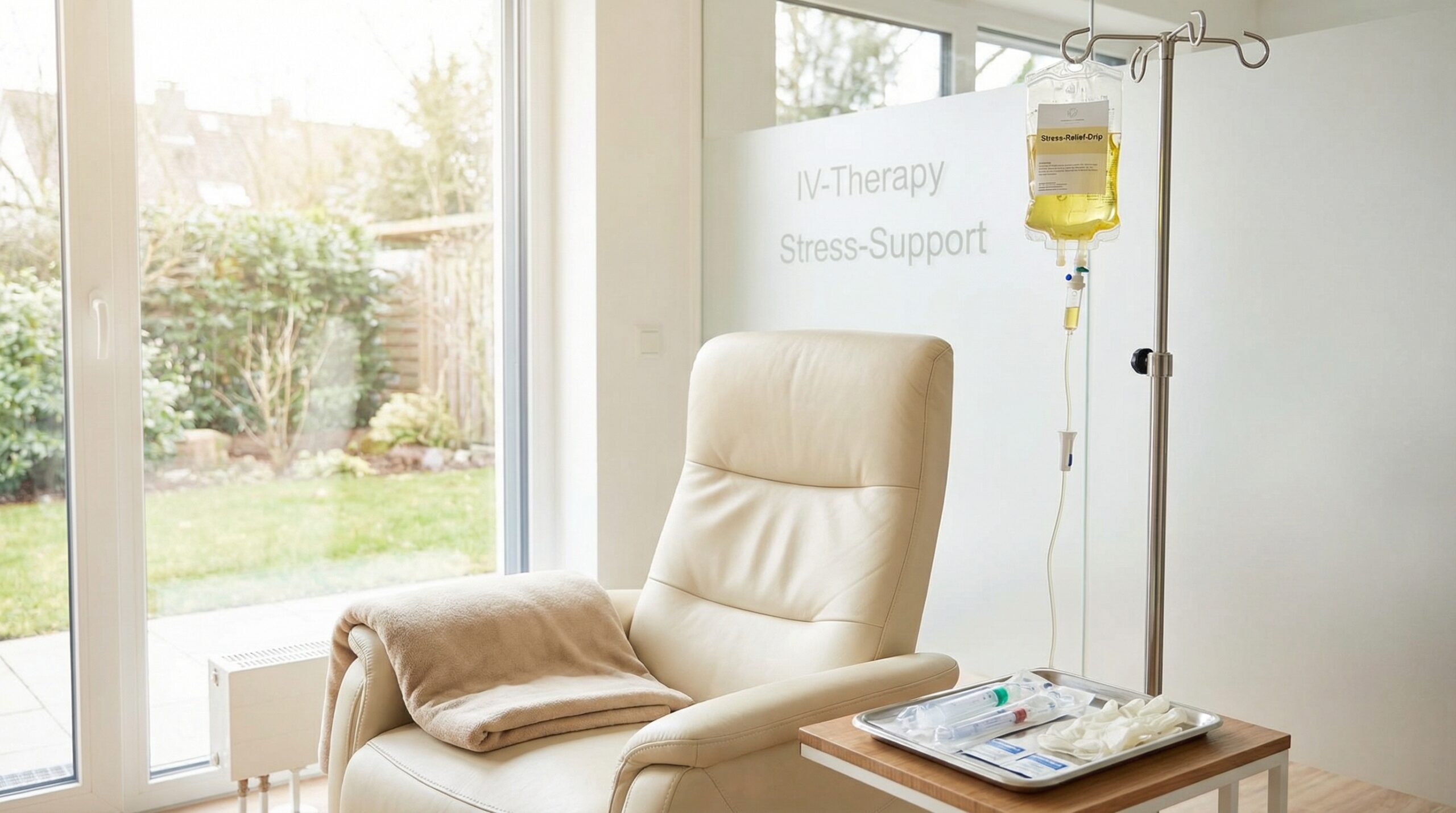
If you feel wired but exhausted, tense, and mentally overloaded, you are not alone. Chronic stress is one of the most common wellness concerns people bring into IV therapy clinics. This guide explains how stress relief IV therapy works, which nutrients are typically used, who it may help, and how to integrate it into a broader stress management plan.
It is written for busy professionals, caregivers, and anyone dealing with ongoing stress who wants to understand whether IV therapy could be a safe, science-informed option to support relaxation, energy, and mental clarity.
Stress relief IV therapy is a type of intravenous infusion that delivers fluids, electrolytes, vitamins, minerals, and antioxidants directly into your bloodstream to replenish nutrients depleted by chronic stress, support hydration, and help calm the nervous system. Because IV delivery bypasses digestion, nutrients reach your circulation quickly, which may translate into faster improvements in hydration, energy, and a sense of relaxation compared with oral supplements, especially when used as part of a comprehensive stress management plan.
What is stress relief IV therapy?
Stress relief IV therapy is a customized intravenous drip designed to support your body’s stress response. A small catheter is placed into a vein, and a fluid bag containing a blend of nutrients infuses slowly over 30 to 60 minutes while you relax in a comfortable setting.
Typical stress-focused IV blends may include:
- Balanced fluids and electrolytes for rapid hydration
- B-complex vitamins for energy and nervous system support
- Magnesium for muscle relaxation and calming the nervous system
- Vitamin C for antioxidant and adrenal support (Vitamin C and the Stress Response, Padayatty et al., 2007)
- Antioxidants such as glutathione or alpha-lipoic acid for oxidative stress support (Glutathione in the Nervous System, Aoyama, 2021)
- Amino acids like taurine or L-theanine to promote a sense of calm (Taurine and Neuroprotection, El Idrissi, 2008)
The exact formula is typically tailored after a consultation that reviews your health history, medications, symptoms, and goals. Stress relief IV therapy is not a cure for anxiety or mood disorders, but it may help restore the “biochemical foundation” your body needs to handle stress more effectively.

How does chronic stress affect your body?
To understand why IV therapy is used for stress support, it helps to look at what long-term stress does inside the body.
The cortisol connection
When you are under pressure, your adrenal glands release cortisol, your primary stress hormone. Short bursts of cortisol help you respond to challenges. However, when stress is constant, cortisol can stay elevated, which is linked with fatigue, sleep disruption, higher blood pressure, and mood changes (Stress, Cortisol, and Health, McEwen, 2007).
Nutrient depletion and “wired but tired”
Chronic stress increases your body’s demand for several key nutrients:
- B vitamins are required for energy production, nerve function, and neurotransmitter synthesis. Low levels are associated with fatigue and low mood (B Vitamins and the Brain, Kennedy, 2016). Learn more about how these nutrients affect cognition in our Brain health IV therapy article.
- Magnesium is involved in hundreds of reactions, including nerve signaling and muscle relaxation. Stress and poor diet can reduce magnesium status, and low magnesium is associated with increased anxiety and difficulty sleeping (Magnesium and Stress, Boyle et al., 2017).
- Vitamin C is concentrated in the adrenal glands and used heavily during stress responses (Vitamin C in the Stress Response, Padayatty et al., 2007).
At the same time, stress can disrupt digestion, appetite, and gut function, which may further impair nutrient absorption. Over time, this can contribute to the common “wired but tired” feeling: mentally on edge, yet physically drained.
Hydration, electrolytes, and brain function
Even mild dehydration can affect mood, attention, and energy levels (Mild Dehydration Affects Mood and Cognition, Ganio et al., 2011). Stress may worsen fluid and electrolyte balance by altering hormones that regulate kidney function and by changing your drinking habits. Symptoms like headaches, brain fog, and irritability can be intensified when hydration is off.
How does stress relief IV therapy work?
Stress relief IV therapy aims to address these physiological effects of stress in a direct and efficient way.
Rapid hydration and electrolyte balance
IV fluids deliver sterile water with electrolytes such as sodium, potassium, and sometimes magnesium directly into your bloodstream. This bypasses the digestive system and can restore circulating volume and electrolyte balance more quickly than drinking alone, particularly if you have been under-hydrating or losing fluids through sweating or caffeine intake (Intravenous Fluid Therapy in Adults, NICE Guideline, 2013). You can explore hydration-focused IV options in our quick hydration IV guide.
Better hydration supports blood pressure, temperature regulation, and cellular function, which many people experience as improved energy and clearer thinking.
Direct nutrient delivery and high bioavailability
When you swallow vitamins, they must pass through the digestive tract and liver before reaching your bloodstream. Absorption can be limited by gut health, medications, and dose. For some nutrients, oral bioavailability can be modest. For example, high oral doses of vitamin C are limited by intestinal transporters, while IV vitamin C can achieve much higher plasma levels without gastrointestinal upset (Vitamin C Pharmacokinetics, Padayatty et al., 2004). For more details, see our vitamin infusion therapy guide.
IV therapy bypasses these barriers, delivering nutrients at full strength into circulation. This is one reason people often report feeling the effects of a stress relief drip within the same day.

Targeted nervous system support
Several nutrients commonly used in stress relief IV therapy have research supporting their role in nervous system regulation:
- Magnesium helps regulate NMDA and GABA receptors, which are involved in excitatory and calming signals in the brain (Magnesium in the Central Nervous System, Vink & Nechifor, 2011). Adequate magnesium may support relaxation, reduce muscle tension, and improve sleep quality.
- B6, B9, and B12 are involved in methylation and neurotransmitter production, including serotonin and dopamine. Deficiencies have been linked with mood disturbances and cognitive changes (B Vitamins and the Brain, Kennedy, 2016).
- Taurine and L-theanine are amino acids that may have calming effects by modulating GABA and glutamate signaling (L-Theanine and Relaxation, Kimura et al., 2007; Taurine as a Neuromodulator, El Idrissi, 2008).
By delivering these compounds together, stress relief IV therapy aims to create a state many clients describe as “calm but clear.”
Antioxidant and inflammation support
Chronic psychological stress is associated with increased oxidative stress and low-grade inflammation (Oxidative Stress and Stress, Liu & Zhou, 2017). Antioxidants such as vitamin C, glutathione, and alpha-lipoic acid are sometimes included in IV stress formulas to help neutralize free radicals and support cellular resilience.
Glutathione in particular is poorly absorbed orally because it is broken down in the gut, while IV administration can raise blood levels more effectively (Glutathione Pharmacokinetics, Witschi et al., 1992). Alpha-lipoic acid is both water- and fat-soluble and can cross the blood brain barrier, where it may support mitochondrial energy production and antioxidant defenses (Alpha-Lipoic Acid in Neurologic Disorders, Packer et al., 1997).
Who might benefit most from stress relief IV therapy?
Stress relief IV therapy is not only for people with diagnosed anxiety disorders. It is often considered by individuals who:
- Experience chronic work or caregiver stress
- Feel persistently fatigued despite adequate sleep
- Struggle with brain fog, low productivity, or difficulty focusing
- Notice frequent muscle tension, headaches, or restlessness linked to stress
- Have demanding travel or performance schedules
- Suspect nutrient depletion due to poor diet, high caffeine or alcohol intake, or digestive issues
People with certain medical conditions, such as kidney disease, heart failure, or specific electrolyte imbalances, may not be good candidates for some IV formulations. A proper medical review is essential before starting therapy.
What happens during a stress relief IV therapy session?
Although details vary by clinic, a typical visit follows a predictable sequence.
1. Consultation and assessment
You will usually complete a health questionnaire and have a brief consultation with a qualified provider. They will review:
- Your medical history and current medications
- Stress level, sleep patterns, and main symptoms
- Past reactions to IVs or injections
- Any lab work you may have, such as nutrient levels or kidney function
Based on this discussion, the provider will recommend a formula and dosing schedule that aligns with your goals and safety profile.
2. IV placement and infusion
Once you are settled in a chair or recliner, a small IV catheter is placed into a vein in your arm or hand. You may feel a brief pinch. The drip is started and typically runs for 30 to 60 minutes, sometimes a bit longer for complex formulas.
During the infusion, you can usually read, listen to music, or simply rest. Staff should monitor you periodically to check your comfort and vital signs.
3. How you might feel afterward
Experiences vary, but many people report:
- Feeling more hydrated and refreshed within a few hours
- Clearer thinking or less brain fog later the same day
- A sense of physical relaxation or reduced muscle tension
- Improved sleep that night or over the next few days
These effects may last several days to about a week, depending on your baseline health, stress load, and lifestyle. Evidence is still emerging, and responses are individual, so it is best to view IV therapy as one tool within a broader wellness plan rather than a stand-alone solution.
What ingredients are commonly used in stress relief IV drips?
While formulations differ, many stress relief IV therapies include a combination of the following components.
Fluids and electrolytes
Most drips start with a base of normal saline or similar solutions to restore hydration. Electrolytes such as sodium, potassium, and sometimes calcium and magnesium help maintain nerve and muscle function and overall fluid balance (Intravenous Fluid Therapy in Adults, NICE Guideline, 2013).
B-complex vitamins
B vitamins often included are B1 (thiamine), B2 (riboflavin), B3 (niacin), B5 (pantothenic acid), B6 (pyridoxine), and B12 (cobalamin). These support:
- Energy production in mitochondria
- Healthy nerve conduction
- Neurotransmitter synthesis for mood regulation
Research suggests that adequate B vitamin intake is important for cognitive performance and mood stability (B Vitamins and the Brain, Kennedy, 2016).
Magnesium
Magnesium is sometimes called the relaxation mineral because of its role in muscle and nerve function. Low magnesium status has been associated with increased stress and anxiety, and supplementation may help reduce subjective anxiety in some individuals (Magnesium Supplementation and Anxiety, Boyle et al., 2017).
Vitamin C
Vitamin C acts as an antioxidant and supports immune function. It is also concentrated in the adrenal glands, which are central to the stress response (Vitamin C in the Stress Response, Padayatty et al., 2007). IV vitamin C can reach higher blood levels than oral dosing, which may be relevant when targeting oxidative stress (Vitamin C Pharmacokinetics, Padayatty et al., 2004).
Glutathione and other antioxidants
Glutathione is a major intracellular antioxidant that helps protect cells from oxidative damage and supports detoxification pathways (Glutathione in the Nervous System, Aoyama, 2021). Because oral glutathione is largely broken down in the gut, IV administration is often used when the goal is to raise systemic levels (Glutathione Pharmacokinetics, Witschi et al., 1992).
Alpha-lipoic acid is another antioxidant sometimes included for its ability to regenerate other antioxidants and support mitochondrial energy production (Alpha-Lipoic Acid in Neurologic Disorders, Packer et al., 1997).
Amino acids for calm and focus
Amino acids such as taurine and L-theanine may be added to support a calm but alert state. Taurine appears to modulate GABAergic signaling and may have neuroprotective properties (Taurine as a Neuromodulator, El Idrissi, 2008). L-theanine, found naturally in green tea, has been shown to promote relaxation without drowsiness and may support attention under stress (L-Theanine and Relaxation, Kimura et al., 2007).
How often can you get stress relief IV therapy?
There is no single schedule that fits everyone. Frequency depends on your health status, goals, and how you respond to treatment.
- Short-term reset: Some people use one or two sessions during particularly intense periods of work or life stress.
- Series for burnout: Others may start with weekly sessions for several weeks, then taper to every two to four weeks as maintenance, guided by a provider.
- Occasional support: Some individuals reserve IV therapy for high-demand times such as travel, big projects, or seasonal stress.
Your provider should periodically reassess whether the therapy is still appropriate and beneficial. Long-term use without medical oversight is not advised.
Is stress relief IV therapy safe?
When administered by trained professionals using appropriate protocols, IV nutrient therapy is generally considered safe for many healthy adults. However, it is still a medical procedure and not risk free.
Potential side effects
Possible side effects can include:
- Temporary discomfort, bruising, or redness at the IV site
- Feeling cold or a metallic taste during certain infusions
- Lightheadedness or changes in blood pressure during or after the drip
More serious complications such as infection, vein irritation, or allergic reactions are uncommon but can occur, which is why sterile technique, appropriate screening, and monitoring are essential (Guidelines for Intravenous Therapy, Infusion Nurses Society, 2021).
Who should be cautious or avoid it?
People who may need extra caution or may not be candidates include those with:
- Kidney disease or reduced kidney function
- Heart failure or severe cardiovascular disease
- Certain electrolyte imbalances
- Known allergies to any component of the infusion
- Pregnancy or breastfeeding, unless cleared by their obstetric provider
A thorough medical review is necessary to weigh potential benefits and risks for your specific situation.
How does stress relief IV therapy compare with oral supplements?
Both IV and oral nutrients have a place in stress management, and they are often used together.
| Aspect | IV therapy | Oral supplements |
|---|---|---|
| Absorption | Bypasses digestion, near 100% bioavailability for many nutrients (Vitamin C Pharmacokinetics, Padayatty et al., 2004) | Limited by gut transport and digestion; varies by person and dose |
| Onset | Often felt within hours | May take days to weeks of consistent use |
| Convenience | Requires clinic visit and IV placement | Can be taken at home |
| Use case | Helpful for rapid repletion or when gut absorption is a concern | Best for ongoing daily maintenance |
In practice, many people use IV therapy as a way to fill the tank quickly, then maintain levels with a nutrient-dense diet and appropriately chosen oral supplements.
How to integrate stress relief IV therapy into a holistic plan
IV therapy works best when it supports, rather than replaces, foundational stress management strategies.
Build the basics first
Key pillars include:
- Consistent sleep schedule and relaxing pre-bed routine
- Regular physical activity such as walking, strength training, or yoga
- Balanced meals with adequate protein, healthy fats, and colorful vegetables
- Stress reduction practices like mindfulness, breathing exercises, or counseling
- Limiting excessive caffeine and alcohol, which can worsen anxiety and sleep
Use IV therapy strategically
Once the basics are in place, stress relief IV therapy can be used to:
- Support recovery during or after high-pressure periods
- Address suspected nutrient depletion more rapidly
- Complement care from your primary clinician or mental health provider
Always share your full medication and supplement list with your IV provider so they can check for interactions and coordinate care.
Next steps if you are considering stress relief IV therapy
If you are curious about whether stress relief IV therapy is appropriate for you, the next step is to schedule a consultation with a qualified provider who can review your health history, discuss your stress patterns, and help design a personalized plan. Together, you can decide how IV therapy might fit alongside nutrition, movement, sleep, and other evidence-based tools to support resilience.
Used thoughtfully and under professional supervision, stress relief IV therapy can be a practical option to replenish stress-depleted nutrients, improve hydration, and help you feel calmer, clearer, and more capable of handling daily demands.
FAQ
How quickly does stress relief IV therapy start working?
Many people notice changes in hydration, energy, or a sense of relaxation within a few hours of their first stress relief IV therapy session, with further benefits such as clearer thinking and improved sleep often reported over the next 24 to 48 hours. Responses vary, and some individuals need several sessions before they notice consistent effects.
How long do the effects of a stress relief IV drip last?
The benefits of a stress relief IV drip typically last from several days up to about a week, depending on your baseline health, nutrient status, and ongoing stress load. Lifestyle factors such as sleep, diet, and continued stress exposure play a major role in how long you feel the difference.
Can stress relief IV therapy replace my anxiety medication?
No, stress relief IV therapy is not a replacement for prescribed anxiety or mood medications. It is best viewed as a complementary wellness tool that may support hydration, nutrient status, and overall resilience. Any changes to medication should only be made in consultation with your prescribing clinician.
How often should I get stress relief IV therapy for chronic stress?
Frequency is individualized, but many people with chronic stress start with weekly sessions for several weeks, then move to every two to four weeks as maintenance, guided by their provider. Your schedule should be based on your response, lab data when available, and medical considerations.
Are there people who should not get stress relief IV therapy?
Yes, individuals with certain conditions, including significant kidney disease, heart failure, specific electrolyte disturbances, or known allergies to infusion ingredients, may not be good candidates for stress relief IV therapy. Pregnant or breastfeeding people should only receive IV therapy if it is clearly indicated and approved by their obstetric provider.
This blog post is intended for informational purposes only and should not be considered medical advice. Always consult a healthcare professional before making changes to your health routine.
Leave a Reply