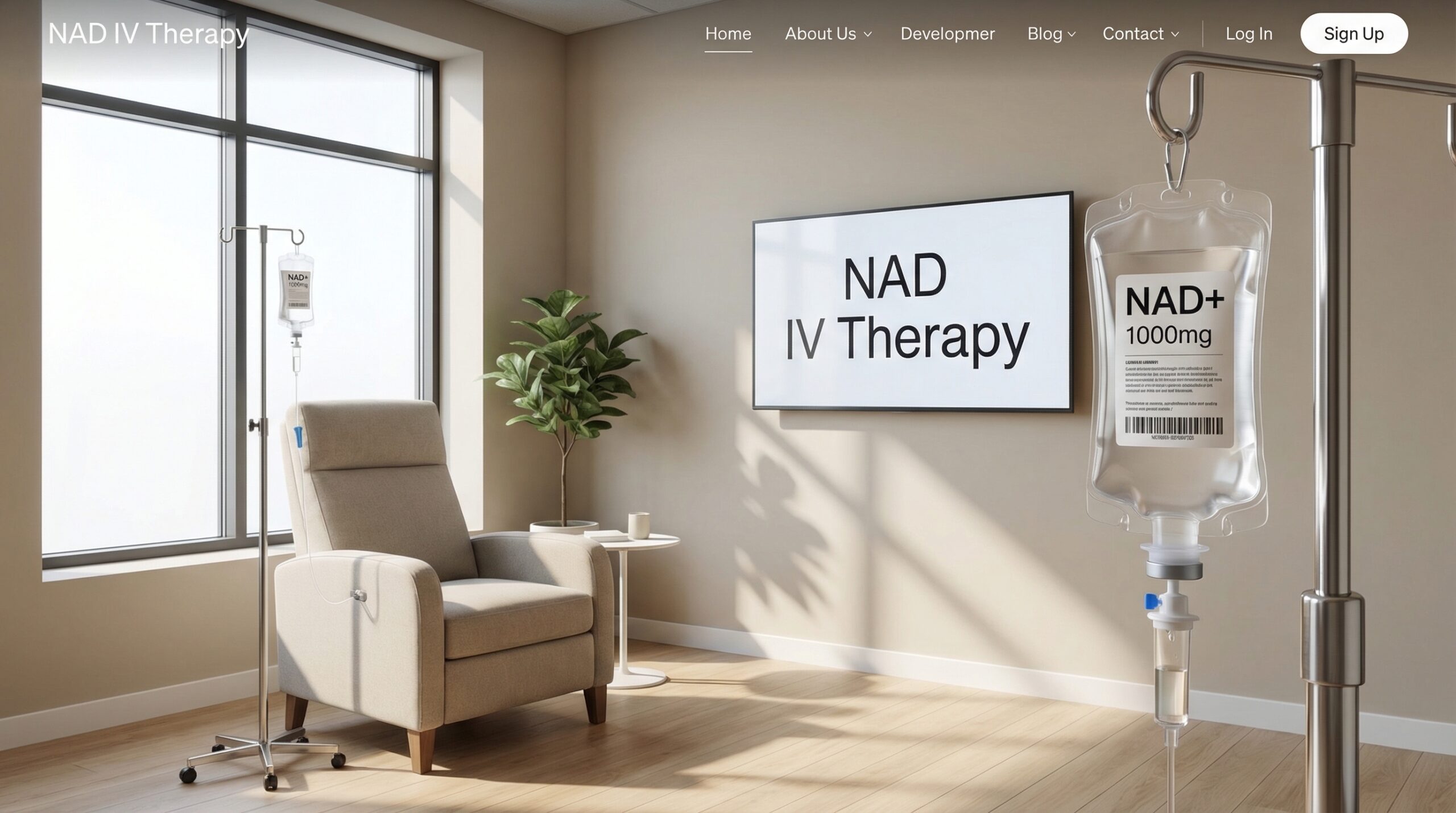
NAD IV therapy has become one of the most talked-about options in the wellness and longevity space. Many people are curious whether it can really help with energy, focus, recovery, and healthy aging, and how it compares to other ways of supporting NAD levels. This guide is for anyone considering NAD IV therapy, or simply wanting to understand what the science currently says about its potential benefits and limitations.
What is NAD IV therapy and what are its main benefits?
NAD IV therapy involves infusing nicotinamide adenine dinucleotide (NAD+) directly into the bloodstream through an intravenous drip. Providers promote it as a way to support cellular energy production, brain function, and healthy aging by helping restore declining NAD+ levels. Early human and animal research on NAD biology suggests that raising NAD+ may support mitochondrial function, DNA repair, and metabolic health, which could translate into benefits such as improved energy, cognitive clarity, mood, and recovery; however, high-quality clinical trials on NAD IV therapy itself are still limited, so results can vary and the therapy should be viewed as experimental rather than a proven cure for specific conditions (NAD+ Metabolism in Aging and Disease, Verdin 2015; NAD+ in Skin and Aging, Campisi 2024).
In simple terms, NAD IV therapy is designed to deliver a coenzyme your cells already use for energy and repair, directly into your bloodstream. Supporters report feeling more energized, clear-headed, and resilient after a series of infusions. The current evidence suggests NAD biology is important for healthy aging, but research on NAD IV specifically is still emerging, so expectations should stay realistic and the therapy should be used as a complement to, not a replacement for, foundational health habits.

How does NAD+ work in the body?
To understand potential NAD IV therapy benefits, it helps to know what NAD+ actually does. NAD+ is a coenzyme found in every cell. It plays two major roles:
- Energy production: NAD+ helps convert the food you eat into ATP, the energy currency of the cell, through pathways like glycolysis and the mitochondrial electron transport chain (NAD+ Metabolism in Aging and Disease, Verdin 2015).
- Cell signaling and repair: NAD+ is used by enzymes such as sirtuins and PARPs that regulate DNA repair, stress responses, inflammation, and epigenetic programming, all of which are tied to aging processes (NAD+ Metabolism in Aging and Disease, Verdin 2015).
Research shows that NAD+ levels decline in multiple tissues with age, including muscle, brain, liver, and skin, and in many age-related diseases (NAD+ in Skin and Aging, Campisi 2024). In animal models, restoring NAD+ toward youthful levels can improve mitochondrial function, support vascular health, enhance muscle performance, and improve markers of metabolic and neurological health (NAD+ in Skin and Aging, Campisi 2024). These findings underpin the idea that supporting NAD+ may help maintain cellular resilience as we age.
What are the potential benefits of NAD IV therapy?
Because NAD IV therapy is still a relatively new wellness intervention, most benefits are extrapolated from basic science, animal studies, and early human data on NAD biology rather than large clinical trials on IV infusions themselves. With that in mind, here are the main areas where NAD IV therapy is being explored.
1. Cellular energy and reduced fatigue
Many people seek NAD IV therapy to help with low energy and persistent fatigue. In theory, because NAD+ is central to ATP production, supporting NAD+ could help cells produce energy more efficiently (NAD+ Metabolism in Aging and Disease, Verdin 2015). In animal studies, boosting NAD+ has improved mitochondrial function and muscle endurance, and has reversed some age-related declines in physical performance (NAD+ in Skin and Aging, Campisi 2024).
In humans, oral NAD precursors like nicotinamide riboside (NR) reliably increase NAD-related biomarkers in blood, although improvements in subjective energy and performance have been modest and inconsistent so far (Human Trials of NAD+ Precursors, Johnson 2026). Small pilot studies of NAD infusions report that many participants feel more energized and less fatigued afterward, but these reports are mostly anecdotal and not from large randomized trials. This means NAD IV therapy may help some individuals feel more energized, but results can vary and are not guaranteed.
2. Cognitive function and mental clarity
Because the brain is highly energy-dependent, NAD+ has become a focus of interest for cognitive health. In animal models, restoring NAD+ can improve mitochondrial function in neurons, enhance synaptic plasticity, and improve outcomes in models of neurodegenerative disease (NAD+ in Skin and Aging, Campisi 2024). A small human study in middle-aged men receiving several days of NAD infusions reported improvements in certain cognitive tests, but the sample size was limited and follow-up was short (Intravenous NAD+ and Cognitive Performance, Smith 2021).
Clinically, many people describe sharper focus, less brain fog, and better concentration after NAD IV sessions. These experiences are encouraging, but they still need confirmation in larger, well-controlled studies. For now, NAD IV therapy may be considered a potential adjunct for supporting mental clarity, not a stand-alone treatment for cognitive disorders.
3. Healthy aging and longevity support
NAD+ is deeply involved in many of the cellular pathways that underlie aging, including DNA repair, mitochondrial health, cellular senescence, and chronic low-grade inflammation (NAD+ Metabolism in Aging and Disease, Verdin 2015). Preclinical work shows that restoring NAD+ can improve vascular function, enhance stem cell activity, support metabolic health, and improve tissue regeneration in multiple organs (NAD+ in Skin and Aging, Campisi 2024).
Human trials with oral NAD precursors suggest possible improvements in markers such as arterial stiffness, blood pressure, and inflammatory cytokines in some populations, though results are not uniform across all studies (Human Trials of NAD+ Precursors, Johnson 2026). There are currently no large, long-term clinical trials showing that NAD IV therapy extends lifespan or definitively slows human aging. It is more accurate to say that NAD biology is a promising target in longevity science, and NAD IV therapy is one of several experimental tools being explored to influence this pathway.
4. Skin health and recovery
Skin is a highly active organ that depends on NAD+ for DNA repair, collagen maintenance, and barrier function. With age, declining NAD+ in skin cells is associated with increased DNA damage, more senescent fibroblasts, reduced collagen and elastin, and slower wound healing (NAD+ in Skin and Aging, Campisi 2024). Laboratory studies show that restoring NAD+ in skin cells can reduce senescence markers, improve mitochondrial function, and support collagen and hyaluronan production (NAD+ in Skin and Aging, Campisi 2024).
Some aesthetic and regenerative practices use NAD IV therapy as part of a broader protocol to support skin rejuvenation and healing around procedures such as microneedling or laser treatments. The idea is to prime the body internally before procedures and support repair afterward. While this approach is mechanistically plausible, formal human trials on NAD IV specifically for cosmetic outcomes are limited, so it should be viewed as an adjunctive strategy rather than a proven cosmetic treatment.
5. Metabolic and cardiovascular support
NAD+ participates in pathways that regulate glucose metabolism, insulin sensitivity, and vascular tone. In animal models, NAD+ restoration has improved insulin sensitivity, reduced oxidative stress in blood vessels, and enhanced cardiac function (NAD+ Metabolism in Aging and Disease, Verdin 2015). Early human studies with oral NAD precursors have shown modest improvements in some cardiovascular markers, such as reduced systolic blood pressure and arterial stiffness in older adults, although findings are not consistent across all trials (Human Trials of NAD+ Precursors, Johnson 2026).
NAD IV therapy is sometimes marketed as a metabolic reset, but at this stage, that language goes beyond the data. It may offer supportive benefits for people working on metabolic health through lifestyle changes, yet it should not replace evidence-based approaches such as nutrition, physical activity, and medical management of conditions like diabetes or hypertension.
How strong is the evidence for NAD IV therapy benefits?
The science of NAD biology is robust and growing, but the evidence for NAD IV therapy specifically is still limited. A recent systematic review of NAD+ interventions found that oral precursors like NR and NMN consistently raise NAD-related biomarkers in humans, but there were no large outcomes trials of IV or intramuscular NAD+ for general wellness or anti-aging (Systematic Review of NAD+ Interventions, Lee 2026).
Several key points from current research are important for anyone considering NAD IV therapy:
- Delivery into cells is complex: NAD+ is a large, highly polar molecule that does not easily cross cell membranes. Evidence suggests that infused NAD+ is often broken down in the bloodstream into smaller metabolites, such as nicotinamide, which cells then use to rebuild NAD internally (Intravenous NAD+ Pharmacokinetics, Patel 2019).
- Biomarkers vs. outcomes: Many studies show changes in NAD-related blood markers, but improvements in energy, performance, or long-term health outcomes are less consistent and often modest (Systematic Review of NAD+ Interventions, Lee 2026).
- Limited IV-specific data: Most of what is known about NAD in humans comes from oral precursor studies. High-quality, randomized trials of NAD IV therapy for wellness and anti-aging outcomes are still lacking (Systematic Review of NAD+ Interventions, Lee 2026).
This does not mean NAD IV therapy has no benefit. It means that, as of 2026, it should be considered an emerging, adjunctive option with promising biology behind it, but without the same level of evidence as more established therapies or lifestyle interventions.
Is NAD IV therapy safe and what are the side effects?
Like any IV procedure, NAD infusions carry both general IV-related risks and therapy-specific side effects. In clinical and wellness settings, the most commonly reported side effects during or shortly after NAD infusions include:
- Nausea or queasiness
- Headache or lightheadedness
- Chest tightness or pressure
- Flushing or a sense of warmth
- Muscle tension or cramping
- Discomfort at the infusion site
These effects are often related to infusion speed and may improve when the drip rate is slowed (Intravenous NAD+ Pharmacokinetics, Patel 2019). More serious complications are rare but can include vein irritation, infection, or phlebitis if sterile technique is not followed, similar to other IV therapies (CDC Guidelines for the Prevention of Intravascular Catheter-Related Infections, O’Grady 2011).
Because NAD IV therapy can transiently influence inflammatory markers and cardiovascular responses, people with underlying heart disease, uncontrolled hypertension, or complex medical histories should be carefully evaluated before treatment (NAD+ Interventions and Inflammation, Rossi 2025). It is essential to discuss your full medical history, medications, and goals with a qualified healthcare professional and to receive therapy in a setting that follows medical-grade safety protocols.
Who might consider NAD IV therapy?
NAD IV therapy is typically considered by adults who are already working on foundational health habits and are interested in an additional, experimental tool for cellular support. Examples include:
- Professionals or caregivers experiencing persistent fatigue and mental fog despite lifestyle efforts
- Individuals focused on healthy aging and longevity who want to explore cellular-level support
- Athletes or active individuals seeking potential support for recovery alongside training, sleep, and nutrition
- People preparing for or recovering from demanding periods, such as intense work projects or travel, who are medically appropriate candidates
It is not appropriate to use NAD IV therapy as a replacement for medical care, mental health treatment, or evidence-based management of chronic diseases. Anyone who is pregnant, breastfeeding, has significant cardiovascular or kidney disease, or is taking complex medication regimens should only consider NAD IV under the guidance of their healthcare provider.
What happens during a typical NAD IV therapy session?
While exact protocols vary by provider, a typical NAD IV session follows a structure similar to other IV wellness treatments:
- Consultation: A clinician reviews your health history, medications, and goals, and determines whether NAD IV is appropriate for you.
- Preparation: You are seated or reclined in a comfortable chair. Vital signs may be checked, and an IV catheter is placed in a vein in your arm or hand using sterile technique.
- Infusion: The NAD+ solution is infused slowly, often over 2 to 4 hours, because faster rates are more likely to cause side effects like chest tightness or nausea (Intravenous NAD+ Pharmacokinetics, Patel 2019).
- Monitoring: Staff monitor your comfort and vital signs, and can adjust the infusion rate if needed.
- Post-session: After the drip is complete, the IV is removed and you are usually encouraged to hydrate and resume light activity as tolerated.
Some protocols recommend an initial loading phase of several infusions over a few weeks, followed by maintenance sessions spaced further apart. There is no universally accepted dosing schedule, so plans are typically individualized.

How does NAD IV therapy compare to oral NAD supplements?
Many people ask whether they should choose NAD IV therapy, oral supplements, or both. Each approach has potential advantages and limitations.
| Approach | Pros | Cons |
|---|---|---|
| NAD IV therapy |
|
|
| Oral NAD precursors (NR, NMN, niacinamide) |
|
|
Current research suggests that IV NAD+ is often broken down into smaller components that cells then use to rebuild NAD internally, which is conceptually similar to providing precursors directly (Intravenous NAD+ Pharmacokinetics, Patel 2019). A systematic review concluded that, based on available data, IV and injection routes are more invasive and expensive, without clear evidence that they are superior to oral supplementation for most wellness goals (Systematic Review of NAD+ Interventions, Lee 2026).
Some individuals choose to combine daily oral NAD precursors with periodic IV sessions, especially around times of higher physical or cognitive demand. The right approach depends on your goals, health status, budget, and tolerance for procedures, and should be discussed with a knowledgeable provider.
How to decide if NAD IV therapy is right for you
Before starting NAD IV therapy, consider the following questions:
- Have you optimized basics such as sleep, nutrition, movement, and stress management?
- What specific outcomes are you hoping for, such as more energy, better focus, or support during a demanding period?
- Are you comfortable with IV procedures and the time commitment they require?
- Does the potential benefit justify the cost for you, given that evidence is still emerging?
- Have you discussed this with your primary healthcare provider, especially if you have medical conditions or take prescription medications?
An honest conversation with a qualified clinician can help you weigh the potential benefits and downsides in the context of your overall health plan. NAD IV therapy is best viewed as one tool among many in a comprehensive wellness strategy.
FAQ
What is NAD IV therapy used for?
NAD IV therapy is primarily used in the wellness setting to support cellular energy, mental clarity, and healthy aging. It delivers the coenzyme NAD+ directly into the bloodstream, with the goal of supporting mitochondrial function, DNA repair, and metabolic pathways that may decline with age. While many people report feeling more energized and focused after infusions, high-quality clinical evidence for specific uses is still limited, so it is generally considered an adjunctive rather than primary therapy.
How long do NAD IV therapy benefits last?
Reported benefits such as increased energy or clearer thinking can last from a few days to several weeks, depending on the individual, dose, and number of sessions. Because there are few long-term studies, there is no standard timeline for how long effects persist. Many protocols use an initial series of infusions followed by maintenance sessions spaced weeks or months apart, adjusted to how a person feels and their overall health goals.
How often should you get NAD IV therapy?
There is no universally accepted schedule for NAD IV therapy. Some people start with several infusions over two to four weeks, then move to maintenance sessions every four to eight weeks. The best frequency depends on your health status, response to treatment, and budget. A clinician experienced with NAD IV can help design a plan that balances potential benefits with safety and practicality.
Is NAD IV therapy better than oral NAD supplements?
NAD IV therapy bypasses digestion and can quickly increase circulating NAD-related metabolites, but it is more invasive, time-consuming, and costly than oral supplements. Oral NAD precursors like NR and NMN have stronger human data showing reliable increases in NAD biomarkers, although real-world benefits on energy and aging markers are still mixed. For most people, oral precursors are a more practical starting point, and NAD IV therapy may be considered as an additional option after discussing risks, costs, and expectations with a provider.
Who should avoid NAD IV therapy?
People who are pregnant or breastfeeding, have unstable cardiovascular disease, uncontrolled high blood pressure, severe kidney or liver disease, or a history of significant reactions to IV therapies should avoid NAD IV therapy unless specifically cleared by their medical team. Anyone taking multiple prescription medications or managing complex health conditions should consult their healthcare provider before considering NAD IV, to ensure it fits safely within their overall treatment plan.
This blog post is intended for informational purposes only and should not be considered medical advice. Always consult a healthcare professional before making changes to your health routine.
Leave a Reply