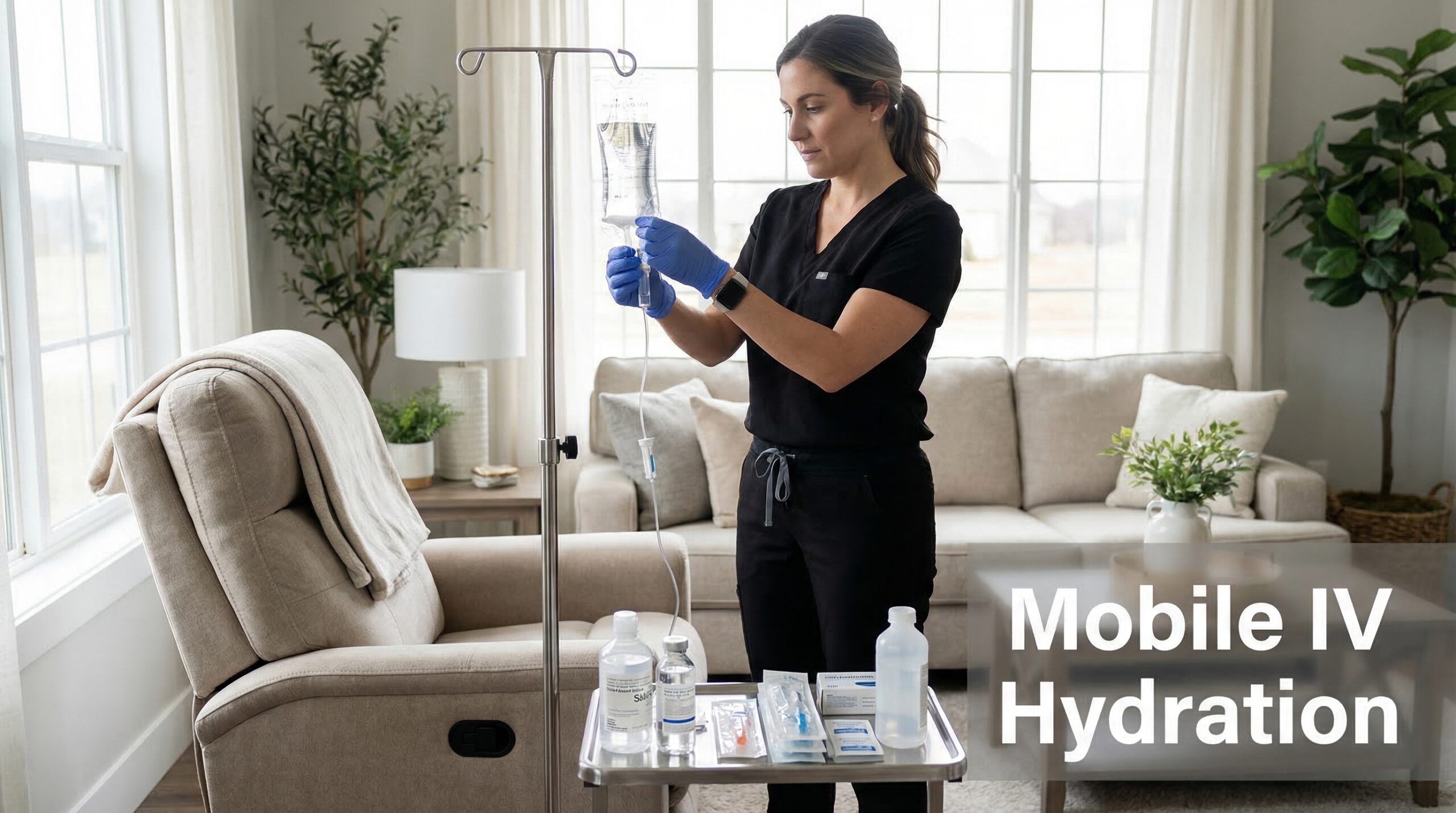
Mobile IV hydration brings clinical-grade IV fluids, electrolytes, and nutrients directly to you at home, in your office, or at events. Instead of driving to a clinic, you book a licensed provider who travels to your location, evaluates you, and administers a tailored IV drip designed to support hydration, energy, recovery, or general wellness. This guide explains how it works, who it may help, what to expect, and how to choose a safe, reputable service.
Mobile IV hydration is a concierge-style service where licensed clinicians deliver intravenous fluids and nutrients at your location. After a brief health screening, they place a small IV catheter and infuse a customized blend of sterile fluids and vitamins directly into your bloodstream, which allows for rapid absorption compared with oral hydration or supplements (Intravenous Fluid Therapy in Adults in Hospital, National Institute for Health and Care Excellence, 2013).
What is mobile IV hydration and how does it work?
Mobile IV hydration is a subset of mobile IV therapy focused on restoring fluid and electrolyte balance, often with added vitamins and antioxidants, outside of a hospital or clinic setting. Instead of you going to a facility, a nurse or other qualified clinician comes to your home, office, hotel, or event with all necessary supplies.
In simple terms, mobile IV hydration works by placing a small catheter into a vein, usually in your arm, and slowly infusing a bag of sterile fluid that may contain electrolytes like sodium and potassium, plus nutrients such as B vitamins and vitamin C. IV delivery bypasses the digestive tract, so fluids and water‑soluble nutrients reach the bloodstream directly, which can be helpful when you are dehydrated or having trouble tolerating oral fluids (Fluid and Electrolyte Therapy in Adults, Gennari & Kassirer, 1990).

Core components of a typical mobile IV hydration visit
While protocols vary by provider and local regulation, most visits include:
- Pre-visit screening: An online or telehealth questionnaire to review your medical history, medications, allergies, and goals.
- On-site assessment: Vital signs, brief symptom review, and confirmation that IV hydration is appropriate for you that day.
- IV placement: A small catheter is inserted into a peripheral vein, commonly in the forearm or hand. Over 330 million peripheral IV catheters are placed annually in the U.S., which shows how routine this procedure is in medical care (Peripheral Intravenous Catheters: Overview, Alexandrou et al., 2014).
- Infusion: A bag of fluid, often normal saline or lactated Ringer’s solution, sometimes with added vitamins or minerals, is infused over 30–60 minutes.
- Monitoring and wrap-up: The clinician monitors you for comfort and side effects, removes the IV, and provides aftercare instructions.
Why is mobile IV hydration becoming so popular?
Mobile IV hydration is growing quickly as part of a broader shift toward on-demand, personalized wellness. Global mobile IV hydration services are estimated in the low billions of U.S. dollars and projected to grow at roughly 7.8–10% compound annual growth over the next decade, driven largely by wellness and convenience-focused consumers (Mobile Intravenous Hydration Services Market, 2024; Mobile IV Therapy Market Size, Emergen Research, 2023).
Convenience and lifestyle fit
Many people prefer to receive hydration and wellness services without visiting a clinic. Mobile IV hydration allows:
- At-home recovery after travel, intense exercise, or illness.
- Office visits for busy professionals who cannot leave work easily.
- Event-based services for weddings, festivals, races, or corporate wellness days.
This aligns with broader trends toward concierge medicine and telehealth, where care adapts to the patient’s schedule instead of the other way around (Trends in Telehealth and Concierge Medicine, Mehrotra et al., 2020). For more on how hydration therapy works, see what IV hydration therapy is.
From medical use to wellness and performance
IV therapy has long been a standard hospital tool for dehydration, electrolyte imbalances, and medication delivery. The newer trend is using IV hydration in outpatient and mobile settings for goals such as:
- Supporting recovery after intense workouts or athletic events.
- Short-term relief of hangover symptoms like headache and nausea.
- General fatigue, jet lag, or travel-related dehydration.
- Complementary support during periods of high stress.
Evidence for IV hydration in these wellness contexts is still emerging and often extrapolated from hospital-based fluid therapy research. For example, studies in athletes show that adequate rehydration and electrolyte replacement can improve recovery and performance, although IV hydration is usually compared with oral strategies and is not necessary for most healthy people (American College of Sports Medicine Position Stand on Exercise and Fluid Replacement, Sawka et al., 2007).
What is typically in a mobile IV hydration drip?
Formulations differ by provider, but most mobile IV hydration drips are based on one of two sterile fluid types used widely in clinical care:
- 0.9% sodium chloride (normal saline): A balanced salt solution used to restore circulating volume in many clinical scenarios (Intravenous Fluid Therapy in Adults in Hospital, National Institute for Health and Care Excellence, 2013).
- Lactated Ringer’s solution: Contains sodium, chloride, potassium, calcium, and lactate, and is often used for surgical and trauma patients where balanced electrolyte replacement is desired (Balanced Crystalloids versus Saline in Critically Ill Adults, Semler et al., 2018).
To this base, mobile IV providers may add:
- B-complex vitamins and vitamin B12 for energy metabolism support (B Vitamins and Energy Production, Kennedy, 2016).
- Vitamin C as an antioxidant and immune-supporting nutrient (Vitamin C and Immune Function, Carr & Maggini, 2017).
- Magnesium for muscle and nerve function, though high doses intravenously must be used cautiously (Magnesium in Clinical Practice, Grober et al., 2015).
- Zinc in small doses for immune function, when appropriate (Zinc in Human Health, Wessels et al., 2017).
- Glutathione as an antioxidant, often given as a separate slow push; human data on cosmetic or wellness outcomes is still limited (Glutathione in Health and Disease, Wu et al., 2004).
Not every client needs every ingredient. Reputable providers tailor drips based on your health history, goals, and any contraindications. To learn more about how IV infusion therapy works, see IV infusion therapy benefits and safety.
Potential benefits of mobile IV hydration
Mobile IV hydration is not a cure-all, but for appropriately selected clients it may offer several potential benefits. These should be viewed as supportive, not as replacements for standard medical care.
Rapid rehydration
IV fluids bypass the digestive system, so they can restore circulating volume and electrolyte balance more quickly than drinking alone, which may be useful when nausea, vomiting, or gastrointestinal upset limit oral intake (Fluid and Electrolyte Disturbances, Moritz & Ayus, 2010). In healthy individuals who can drink, oral hydration is usually sufficient, but IV hydration may provide faster symptom relief in some cases.
Symptom relief after exertion or illness
After intense exercise, dehydration and electrolyte loss can contribute to fatigue, headache, and muscle cramps. Studies in endurance athletes show that restoring fluid and sodium balance supports performance and recovery, although most research focuses on oral strategies rather than IV therapy (Exercise and Fluid Replacement, Sawka et al., 2007). In outpatient settings, IV hydration may help some people feel better more quickly after gastrointestinal illnesses, heat exposure, or heavy sweating, but it should never delay urgent evaluation for severe symptoms.
Supportive role in wellness and immune health
Many mobile IV hydration blends include vitamin C, B vitamins, and zinc. These nutrients play established roles in immune function and energy metabolism, although high-dose IV versions have less robust evidence for routine use in otherwise healthy people (Vitamin C and Immune Function, Carr & Maggini, 2017; Zinc in Human Health, Wessels et al., 2017). For most individuals, a balanced diet remains the foundation of nutrient intake.
Convenience and adherence
Another practical benefit is convenience. People who struggle to follow through with clinic visits or multi-pill supplement regimens may find that occasional mobile IV sessions fit their lifestyle better. This convenience factor is one reason mobile IV hydration services are expanding in North America and other regions (Global Mobile IV Hydration Services Market, 2024).
Risks and side effects you should know about
IV therapy is a medical procedure and is not risk-free. Even when performed by experienced clinicians, there are potential side effects and complications, which is why a proper medical assessment and ongoing monitoring are important.
Common, usually mild side effects
- Temporary discomfort, bruising, or soreness at the IV site.
- A feeling of coolness in the arm during infusion.
- Mild lightheadedness or fatigue afterward.
These usually resolve quickly without specific treatment.
Less common but more serious risks
- Infection at the IV site if skin is not properly cleaned or equipment is not sterile (Complications of Peripheral Venous Catheters, Rickard et al., 2012).
- Infiltration or phlebitis, where fluid leaks into surrounding tissue or the vein becomes inflamed.
- Allergic reactions to vitamins, preservatives, or other additives.
- Fluid overload in people with heart, kidney, or liver disease, which can worsen swelling or shortness of breath (Fluid Overload and Outcomes, Acheampong & Vincent, 2015).
- Electrolyte imbalances if inappropriate formulations or doses are used.
These risks underscore the importance of individualized assessment, appropriate dosing, and qualified staff who can recognize and manage complications.
Who is a good candidate for mobile IV hydration?
Suitability depends on your health status, symptoms, and goals. Mobile IV hydration may be considered for adults who:
- Have mild to moderate dehydration symptoms, such as fatigue, headache, dry mouth, or lightheadedness, but are otherwise stable.
- Are recovering from travel, a busy event, or intense exercise and want structured hydration support.
- Do not have uncontrolled chronic conditions that increase the risk of fluid overload or electrolyte disturbances.
People who should be cautious or seek medical evaluation first include those with significant heart disease, kidney disease, uncontrolled high blood pressure, pregnancy-related complications, or severe symptoms such as chest pain, severe shortness of breath, confusion, or very low blood pressure. These can be signs of medical emergencies that require hospital-level care (Advanced Cardiovascular Life Support Guidelines, American Heart Association, 2020). For more guidance on on-demand services, see mobile IV therapy on-demand hydration.
How to choose a safe mobile IV hydration provider
Because regulations vary by region, the responsibility often falls on you to vet providers carefully. Consider the following factors.
Clinical credentials and oversight
- Confirm that the person placing your IV is a licensed professional, such as a registered nurse or paramedic, practicing within their scope.
- Ask whether a physician or other prescribing provider oversees protocols and is available for consultation.
- Look for clear processes for good-faith exams or telehealth evaluations before your first treatment, especially if prescription-only ingredients are used.
Protocols, ingredients, and safety practices
- Ask where IV bags are sourced. Many reputable services use FDA-registered outsourcing facilities for compounded nutrient bags when required by regulation (Outsourcing Facilities and Compounded Drugs, U.S. Food and Drug Administration, 2018).
- Request a full ingredient list and dosing information for any drip you are considering.
- Ensure they take a detailed medical history, check vital signs, and screen for contraindications.
- Confirm how they handle emergencies, including access to basic resuscitation equipment and protocols for calling emergency services.
Transparency and follow-up
- Reputable providers explain potential benefits and risks clearly and avoid promising guaranteed results.
- They encourage you to stay in touch about any delayed side effects or concerns after the visit.
- They are comfortable coordinating with your primary care clinician when needed.
What to expect during your first mobile IV hydration session
Knowing what will happen can help you feel more comfortable and prepared.
Before the visit
- Complete any required medical questionnaires honestly and thoroughly.
- Have a list of your medications, allergies, and medical conditions ready.
- Choose a comfortable, well-lit space where you can sit or recline.
During the infusion
- The clinician will verify your identity, review your health information, and explain the plan.
- They will clean your skin, place the IV, and start the drip, adjusting the rate as needed.
- You can usually read, work, or rest while being monitored.

After the session
- You may be asked to remain seated briefly to ensure you feel well before standing.
- Drink water, eat a light snack if appropriate, and avoid strenuous activity if you feel tired.
- Contact the provider or seek urgent care if you notice increasing pain, redness, swelling, fever, or shortness of breath.
Integrating mobile IV hydration into a broader wellness plan
Mobile IV hydration can be one tool in a larger wellness strategy that also includes nutrition, sleep, physical activity, and routine medical care. It should not replace evidence-based treatments for chronic conditions or emergency care when needed.
For some people, occasional IV hydration sessions may complement:
- Healthy dietary patterns rich in whole foods and adequate fluids.
- Regular physical activity, with attention to pre- and post-exercise hydration.
- Preventive care visits and recommended screenings.
- Stress management techniques such as mindfulness or counseling when appropriate.
Discuss any plans for recurring IV therapy with your primary healthcare provider, especially if you have underlying medical conditions or take multiple medications. For more on mobile IV care, see mobile IV therapy services.
FAQ
How often can I safely get mobile IV hydration?
Frequency depends on your health status, goals, and the specific formulation used. Some healthy individuals may choose occasional sessions around travel or events, while others consider monthly or seasonal visits. Because repeated IV therapy can affect veins, fluid balance, and electrolytes, you should work with a qualified clinician and your primary care provider to determine an appropriate schedule based on your medical history.
How long do the effects of a mobile IV hydration session last?
Many people report feeling more hydrated or energized for several hours to a couple of days after a session, especially if they were significantly dehydrated beforehand. The duration of perceived benefits varies widely and depends on factors such as sleep, stress, diet, ongoing fluid intake, and underlying health conditions. IV hydration does not prevent future dehydration, so maintaining good daily hydration habits remains important.
Is mobile IV hydration safe if I have heart or kidney problems?
People with heart failure, chronic kidney disease, or severe liver disease have a higher risk of fluid overload and electrolyte disturbances from IV therapy. In these situations, mobile IV hydration may not be appropriate or may require very careful medical supervision and tailored dosing. You should consult your cardiologist or nephrologist before considering any IV hydration service and avoid treatment if you have not received explicit clearance.
Can mobile IV hydration help with hangovers?
IV hydration can replace fluids and electrolytes lost through alcohol-related dehydration and may help some people feel better more quickly, especially when nausea makes drinking difficult. However, it does not reverse the toxic effects of alcohol on the liver or brain, and it does not make heavy drinking safer. The most effective strategies for preventing hangovers remain moderating alcohol intake, drinking water alongside alcoholic beverages, and getting adequate rest.
Do I still need to drink water if I get mobile IV hydration?
Yes. IV hydration is not a substitute for regular daily fluid intake. Even if you feel better after a drip, you still need to drink water and consume hydrating foods to maintain fluid balance. Relying on IV therapy instead of healthy hydration habits is not recommended and may mask underlying issues such as inadequate diet, sleep, or stress management.
This blog post is intended for informational purposes only and should not be considered medical advice. Always consult a healthcare professional before making changes to your health routine.
Leave a Reply