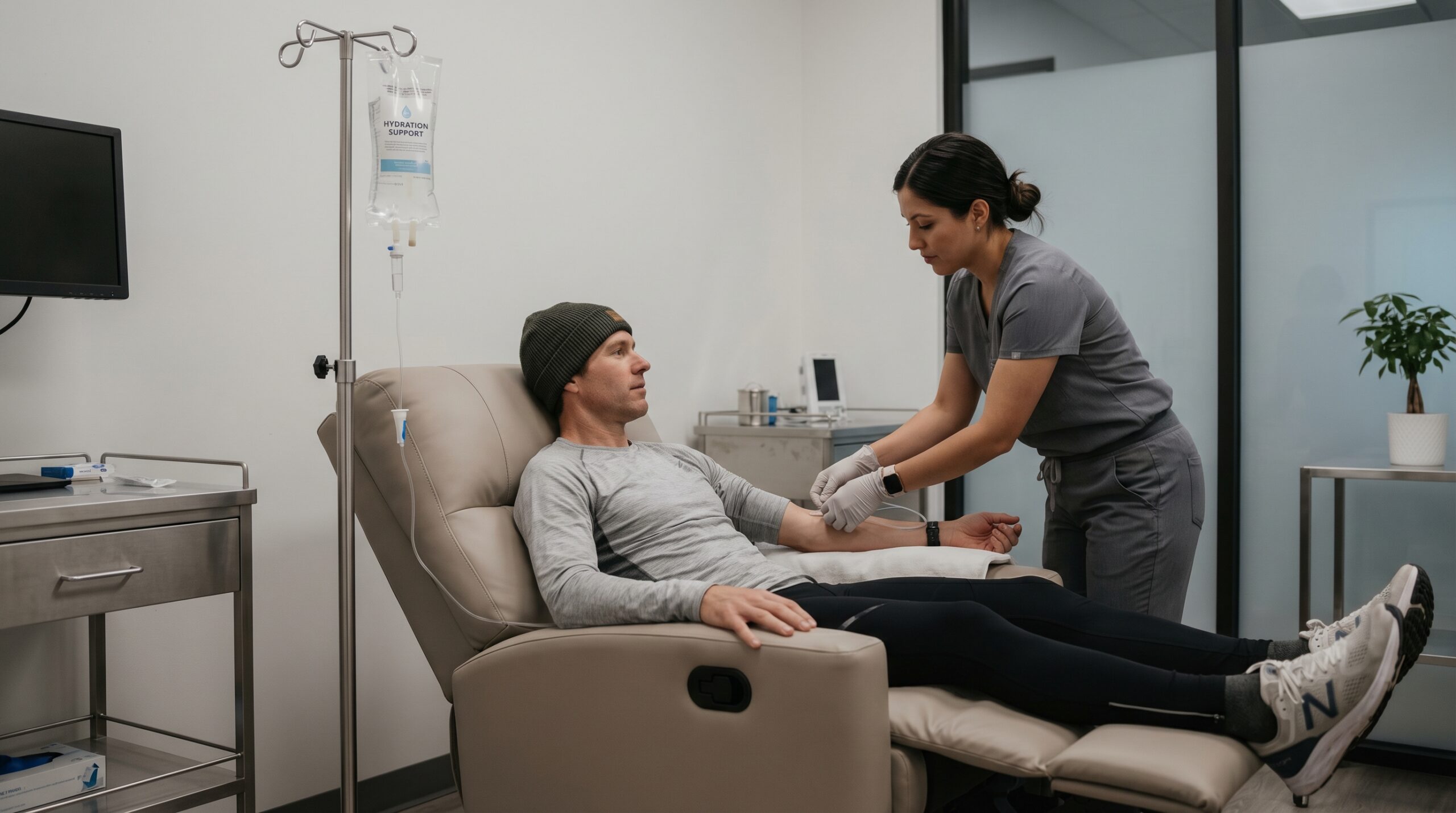
Athletes push their bodies hard, which means hydration, nutrient status, and recovery can make the difference between a strong performance and a disappointing one. IV therapy for athletes is often marketed as a fast way to rehydrate, reduce fatigue, and bounce back from intense training or competition. This article explains what IV therapy really does, what the research shows, who it may help, and how to use it safely as part of a broader performance and recovery strategy.
IV therapy for athletes involves delivering fluids, electrolytes, and sometimes vitamins, amino acids, and antioxidants directly into a vein. It may help speed rehydration after significant fluid loss, support recovery in certain situations, and provide an option for athletes who cannot keep fluids down. For most healthy athletes who can drink normally, well planned oral hydration and nutrition remain the foundation, and IV therapy is best reserved for targeted, medically supervised use. Learning more about how IV therapy works can help clarify where it fits into training and recovery.
What is IV therapy for athletes?
IV therapy for athletes is a medical procedure in which a healthcare professional inserts a small catheter into a vein and infuses a sterile solution of fluids and nutrients. The goal is usually one of three things: rapid rehydration, targeted nutrient replenishment, or support during recovery after intense exercise or competition.
Unlike oral fluids and supplements that must pass through the digestive system, IV infusions deliver ingredients directly into the bloodstream. This bypasses variable gut absorption and can restore circulating fluid volume more quickly in the short term compared with drinking alone (Performance Benefits of Rehydration With Intravenous Fluid and Oral Glycerol, Montner et al., 2012). However, research in sports medicine shows that for most healthy, non-collapsed athletes, IV fluids do not consistently improve performance compared with well planned oral hydration (Intravenous Fluids in Athletes, McDermott et al., 2017).
How does IV therapy support hydration and performance?
For athletes, the most common reason to consider IV therapy is significant fluid and electrolyte loss from heavy sweating, especially in hot or humid environments. Dehydration of about 2 percent of body weight can begin to impair endurance performance, and greater losses can affect cognition, power output, and heat tolerance (Intravenous Fluids in Athletes, McDermott et al., 2017). When dehydration is severe or an athlete cannot tolerate oral fluids, IV therapy may help restore fluid balance more rapidly.

In simple terms, IV hydration can quickly expand plasma volume, the liquid portion of blood. This may temporarily support:
- Cardiovascular stability, by maintaining blood pressure and stroke volume
- Thermoregulation, by supporting skin blood flow and sweating
- Delivery of oxygen and nutrients to working muscles
In one small study of endurance-trained cyclists who were dehydrated by about 4 percent of body weight, rehydration strategies that included IV fluids improved 40 km time-trial performance by roughly 3.5 percent compared with a basic oral-only regimen (Performance Benefits of Rehydration With Intravenous Fluid and Oral Glycerol, Montner et al., 2012). Oral glycerol plus fluids produced a similar benefit, and combining IV fluid with glycerol improved fluid retention the most, although this did not translate into extra performance gains beyond the other enhanced strategies.
At the same time, controlled trials comparing IV and oral hydration in non-collapsed athletes generally find no clear performance advantage for IV fluids when total fluid replacement is matched. Time to exhaustion, heart rate, core temperature, and heat tolerance are usually similar whether athletes rehydrate orally or intravenously (Intravenous Fluids in Athletes, McDermott et al., 2017). Many athletes also report lower perceived exertion and better comfort with oral rehydration, making it similar in effect to approaches discussed in hydration IV treatment guidance.
Common ingredients in athlete-focused IV drips
While the exact formulation should always be tailored by a qualified provider, many athlete-focused IV drips include a mix of fluids, electrolytes, vitamins, amino acids, and antioxidants. Typical components include:
Fluids and electrolytes
- Isotonic saline or balanced crystalloid solutions to replace fluid volume and support circulation.
- Sodium and chloride to help maintain plasma volume and nerve conduction.
- Potassium for muscle contraction and prevention of low potassium levels, which can cause weakness or arrhythmias when severe.
- Magnesium to support muscle relaxation, nerve function, and energy metabolism; low magnesium is associated with muscle cramps and fatigue in some athletes (Magnesium and Exercise, Nielsen, 2010).
B vitamins for energy metabolism
- B-complex vitamins (such as B1, B2, B3, B5, B6, and B12) support carbohydrate and fat metabolism and red blood cell production. Adequate B vitamin status is important for maintaining energy production during prolonged exercise (B Vitamins and Exercise, Woolf & Manore, 2006).
Amino acids and recovery support
- Glutamine and arginine are sometimes used to support muscle protein turnover, immune function, and blood flow, although evidence for performance benefits from IV delivery in healthy athletes is limited.
- Branched-chain amino acids (BCAAs) may help reduce perceived muscle soreness and support muscle protein synthesis when combined with adequate protein intake (Branched-chain amino acids and exercise, Shimomura et al., 2004).
Antioxidants and immune support
- Vitamin C plays roles in collagen synthesis, immune function, and antioxidant defense. Regular dietary intake is important for active individuals, and high-dose IV vitamin C is being studied in various contexts, although robust data in healthy athletes are limited (Exercise and Vitamin C, Braakhuis, 2011).
- Glutathione, a key intracellular antioxidant, is sometimes added to drips aimed at reducing oxidative stress. Evidence for performance enhancement in healthy athletes is still emerging.
It is important to remember that most athletes can meet their micronutrient and amino acid needs through a balanced diet and targeted supplementation. IV delivery may be considered when rapid repletion is needed or when gastrointestinal tolerance is an issue, but it is not a substitute for overall nutrition.
When might IV therapy be appropriate for athletes?
Sports medicine organizations emphasize that IV therapy is a medical intervention, not a routine performance hack. The Australian Institute of Sport outlines several clear indications for IV fluids in athletes, primarily in acute or serious situations (Intravenous fluid use in elite athletes, AIS Consensus Statement, 2020):
- Severe dehydration with symptoms such as confusion, inability to keep fluids down, or signs of circulatory compromise.
- Exertional heat illness, including heat stroke or severe heat exhaustion where rapid cooling and circulatory support are needed.
- Hypovolemia from trauma, such as significant blood loss or fluid loss after injury.
- Administration of medications that must be given intravenously in an acute setting.
Outside of emergencies, IV therapy may be considered in select athletes who:
- Have a documented history of severe cramping or heat illness despite optimized oral strategies.
- Struggle with gastrointestinal upset that limits their ability to drink or eat around competition.
- Train or compete in extreme environments where fluid losses are very high and rapid rehydration is clinically justified.
Even in these cases, guidelines recommend careful risk benefit assessment, documentation, and adherence to anti doping rules rather than routine, pre event use for convenience (Intravenous fluid use in elite athletes, AIS Consensus Statement, 2020). Many of these considerations overlap with guidance in athletic recovery IV therapy resources.
What does the science say about IV therapy and performance?
Evidence around IV therapy for athletes is nuanced. Some key findings from peer reviewed research include:
Hydration and performance thresholds
Dehydration of about 2 percent of body weight can impair endurance performance, with greater losses progressively affecting aerobic capacity, anaerobic power, and cognitive function (Intravenous Fluids in Athletes, McDermott et al., 2017). Preventing this level of dehydration is important, but this does not automatically mean IV fluids are required. For most athletes, structured drinking before, during, and after exercise can maintain hydration within acceptable limits.
IV versus oral rehydration
Multiple studies have compared IV and oral rehydration after induced dehydration. In general, IV fluids restore plasma volume more quickly in the first few minutes, but when athletes resume exercise, performance outcomes such as time to exhaustion, heart rate, core temperature, and perceived exertion are similar between IV and oral strategies (Intravenous Fluids in Athletes, McDermott et al., 2017). Many athletes also report feeling more comfortable and less thirsty when rehydrating orally.
The 2012 cycling study mentioned earlier found that enhanced rehydration strategies, including IV fluids and oral glycerol, improved performance compared with basic oral fluids alone after 4 percent dehydration. However, the combination of IV plus glycerol did not provide additional performance benefit beyond either strategy alone, even though it produced the greatest plasma volume expansion (Performance Benefits of Rehydration With Intravenous Fluid and Oral Glycerol, Montner et al., 2012). This suggests that more fluid retention does not always equal more performance.
Muscle cramps and heat illness
Exercise associated muscle cramps are now thought to be driven largely by neuromuscular fatigue rather than fluid or electrolyte loss alone, although a subset of athletes with very high sweat sodium losses may be more fluid sensitive (Intravenous Fluids in Athletes, McDermott et al., 2017). There are currently no high quality trials showing that routine pre event IV hydration prevents cramps or heat illness in otherwise healthy athletes. Surveys of college and professional football programs show that some teams do use pregame IV hyperhydration, mainly to prevent cramps and heat illness, but complications are not rare and perceived team wide performance benefits are modest (Pregame Intravenous Fluid Hyperhydration in NCAA Football, Yeargin et al., 2019).
Overall, the scientific consensus is that IV therapy should not replace evidence based hydration and cooling strategies. It may have a role in specific, higher risk athletes under medical supervision, but it is not a universal solution.
Risks and safety considerations of IV therapy
Although IV therapy is common in hospitals and clinics, it is still an invasive procedure with potential risks. These include:

- Infection at the insertion site or, rarely, systemic infection.
- Vein irritation or thrombophlebitis, which can be painful and may require treatment.
- Infiltration or extravasation, where fluid leaks into surrounding tissue instead of the vein.
- Bleeding or bruising at the insertion site.
- Air embolism, a rare but serious complication if air enters the bloodstream.
- Fluid overload, particularly in people with heart, kidney, or certain endocrine conditions.
- Allergic reactions to components in the IV solution.
Because of these risks, IV therapy for athletes should be performed only by trained healthcare professionals in an appropriate setting, using sterile technique and careful screening. Athletes with chronic medical conditions, those taking medications, or those with a history of heart or kidney disease should discuss IV therapy with their medical provider before proceeding.
Anti-doping rules and IV therapy
Competitive athletes must also consider anti doping regulations. The World Anti Doping Agency (WADA) prohibits IV infusions of more than 50 mL per 6 hour period in most situations, unless they are received in a hospital, surgical, or clinical setting, or are part of a legitimate medical treatment that qualifies for a Therapeutic Use Exemption (World Anti Doping Code, International Standard Prohibited List, WADA, 2025).
The Australian Institute of Sport consensus statement stresses that sports physicians and support staff must ensure that any IV fluid use is medically justified, carefully documented, and compliant with the World Anti Doping Code (Intravenous fluid use in elite athletes, AIS Consensus Statement, 2020). Athletes who compete in sanctioned events should always check with their team doctor or anti doping officer before receiving IV therapy, even in a wellness or spa environment.
How athletes can build a smart hydration and recovery plan
Whether or not IV therapy is part of your routine, a structured approach to hydration and recovery will do more for performance than any single intervention. Key steps include:
1. Know your sweat rate
Weigh yourself before and after a typical training session, accounting for any fluids consumed. Each kilogram of body mass lost is roughly equivalent to one liter of fluid loss. This helps you estimate how much you need to drink before, during, and after exercise to limit dehydration to about 2 percent of body weight or less.
2. Plan fluids and electrolytes
Use your sweat rate to guide a personalized drinking plan. In many cases, this means starting exercise well hydrated, sipping during activity based on thirst and conditions, and replacing about 125 to 150 percent of fluid lost in the hours after training using water and electrolyte containing drinks (American College of Sports Medicine Position Stand on Exercise and Fluid Replacement, Sawka et al., 2007).
3. Prioritize nutrition and sleep
A balanced diet that provides adequate energy, carbohydrates, protein, and micronutrients is the foundation of recovery. Sleep of 7 to 9 hours per night supports hormonal balance, muscle repair, and cognitive performance. IV nutrients cannot compensate for chronic under fueling or sleep deprivation.
4. Use IV therapy judiciously
If you and your healthcare provider decide that IV therapy fits your situation, treat it as one tool in a broader plan, not a shortcut. Discuss your training load, medical history, medications, and competition schedule. Make sure the formulation is appropriate, the provider is qualified, and any anti doping implications are understood if you compete in regulated sport.
FAQ
How often should athletes get IV therapy?
There is no one size fits all schedule for IV therapy. Frequency depends on your training load, medical history, environment, and how well you tolerate and respond to oral hydration and nutrition. Many healthy athletes do not need routine IV therapy at all and can meet their needs through fluids, food, and recovery habits. If IV therapy is used, it should be based on an individualized assessment by a healthcare professional rather than a fixed weekly or pre event protocol.
Can IV therapy replace drinking water and sports drinks?
No. IV therapy is not a replacement for daily hydration and nutrition. Even if you occasionally use an IV drip, you still need to drink water and, when appropriate, electrolyte containing beverages before, during, and after exercise. Oral fluids support normal thirst mechanisms and gut function, and for most athletes they are sufficient to maintain performance when used correctly.
Is IV therapy safe for all athletes?
IV therapy is generally safe when performed by trained professionals, but it is not appropriate for everyone. Athletes with heart disease, kidney problems, uncontrolled high blood pressure, or certain endocrine conditions may be at higher risk of fluid overload or electrolyte disturbances. There is also a small risk of infection, vein irritation, and other complications for any IV. Always review your medical history with a qualified provider before starting IV therapy.
Does IV therapy help with muscle cramps?
Current evidence suggests that most exercise associated muscle cramps are primarily related to neuromuscular fatigue rather than fluid or electrolyte loss alone (Intravenous Fluids in Athletes, McDermott et al., 2017). While IV fluids may help in athletes who are severely dehydrated or have very high sweat sodium losses, there are no strong data showing that routine pre event IV hydration reliably prevents cramps. Training adjustments, conditioning, and tailored oral hydration strategies are usually the first steps.
Can competitive athletes use IV therapy without breaking anti-doping rules?
It depends on the volume, context, and governing body. WADA prohibits most IV infusions above 50 mL per 6 hours unless they are part of a legitimate medical treatment in a hospital or similar setting, or covered by a Therapeutic Use Exemption (World Anti Doping Code, International Standard Prohibited List, WADA, 2025). If you compete in sanctioned events, discuss any planned IV therapy with your team doctor or anti doping officer before proceeding.
This blog post is intended for informational purposes only and should not be considered medical advice. Always consult a healthcare professional before making changes to your health routine.
Leave a Reply