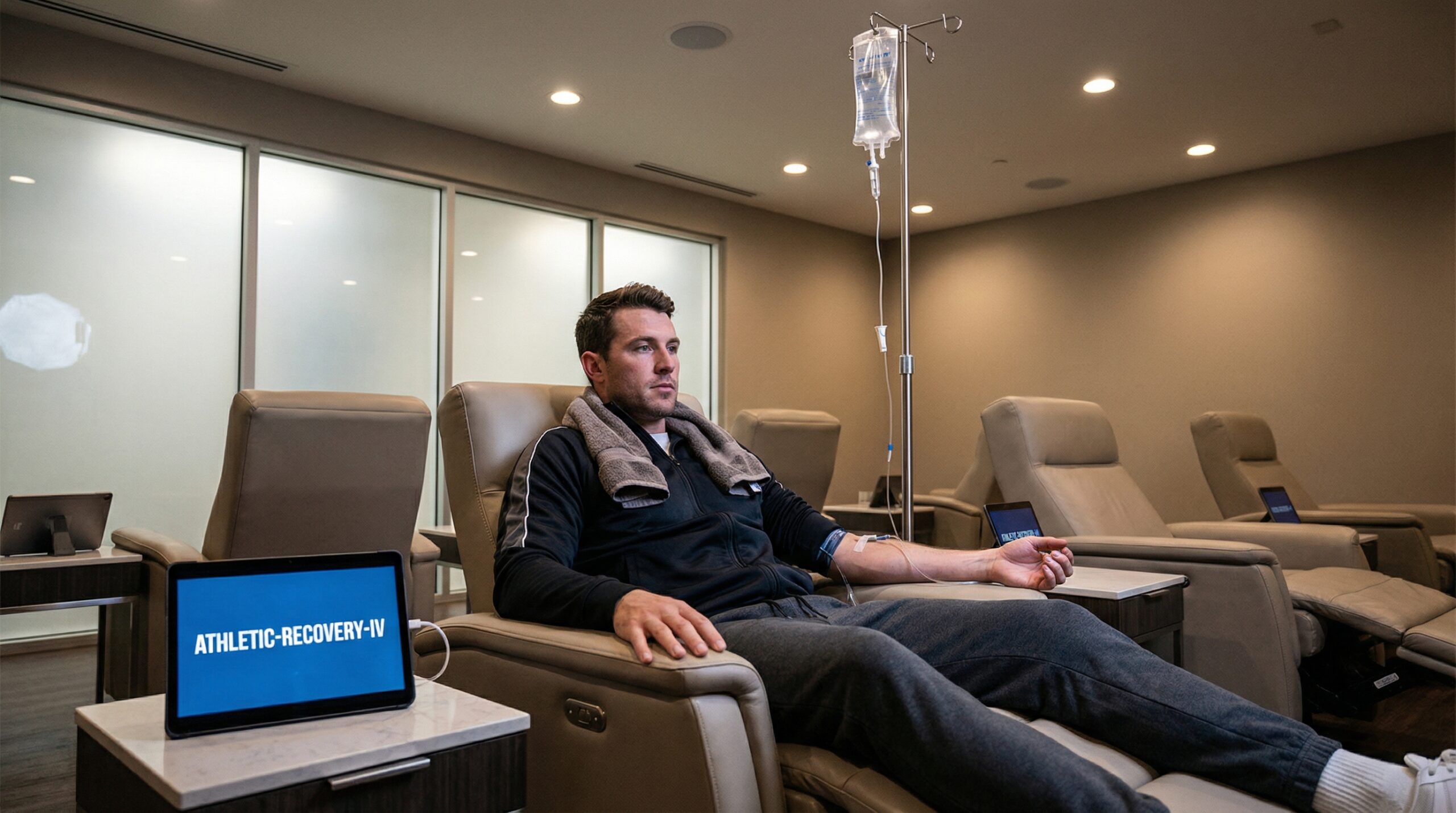
Athletes and active people put their bodies under constant stress. Training, games, races, and long gym sessions can leave you dehydrated, sore, and mentally drained. Athletic recovery IV therapy is designed to help you bounce back faster by delivering fluids, electrolytes, vitamins, minerals, and amino acids directly into your bloodstream so your body can recover more efficiently.
This guide is for athletes, weekend warriors, and highly active individuals who want to understand how IV recovery drips work, what is in them, what the science actually says, and how to decide if they fit into your overall training and wellness plan.
What is athletic recovery IV therapy?
Athletic recovery IV therapy is an intravenous drip that delivers a blend of fluids, electrolytes, vitamins, minerals, and sometimes amino acids directly into a vein to support hydration, muscle recovery, energy production, and overall post‑workout repair. Because the infusion bypasses the digestive system, nutrients become available in the bloodstream more quickly than with oral supplements or sports drinks, which may help athletes rehydrate faster, reduce soreness, and return to training sooner when used alongside proper nutrition, rest, and a structured training program (Intravenous rehydration in exercise and recovery, Maughan et al., 2016).
In simple terms, athletic recovery IV therapy is a post‑workout or post‑event drip that helps you rehydrate and replenish key nutrients quickly so your muscles, nervous system, and immune system can recover more efficiently between efforts.

How does athletic recovery IV therapy support hydration and performance?
Dehydration and electrolyte loss are two of the biggest performance killers for athletes. Even mild dehydration of around 2% of body mass can impair endurance, cognitive performance, and thermoregulation (Exercise and fluid replacement, Sawka et al., 2007). Athletic recovery IV therapy targets this problem directly.
Direct hydration through the bloodstream
During an IV session, a sterile solution such as normal saline or lactated Ringer’s is infused directly into your vein. This fluid enters the bloodstream immediately, which can restore circulating volume and correct dehydration faster than oral intake in certain situations, for example after prolonged or intense exercise with significant fluid loss (Fluid and electrolyte needs for training, American College of Sports Medicine, 2016).
Oral hydration is still essential day to day, but IV hydration can be a strategic tool when you need rapid rehydration after heavy sweating, long tournaments, or endurance events.
Electrolytes for muscle and nerve function
Athletic recovery IV drips typically include electrolytes such as sodium, potassium, magnesium, and sometimes calcium. These minerals are critical for:
- Muscle contraction and relaxation
- Nerve signal transmission
- Maintaining fluid balance between cells and blood
- Supporting normal heart rhythm
Sodium and potassium losses through sweat can be substantial in hot conditions or long‑duration exercise. Replacing them helps reduce cramping risk and supports sustained performance (Electrolytes and hydration in sports nutrition, Shirreffs, 2011).
Energy‑supporting B vitamins
Many athletic IV formulas contain a B‑complex blend, which may include vitamins B1, B2, B3, B5, B6, and B12. B vitamins act as coenzymes in energy metabolism, helping your body convert carbohydrates, fats, and proteins into usable energy (B vitamins and exercise, Woolf and Manore, 2006). Adequate B vitamin status is particularly important for athletes with high energy expenditure or restricted diets.
What nutrients are commonly included in athletic recovery IV therapy?
While exact blends vary, most athletic recovery IV therapy protocols are built around three pillars: rehydrate, replace, and repair. Below are some of the most common ingredients and why they are used.
Fluids and electrolytes
- Normal saline or lactated Ringer’s for fluid volume and rapid rehydration.
- Sodium to support fluid balance and blood pressure.
- Potassium for muscle contraction and nerve function.
- Magnesium which is involved in over 300 enzymatic reactions including muscle and nerve function and may help reduce cramping in individuals with low magnesium status (Magnesium in exercise and sports performance, Volpe, 2015).
Vitamins for recovery and immune support
- B‑complex vitamins to support energy production and red blood cell formation.
- Vitamin C as an antioxidant and cofactor for collagen synthesis, which is important for connective tissue repair and immune support (Vitamin C and immune function, Carr and Maggini, 2017).
Amino acids and performance nutrients
Some athletic recovery IV therapy blends add amino acids or related compounds to support muscle repair and cellular energy:
- Branched‑chain amino acids (BCAAs) such as leucine, isoleucine, and valine, which are involved in muscle protein synthesis and may help reduce exercise‑induced muscle damage and soreness in some athletes (Branched‑chain amino acid supplementation and exercise, Negro et al., 2008).
- Glutamine, an amino acid that plays roles in immune function and gut integrity and may be depleted after intense exercise, although evidence for supplementation benefits is mixed (Glutamine and immune function in athletes, Castell and Newsholme, 1997).
- Taurine, which is involved in osmoregulation and muscle function and is commonly used in performance formulations (Taurine and skeletal muscle function, Schaffer et al., 2010).
- L‑carnitine, which helps transport fatty acids into mitochondria for energy production and has been studied for potential effects on recovery and reduced muscle soreness (L‑carnitine supplementation in recovery from exercise, Fielding et al., 2011).
Antioxidants
High‑intensity or long‑duration exercise increases oxidative stress, which can contribute to muscle fatigue and delayed recovery. Athletic recovery IV therapy may include antioxidants such as:
- Vitamin C, which helps neutralize free radicals generated during exercise and supports immune function (Vitamin C and exercise‑induced oxidative stress, Nikolaidis et al., 2012).
- Glutathione, a major intracellular antioxidant that protects cells from oxidative damage; IV glutathione is sometimes used as part of athletic recovery protocols, although human performance data are still limited (Glutathione in health and disease, Wu et al., 2004).
What are the potential benefits of athletic recovery IV therapy?
Athletic recovery IV therapy is not a replacement for training, nutrition, or sleep, but it may provide several complementary benefits when used appropriately.

1. Faster rehydration after intense effort
After heavy sweating, restoring plasma volume quickly can help normalize heart rate, blood pressure, and temperature regulation. Research suggests that intravenous rehydration can restore plasma volume and correct dehydration more rapidly than oral fluids in some post‑exercise scenarios (Intravenous vs oral rehydration after exercise, Maughan and Leiper, 1999). For athletes who need to compete again within hours, this speed can be valuable.
2. Reduced muscle soreness and fatigue
By combining fluids, electrolytes, and recovery‑focused nutrients, athletic recovery IV therapy may help reduce perceived soreness and fatigue, which can support a quicker return to training. Amino acids, magnesium, and antioxidants are often included for this reason, although individual responses vary and high‑quality randomized trials in athletic populations are still limited (Nutritional strategies to reduce muscle damage and soreness, Owens et al., 2019).
3. Support for immune function during heavy training
Intense, prolonged training blocks can temporarily suppress aspects of the immune system, increasing susceptibility to upper respiratory infections in some athletes (Exercise and immune function, Nieman and Wentz, 2019). Nutrients such as vitamin C, zinc, and glutamine play roles in immune defense, and IV therapy may help correct deficiencies or support adequate intake when dietary intake is suboptimal.
4. More consistent training with less downtime
For many athletes, the biggest advantage of athletic recovery IV therapy is not a single dramatic effect but more consistent training. If you are better hydrated, less sore, and recovering efficiently, you may be able to maintain higher training volumes or frequencies with fewer forced rest days. Over time, that consistency often matters more than any single session.
Is athletic recovery IV therapy safe?
When administered by trained medical professionals using sterile technique and appropriate screening, IV therapy is generally considered safe for healthy individuals. However, it is still a medical procedure and not risk‑free.
Potential risks and side effects
Possible side effects can include:
- Bruising or discomfort at the IV site
- Vein irritation or inflammation
- Infection at the insertion site
- Allergic reactions to ingredients
- Fluid overload in susceptible individuals
- Electrolyte imbalances if doses are inappropriate
People with kidney disease, heart failure, or certain endocrine conditions may be at higher risk of complications from IV fluids or specific nutrients and should only receive IV therapy under direct medical supervision, if at all (Guidelines for intravenous fluid therapy, NICE, 2013).
Who should avoid or be cautious with IV therapy?
You should speak with a healthcare professional before trying athletic recovery IV therapy if you:
- Have kidney disease or reduced kidney function
- Have heart failure or significant heart disease
- Have uncontrolled high blood pressure
- Are pregnant or breastfeeding
- Have a history of severe allergic reactions
- Take medications that affect fluid or electrolyte balance
Competitive athletes should also be aware that some sports governing bodies regulate the volume and timing of IV infusions. Always check your organization’s rules before scheduling large‑volume IV therapy around competitions (World Anti‑Doping Agency Prohibited List, WADA, 2024).
How does athletic recovery IV therapy compare with traditional recovery methods?
IV therapy is only one piece of the recovery puzzle. It works best when integrated with proven, foundational strategies.
Core recovery strategies that still matter most
- Nutrition: Adequate calories, protein, carbohydrates, and healthy fats to support training and repair.
- Hydration: Daily water and electrolyte intake matched to your sweat rate and environment.
- Sleep: 7 to 9 hours per night for most adults, which is critical for hormonal balance, tissue repair, and cognitive function (Sleep and athletic performance, Fullagar et al., 2015).
- Periodized training: Planned hard and easy days to avoid overtraining.
- Active recovery: Light movement, stretching, and mobility work.
Athletic recovery IV therapy is best viewed as an adjunct that may give you an extra edge in specific situations such as tournament weekends, long races, travel‑heavy schedules, or peak training blocks.
When IV therapy may be especially useful
- Back‑to‑back games or events with limited time to rehydrate and refuel.
- Endurance events such as marathons, triathlons, or long cycling races.
- High‑intensity training blocks where recovery windows are short.
- Training or competing in hot, humid environments with heavy sweating.
- Periods of illness or travel where appetite and oral intake are reduced.
What does an athletic recovery IV therapy session look like?
Although details vary by provider, most sessions follow a similar structure.
1. Pre‑session consultation
You complete a health questionnaire and discuss your goals, recent training, and any medical conditions or medications with a qualified provider. This helps determine whether IV therapy is appropriate for you and which formulation makes sense.
2. IV placement and infusion
A nurse or other licensed clinician inserts a small IV catheter, usually into a vein in your arm or hand. The athletic recovery IV therapy blend is connected and allowed to drip in over 30 to 60 minutes while you relax in a chair or recliner.
3. Monitoring and aftercare
Your vital signs and comfort are monitored during the session. After the infusion, the IV is removed and you are typically observed briefly before leaving. You can usually return to normal activities right away, although intense exercise is often best scheduled after you have had time to eat, rehydrate orally, and listen to how your body feels.
How often can you get athletic recovery IV therapy?
There is no one‑size‑fits‑all schedule. Frequency depends on your training volume, health status, goals, and how you respond.
- Occasional use: After major events such as marathons, triathlons, tournaments, or very long training days.
- Short‑term blocks: Weekly or bi‑weekly during particularly demanding training phases.
- As needed: When you feel unusually depleted, are traveling, or recovering from illness.
Because IV therapy involves direct access to your bloodstream and concentrated nutrients, it should not be used excessively or as a replacement for daily hydration and nutrition. A clinician can help you design a schedule that fits safely within your broader recovery plan.
How to decide if athletic recovery IV therapy is right for you
Choosing whether to add IV therapy to your routine comes down to your goals, your current recovery strategies, and your health profile.
Questions to ask yourself
- Am I consistently struggling with hydration, cramping, or post‑workout fatigue despite good nutrition and sleep?
- Do I have upcoming events where rapid turnaround between efforts is critical?
- Have I discussed IV therapy with a healthcare professional who understands my medical history and training load?
- Am I prepared to treat IV therapy as a complement to, not a substitute for, training, nutrition, and rest?
What to look for in a provider
- Licensed medical staff such as registered nurses, nurse practitioners, or physicians.
- Clear health screening and informed consent process.
- Customized formulations based on your needs, not a one‑size‑fits‑all approach.
- Clean, professional environment and use of sterile, medical‑grade supplies.
- Willingness to coordinate with your existing healthcare and training team.
Next steps: Integrating IV therapy into your recovery plan
If you are curious about athletic recovery IV therapy, start by tightening the fundamentals: optimize your hydration, nutrition, sleep, and training structure. From there, consider IV therapy as an additional tool for specific situations where you need faster recovery or more efficient rehydration.
Schedule a consultation with a qualified provider, share your training calendar and health history, and ask how an individualized IV protocol could fit into your overall performance and wellness strategy.
This blog post is intended for informational purposes only and should not be considered medical advice. Always consult a healthcare professional before making changes to your health routine.
FAQ
How long does athletic recovery IV therapy take to work?
Many people notice subjective benefits such as feeling more hydrated or less fatigued within a few hours of an IV session, since fluids and nutrients enter the bloodstream immediately. Objective recovery markers like reduced soreness or improved performance typically show up over the next 24 to 48 hours as your body uses those nutrients for repair.
Can athletic recovery IV therapy replace drinking water and eating after a workout?
No, IV therapy should not replace normal hydration or nutrition. It is a supplemental tool that can help with rapid rehydration and nutrient delivery, but you still need regular fluids, electrolytes, and balanced meals to support training, recovery, and overall health.
Is athletic recovery IV therapy allowed in competitive sports?
Some sports organizations limit the volume and timing of IV infusions, especially around competition days. If you compete under a governing body that follows anti‑doping rules, check their regulations or speak with your team physician before using IV therapy near events.
How often should an athlete get recovery IV therapy?
Frequency is highly individual. Some athletes use IV therapy only after major events, while others schedule sessions weekly or bi‑weekly during intense training blocks. A healthcare professional can help design a schedule based on your goals, workload, and medical history.
Are there side effects from athletic recovery IV therapy?
Possible side effects include bruising or discomfort at the IV site, vein irritation, infection, allergic reactions, or fluid and electrolyte imbalances, particularly in people with underlying heart or kidney conditions. This is why proper screening and professional administration are essential.
Leave a Reply