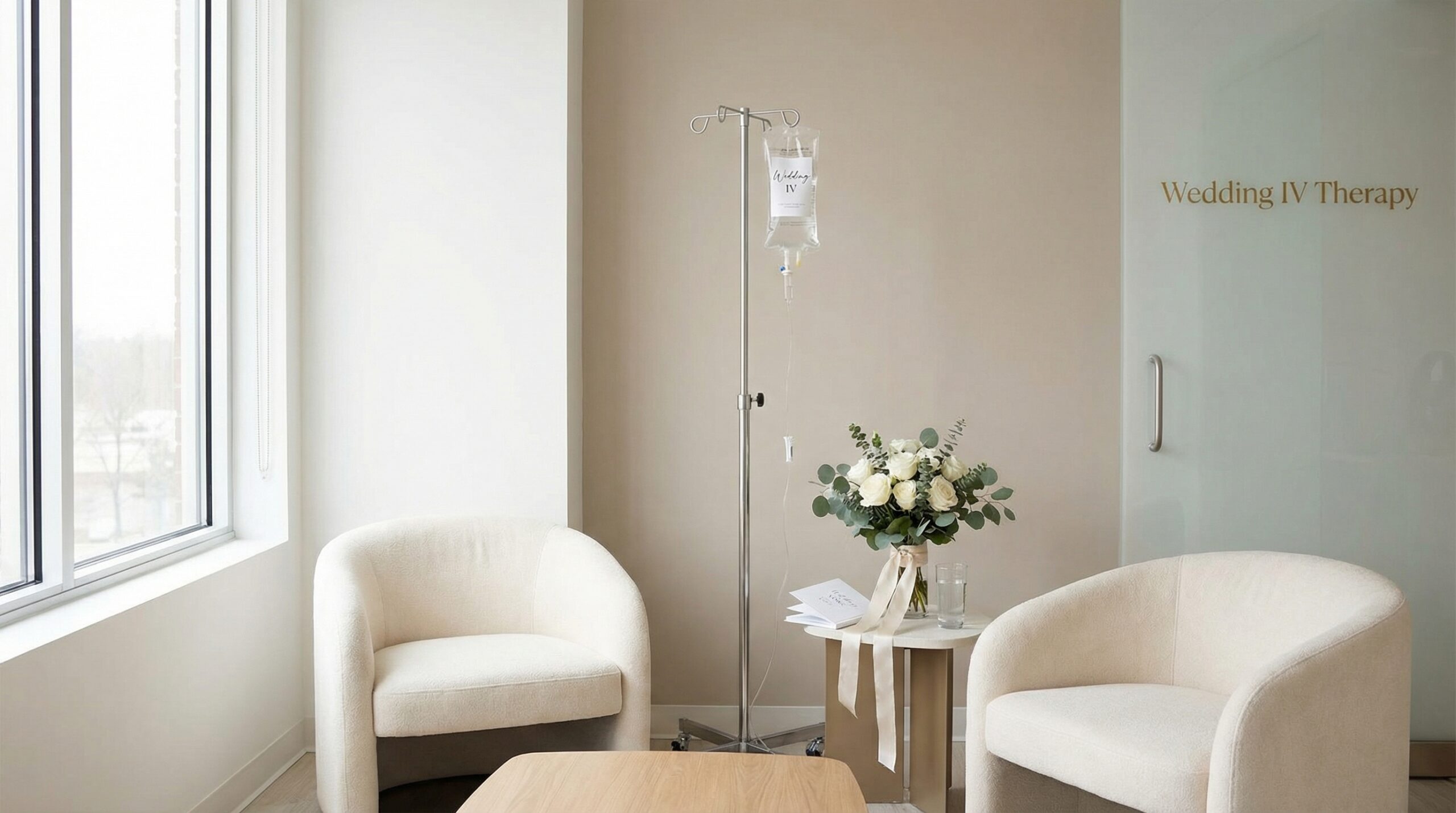
Your wedding is one of the most photographed and emotionally charged days of your life. Between planning, travel, events, and late nights, it is also one of the most exhausting. Wedding IV therapy brings medical-grade hydration and nutrients directly into your bloodstream to help you feel clear, calm, and energized when it matters most.
This guide is for brides, grooms, wedding parties, and planners who want to understand how IV hydration and vitamin drips can fit safely and realistically into a wedding wellness plan in 2026.
Wedding IV therapy is a tailored IV hydration and nutrient infusion given before or around your wedding events to support hydration, energy, and recovery. A nurse or qualified medical professional inserts a small IV line, then administers a fluid bag that may include electrolytes, B vitamins, vitamin C, and other nutrients, which enter your bloodstream directly and may work faster than oral supplements for short-term support. It is not a replacement for sleep, nutrition, or medical care, but it can be one tool in a broader wedding wellness strategy.
What is Wedding IV therapy?
Wedding IV therapy is a customized IV drip service designed around the needs of couples and wedding parties. It focuses on hydration, key vitamins, and gentle recovery support so you can handle a packed schedule of showers, fittings, travel, bachelor and bachelorette events, and the wedding day itself.
IV therapy delivers fluids and nutrients directly into a vein, bypassing the digestive system. This allows 100 percent of the infused dose to reach the bloodstream, which can lead to faster increases in blood levels compared with oral intake, especially for hydration and certain vitamins (“Parenteral versus enteral fluid therapy”, Myburgh & Mythen, 2013). The exact ingredients, doses, and timing should always be personalized by a qualified provider.

Why couples are adding IV therapy to their wedding plans
Modern wellness is shifting toward prevention, personalization, and performance. Many people now see weddings not just as a single day, but as a multi-week or multi-month season that includes travel, events, and photo sessions. This mirrors broader wellness trends where people seek proactive support for energy, mood, immunity, and recovery rather than waiting for problems to appear (“Future of Wellness”, McKinsey Health Institute, 2022).
Within this context, Wedding IV therapy appeals to couples who:
- Want to feel clear-headed and energized for photos, ceremonies, and receptions
- Struggle with travel fatigue, jet lag, or busy work schedules leading up to the event
- Plan several days of celebrations and want support for hydration and recovery
- Value personalized, concierge-style wellness experiences for themselves and their wedding party
How does Wedding IV therapy work?
Wedding IV therapy follows the same basic steps as standard IV hydration, but the timing and ingredient choices are tailored to wedding-related needs.
1. Consultation and medical screening
Before any IV drip, you should complete a health questionnaire and speak with a qualified provider. This is essential to identify medical conditions, medications, or allergies that may affect your safety. Good clinics take a preventive approach and use your history to personalize your drip, similar to how functional and preventive medicine services tailor care to underlying needs (“Functional Medicine: An Operating System for Integrative Medicine”, Jones et al., 2010).
2. Personalized drip selection
For wedding-focused sessions, providers often select or customize blends that may include:
- Fluids and electrolytes such as sodium and potassium to support hydration balance, especially if you have been traveling, sweating, or drinking alcohol (“Intravenous fluid therapy in adults in hospital”, NICE Guideline, 2017). Learn more about electrolyte drips here.
- B-complex vitamins including B12 and B6, which are involved in energy metabolism and nervous system function (“Vitamin B12 Deficiency”, O’Leary & Samman, 2010).
- Vitamin C, an antioxidant that supports normal immune function and collagen formation (“Vitamin C in health and disease”, Naidu, 2003).
- Magnesium in some protocols, which plays a role in muscle and nerve function and may help with muscle tension in appropriate doses (“Magnesium in disease”, Grober et al., 2015).
The exact formulation and doses must be determined by a licensed provider who can weigh potential benefits against risks for your situation.
3. The IV session
During the session, a nurse or trained medical professional inserts a small catheter into a vein, usually in your arm or hand. The fluid bag is connected and allowed to drip in over 30 to 60 minutes on average, though times can vary based on the formulation and your circulation. Many people read, rest, or chat with friends during the infusion.
Because the nutrients and fluids enter your bloodstream directly, you bypass the variable absorption that comes with digestion. This can be helpful for people who have limited time before a big event and want short-term support for hydration or nutrient replenishment (“Parenteral nutrition in adults”, Singer et al., 2009).
4. Short-term effects and expectations
Some people report feeling more hydrated, clear-headed, or energized in the hours after an IV, while others notice subtler changes. The effects depend on your baseline status, sleep, stress, and overall health. IV therapy is not a substitute for a healthy lifestyle, and results are not guaranteed.
It is important to see Wedding IV therapy as one tool among many: sleep, balanced meals, movement, and stress management still do most of the work when it comes to how you look and feel.
Is Wedding IV therapy safe?
IV therapy is a medical procedure, and like any procedure it carries potential risks. When provided under appropriate medical supervision and with proper screening, it can be safe for many people, but it is not suitable for everyone. Learn more about safety here.
Potential risks and side effects
Common, usually mild side effects can include:
- Temporary discomfort or bruising at the IV site
- A feeling of coolness in the arm during the infusion
- Metallic taste in the mouth with some nutrients
Less common but more serious risks can include infection at the IV site, vein irritation, fluid overload in susceptible individuals, and allergic reactions to components of the drip (“Complications of peripheral intravenous therapy”, Rickard et al., 2012). This is why medical screening and trained staff are essential.
People with kidney disease, heart failure, certain electrolyte imbalances, or complex medical conditions may not be appropriate candidates for IV therapy. Always disclose your full medical history and medications, and follow your provider’s guidance.
How to choose a safe Wedding IV therapy provider
Look for clinics that:
- Operate under medical oversight by a physician or nurse practitioner
- Use licensed nurses or similarly qualified clinicians to start IVs
- Perform in-depth health screening and do not rush you into treatment
- Source sterile, pharmacy-grade ingredients and follow infection control standards
- Are comfortable explaining what is in your drip and why it is recommended for you
In 2026, many people actively seek medically supervised wellness services because they want both results and safety. This aligns with the broader trend toward professionally guided preventive care and longevity-focused wellness (“The rise of the wellness market”, McKinsey & Company, 2021).

When should you schedule Wedding IV therapy?
Timing is one of the most important decisions if you are considering an IV drip around your wedding.
Pre-wedding IV timing
Many couples schedule their main Wedding IV therapy session 24 to 72 hours before the ceremony. This gives time to notice how you feel, address any minor bruising at the IV site, and avoid adding another appointment on the actual wedding day.
Some people also schedule a drip earlier in the wedding season, for example a few weeks before, as part of a broader wellness reset that includes sleep, nutrition, and movement. This longer-term approach is more aligned with preventive wellness and may be easier on your schedule.
Post-event recovery IVs
Others prefer to use IV therapy after bachelor or bachelorette parties, rehearsal dinners, or the wedding itself. The focus here is usually hydration and gentle recovery support, especially if there has been alcohol, travel, or late nights. Adequate fluid and electrolyte intake is known to help maintain normal circulation and support recovery from mild dehydration (“Clinical management of dehydration”, Maughan & Leiper, 1999).
If you are planning a post-event IV, allow time the next day without tight schedules, and continue to prioritize water, balanced food, and rest alongside any IV support.
What can Wedding IV therapy help with?
Within a well-designed wedding wellness plan, IV therapy may support several practical goals.
Hydration for long wedding days
Wedding days often involve hours of standing, lights, dancing, and limited opportunities to drink water. Even mild dehydration can contribute to fatigue, headaches, and reduced cognitive performance (“Mild dehydration impairs cognitive performance”, Grandjean & Grandjean, 2007). IV hydration delivers fluids and electrolytes directly into the bloodstream, which can be useful if you are already behind on hydration or have been traveling.
This does not replace drinking water throughout the day, but it may help you start from a better baseline.
Short-term energy and focus support
B vitamins play an important role in energy metabolism and nervous system function, and deficiency can contribute to fatigue and cognitive changes (“B vitamins and the brain”, Kennedy, 2016). For people with low or borderline levels, repletion may improve how they feel over time. IV therapy can deliver these vitamins directly, which may be helpful for those with absorption issues, though evidence for performance boosts in already well-nourished individuals is limited.
Framing Wedding IV therapy as a way to support your body, rather than a guaranteed energy boost, keeps expectations realistic and grounded in physiology.
Immune and stress support before travel and gatherings
Weddings often involve air travel, crowded events, and disrupted routines. Adequate vitamin C, vitamin D, zinc, and sleep are all linked to normal immune function (“Nutrition and immune function”, Calder, 2020). Some IV drips include vitamin C and other antioxidants, which may help support normal immune responses, although they do not prevent infections on their own.
Stress management is also critical. While an IV cannot replace mindfulness, breathing exercises, or counseling, feeling physically supported and hydrated can make it easier to cope with emotional stress.
Recovery after celebrations
Alcohol, late nights, and travel can leave you feeling depleted. Hydration and electrolyte replacement are core elements of recovery from mild overindulgence (“Alcohol and dehydration”, Shirreffs, 2000). Post-event IV drips are often formulated to support fluid balance and may include B vitamins and antioxidants that participate in normal metabolic pathways.
Again, IV therapy should be seen as an adjunct to, not a replacement for, rest, hydration by mouth, and nourishing food.
How to build a realistic wedding wellness plan with IV therapy
Instead of thinking of Wedding IV therapy as a last-minute rescue, it is more helpful to integrate it thoughtfully into a broader plan that supports your health throughout the wedding season.
Step 1: Clarify your goals
Ask yourself what you truly want from IV therapy:
- To feel less drained by travel and events
- To show up clear-headed and calm for photos and ceremonies
- To support recovery after a specific event
Clear goals help your provider design a more appropriate protocol and set realistic expectations.
Step 2: Align timing with your wedding calendar
Map out your key dates: showers, parties, travel days, rehearsal, wedding, and honeymoon. Then decide where one or two IV sessions would add the most value without creating scheduling stress. Many couples choose:
- One drip 24 to 72 hours before the wedding
- An optional recovery drip the day after a major event
Step 3: Support your body between drips
IV therapy works best when combined with fundamentals:
- Consistent sleep and wind-down routines
- Balanced meals with protein, healthy fats, and colorful plants
- Daily movement and gentle exercise
- Stress management tools such as breathing, stretching, or journaling
These habits are the foundation of how you feel and look; IV therapy is an optional layer on top.
Who is Wedding IV therapy best suited for?
Wedding IV therapy may be most helpful for people who:
- Are generally healthy but under high temporary stress from planning and travel
- Want a concierge-style wellness experience for themselves or their wedding party
- Have discussed IV therapy with a provider and been cleared as appropriate candidates
It may not be appropriate for individuals with complex medical conditions, certain heart or kidney issues, or those on medications that interact with IV components. This is why individualized screening is essential.
Planning a Wedding IV therapy session with IVTherapy
If you are considering integrating IV therapy into your wedding plans, our team focuses on medically informed, personalized care. We start with a thorough consultation, review your wedding timeline, and walk you through drip options that match your goals for energy, hydration, and recovery.
We believe Wedding IV therapy works best as part of a thoughtful wellness strategy, not a quick fix. Our role is to help you understand the options, support informed decisions, and coordinate sessions so they fit smoothly into your big-week schedule.
FAQ
How far before my wedding should I get Wedding IV therapy?
Many people schedule their main Wedding IV therapy session 24 to 72 hours before the ceremony. This timing gives your body a chance to respond, allows any minor bruising at the IV site to settle, and keeps your actual wedding day free from extra appointments. Your provider can help you fine-tune the exact timing based on your schedule and health.
Can Wedding IV therapy really help with hangover symptoms after events?
IV hydration with electrolytes can support fluid balance and may ease some symptoms related to mild dehydration after drinking alcohol, such as fatigue or headache, for some people. It does not reverse the effects of heavy drinking, protect the liver, or guarantee you will feel normal immediately. Rest, oral fluids, and nutrition remain important, and the safest approach is always to drink alcohol in moderation.
Is Wedding IV therapy safe if I have a medical condition?
People with heart, kidney, or certain endocrine conditions, or those taking specific medications, may not be good candidates for IV therapy. Safety depends on your individual health status. A qualified provider should review your medical history, medications, and recent lab results if available before approving any drip. Always consult your own healthcare professional if you have a chronic condition.
Can my whole bridal party get IV drips together?
Some clinics offer group Wedding IV therapy sessions for bridal parties, which can be a convenient and enjoyable way to prepare for events. Group sessions still require individual screening for each person, and staffing must be sufficient to monitor everyone safely. Discuss your group size, timing, and health histories with the clinic in advance so they can plan appropriately.
Will Wedding IV therapy make my skin look better for photos?
Good hydration and adequate nutrient status are important for healthy skin, and some people notice a temporary improvement in skin plumpness or glow after IV hydration. However, IV therapy is not a cosmetic procedure, and it will not replace long-term skincare, sun protection, or lifestyle habits. Think of it as a potential short-term support for how you feel, with any skin benefits as a possible bonus rather than the main goal.
This blog post is intended for informational purposes only and should not be considered medical advice. Always consult a healthcare professional before making changes to your health routine.
Leave a Reply