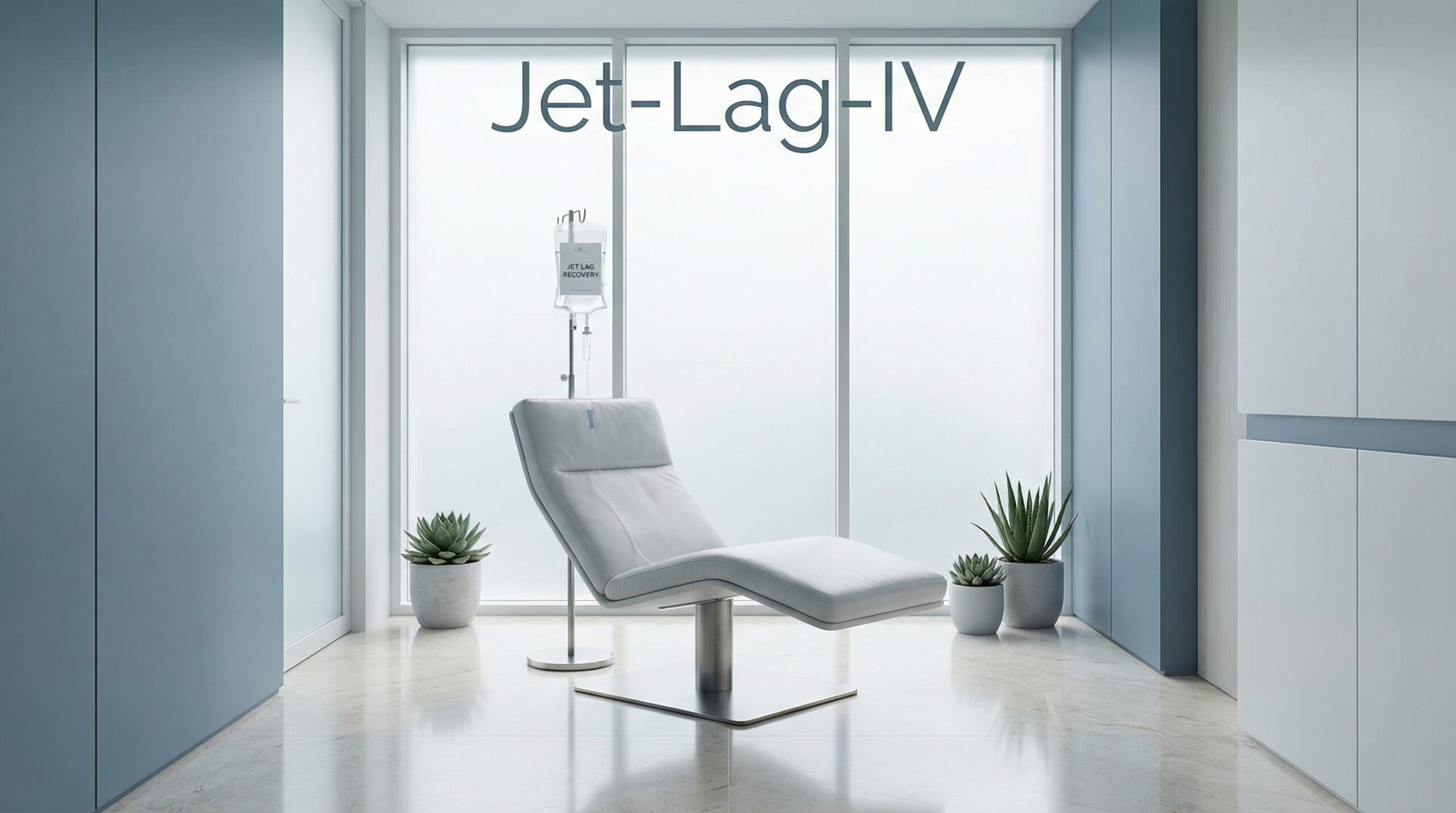
Long-haul flights can leave you exhausted, foggy, and out of sync with your new time zone, especially when you have to perform at your best soon after landing. Jet lag recovery IV treatment is designed to support hydration, energy, and overall recovery so you can feel more like yourself again while your body clock gradually adjusts.
This guide is for frequent flyers, business travelers, vacationers, and anyone curious about how IV vitamin and hydration therapy may fit into a holistic jet lag recovery plan. You will learn what jet lag really is, how IV therapy works, what is typically included in a jet lag drip, who it may be suitable for, and how to combine it with proven sleep and circadian strategies.
Jet lag recovery IV treatment is a medically supervised infusion of fluids, electrolytes, and selected vitamins delivered directly into your bloodstream to rapidly support hydration, energy metabolism, and immune function after travel. It does not cure jet lag or reset your body clock, however it may help you feel more hydrated, clear-headed, and physically recovered while you use light exposure, sleep routines, and nutrition to realign your circadian rhythm.
What is jet lag and why does it feel so intense?
Jet lag, also called circadian desynchrony, occurs when you travel quickly across at least two time zones and your internal body clock no longer matches the local time at your destination. Your circadian rhythm is regulated by a brain region called the suprachiasmatic nucleus, which responds to light and other daily cues to coordinate sleep, hormones, temperature, digestion, and alertness (Jet lag: Current and potential therapies, Sack, 2010, source).
When that rhythm is suddenly shifted by a long flight, you may experience:
- Difficulty falling asleep or staying asleep at local night
- Daytime sleepiness and low energy
- Brain fog and slower reaction times
- Headaches and irritability
- Digestive discomfort from eating at unusual times
Air travel also adds physical stress. Low cabin humidity and pressurization promote fluid loss and mild dehydration, and many travelers consume caffeine or alcohol, move very little, and eat irregularly. These factors can worsen fatigue, stiffness, and mental fogginess after a flight (Jet lag and travel fatigue: A comprehensive review, Waterhouse, 2002, source).
How can IV therapy support jet lag recovery?
IV vitamin and hydration therapy involves placing a small catheter into a vein and infusing sterile fluids with electrolytes and nutrients. Because the infusion goes directly into the bloodstream, it bypasses the digestive tract and provides nearly immediate systemic availability, which is useful when appetite is low or the gut feels unsettled after travel (Intravenous vitamin therapy: A review of its use, Naidu, 2019, source).

For jet lag recovery, IV therapy is best understood as a supportive tool rather than a cure. It does not realign your circadian rhythm, which still requires time, light exposure, and sleep scheduling. Instead, a jet lag recovery IV treatment aims to:
- Rehydrate you more rapidly than oral intake alone
- Replenish B vitamins involved in energy metabolism
- Provide vitamin C and other antioxidants that support immune function
- Correct electrolyte imbalances that may contribute to fatigue or headaches
- Include calming minerals such as magnesium that may support relaxation
By improving hydration and nutrient status, some people report feeling more alert, less heavy, and better able to function while their internal clock continues to adjust naturally.
What is in a typical jet lag recovery IV drip?
Formulations vary by provider and are tailored to individual needs, but many jet lag recovery IV treatments include a combination of the following components:
Fluids and electrolytes
A base of sterile saline or a balanced electrolyte solution helps restore circulating volume and support blood pressure, circulation, and cellular function. Mild dehydration can impair cognition, mood, and physical performance, and even a 1–2% loss of body water has been associated with reduced attention and increased fatigue (Mild dehydration impairs cognitive performance and mood, Armstrong, 2012, source).
Electrolytes such as sodium, potassium, and sometimes magnesium and calcium support nerve signaling, muscle function, and fluid balance, which are often disrupted by long flights and irregular food and fluid intake.
B-complex vitamins and vitamin B12
B vitamins play central roles in cellular energy production and nervous system function. Deficiencies or marginal intakes can contribute to fatigue and reduced cognitive performance (B vitamins and brain function, Kennedy, 2016, source).
- B-complex often includes B1, B2, B3, B5, B6, and B7 to support energy metabolism, red blood cell production, and nervous system health.
- Vitamin B12 is important for red blood cell formation and neurological function, and deficiency is linked to fatigue and cognitive changes (Vitamin B12 deficiency, O’Leary, 2010, source).
In a jet lag context, B vitamins do not override sleep loss, however they may help support normal energy pathways while you recover.
Vitamin C and immune-supportive nutrients
Airports and airplanes are crowded environments, and travel stress can temporarily affect immune defenses. Vitamin C contributes to normal immune cell function and has been studied for its role in reducing the duration and severity of common cold symptoms in some populations (Vitamin C and immune function, Carr, 2017, source).
Some jet lag IV blends may also include zinc, which is required for normal immune and cellular repair processes (Zinc in human health, Prasad, 2013, source).
Magnesium for relaxation
Magnesium is a mineral involved in hundreds of enzymatic reactions, including those related to nerve signaling and muscle relaxation. Low magnesium intake has been associated with sleep problems in some studies (Effects of magnesium supplementation on insomnia, Abbasi, 2012, source). When included in IV therapy, magnesium may help ease muscle tension and support a sense of calm, which can be helpful when trying to rest after a long flight.
Optional vitamin D or antioxidant support
Some clinics incorporate vitamin D injections or IV formulations, particularly for people with low baseline levels. Vitamin D is involved in immune regulation and has been linked to sleep quality and mood in observational studies (Vitamin D and sleep regulation, Gao, 2018, source). Antioxidants such as glutathione may also be added to support the body’s response to oxidative stress, which can increase during long flights and time zone changes, although human data specific to jet lag are limited.
When should you schedule a jet lag recovery IV treatment?
Timing can be tailored to your travel schedule and how you tend to respond to long flights. Many travelers use jet lag IV therapy in one of three ways:
- Pre-flight: 24 to 48 hours before departure to optimize hydration and nutrient status before a demanding trip.
- Post-flight: As soon as practical after landing to address dehydration, fatigue, and immune stress from the journey.
- During extended trips: Periodic sessions on long or high-intensity itineraries to help maintain hydration and general wellness.
The ideal approach depends on your health status, length and direction of travel, and the demands you will face on arrival. A consultation with a qualified provider can help you decide what fits best.
What does a jet lag IV session feel like?
Although details differ by clinic, a typical session includes several predictable steps:

1. Pre-treatment consultation
You will usually complete a health questionnaire and speak with a nurse or other licensed professional about your medical history, current medications, allergies, and travel plans. This screening helps determine whether IV therapy is appropriate and which nutrients may be most suitable for your goals.
2. IV placement and infusion
After cleaning the skin, a small IV catheter is inserted into a vein, often in the arm or hand. Most people describe this as a brief pinch. The infusion is then connected and allowed to run by gravity or pump over 30 to 60 minutes, depending on the formula and your circulation.
During the session, you can typically relax in a comfortable chair, read, listen to music, or rest. Staff monitor you and can adjust the drip rate if needed.
3. Aftercare and expectations
Many people notice a sense of improved hydration or energy within hours, although responses vary. You will be encouraged to continue drinking water, eat balanced meals, and prioritize sleep. Bruising or mild tenderness at the IV site can occur, and you should contact your provider if you notice increasing redness, warmth, or pain.
Is jet lag recovery IV treatment safe for everyone?
IV therapy is generally considered safe when administered by trained professionals who use appropriate screening and sterile technique. However, it is not suitable for everyone. People with certain heart or kidney conditions, significant blood pressure issues, a history of fluid overload, or complex medication regimens may need alternative strategies or very careful medical oversight (Guidelines for safe administration of intravenous therapy, Gorski, 2021, source).
Potential risks and side effects can include:
- Discomfort, bruising, or irritation at the insertion site
- Infection or phlebitis at the vein, although this is uncommon with proper technique
- Allergic reactions to specific vitamins or additives
- Fluid overload or electrolyte imbalances in susceptible individuals
A thorough pre-treatment assessment helps minimize these risks. Always disclose your full medical history, current medications, and any previous reactions to IV therapy or injections.
How does IV therapy fit into evidence-based jet lag management?
For lasting relief from jet lag, you still need to realign your internal clock with your new time zone. Research highlights several core strategies:
- Light exposure: Light is the strongest cue for your circadian rhythm. Timed exposure to bright light at your destination can help shift your internal clock. Morning light generally advances the clock, which is helpful after eastward travel, while evening light can delay it (Jet lag: Current and potential therapies, Sack, 2010, source).
- Melatonin: Short-term use of melatonin, taken at the appropriate local biological night, can reduce subjective jet lag and improve sleep onset in many travelers, especially after eastward flights crossing multiple time zones (Melatonin for the prevention and treatment of jet lag, Herxheimer, 2002, source).
- Sleep scheduling: Gradually shifting your sleep and wake times toward destination time before travel can reduce the magnitude of the circadian shift you experience on arrival.
- Nutrition and hydration: Regular meals and adequate fluids support more stable energy and sleep.
- Movement: Gentle exercise or walking can improve circulation and help you feel more alert during the day.
Jet lag recovery IV treatment can sit alongside these evidence-based tools as a physiological support layer. It may help you feel more hydrated and energized, which can make it easier to follow your light, sleep, and activity plan, but it does not replace them.
Who might consider jet lag recovery IV treatment?
People who may be interested in jet lag IV therapy include:
- Frequent business travelers who must perform soon after landing
- Executives and entrepreneurs with tightly scheduled trips
- Vacationers who want to maximize limited time at their destination
- Individuals who know they struggle with dehydration, poor in-flight sleep, or low appetite after travel
On the other hand, IV therapy may not be appropriate for those with certain cardiovascular, kidney, or complex chronic conditions, or during pregnancy or breastfeeding without direct medical guidance. A personalized consultation is essential to determine suitability.
How to integrate jet lag IV therapy into your travel routine
If you and your provider decide that jet lag recovery IV treatment is right for you, consider building it into a broader travel routine:
- Plan ahead: For important trips, schedule a pre-flight or immediate post-flight session in advance so it fits your itinerary.
- Prepare your body: In the days before travel, focus on hydration, regular meals, and incremental sleep schedule shifts when possible.
- Use light strategically: Upon arrival, seek natural light during your new daytime and minimize bright screens and overhead lighting close to your new bedtime.
- Support sleep: Consider evidence-based tools like melatonin under professional guidance, maintain a cool, dark sleep environment, and avoid heavy meals and alcohol late at night.
- Listen to your body: Even with IV support, allow yourself time to adjust, especially after crossing many time zones.
FAQ
How quickly does jet lag recovery IV treatment work?
Many people report feeling more hydrated or clear-headed within a few hours of an IV session, although responses vary by individual, baseline hydration, nutrient status, and the severity of sleep disruption. The IV does not instantly reset your body clock, but it may help you feel physically better while your circadian rhythm gradually adjusts over several days.
Can IV therapy completely prevent jet lag?
No. Jet lag is primarily a circadian rhythm problem caused by rapid time zone changes. IV therapy can support hydration, energy, and immune function, but it cannot fully replace strategies like timed light exposure, sleep scheduling, and, in some cases, short-term use of melatonin or other medications recommended by a healthcare professional.
Is jet lag IV treatment safe if I have medical conditions?
It depends on the condition. People with certain heart or kidney diseases, uncontrolled high blood pressure, or a history of fluid overload need careful assessment and may not be good candidates for IV therapy. Always discuss your full medical history and medications with a qualified provider before treatment so they can determine whether an IV is appropriate for you.
How long do the benefits of a jet lag IV drip last?
The sense of improved hydration and energy may last from a day to several days, depending on your ongoing sleep, activity, and fluid intake. However, if you continue to sleep poorly or ignore circadian strategies, jet lag symptoms can persist even if you feel somewhat better physically right after the infusion.
How often can I get jet lag recovery IV treatments?
Frequency should be individualized. Some frequent travelers schedule IV therapy before and after particularly demanding trips, while others reserve it for occasions when they know recovery time is short. Your provider can help you develop a schedule that considers your travel pattern, health status, and overall wellness goals.
This blog post is intended for informational purposes only and should not be considered medical advice. Always consult a healthcare professional before making changes to your health routine.
Leave a Reply