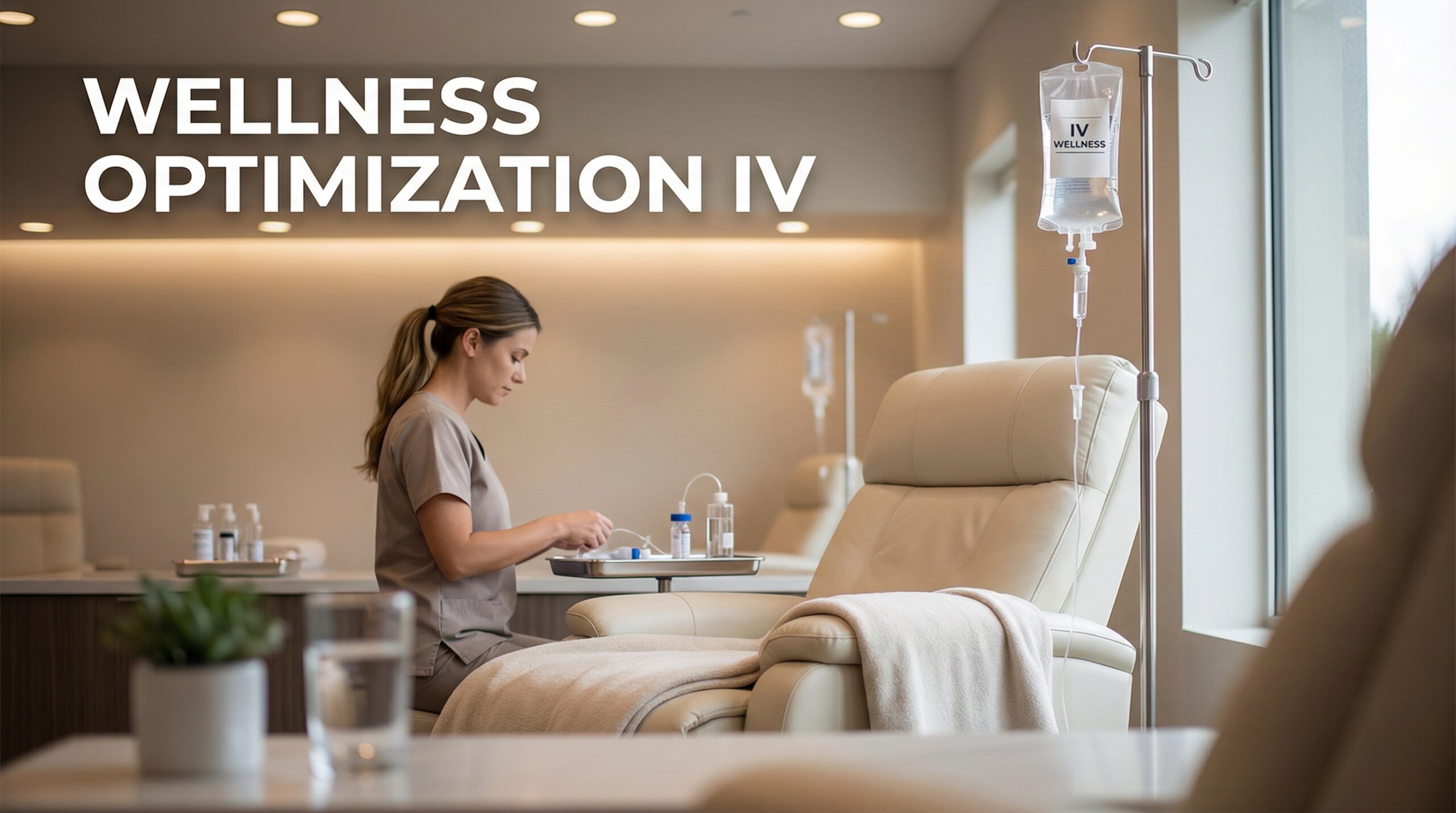
Wellness is no longer just about avoiding illness. Many people in 2025 want to feel sharper, recover faster, and age in a healthier way. A Wellness optimization IV is designed to support that goal by delivering fluids, vitamins, minerals, and antioxidants directly into your bloodstream in a calm, spa-like setting rather than a hospital.
This guide explains what a wellness-focused IV actually is, who it may help, how it compares to oral supplements, and what to expect during a session. It is written for anyone curious about using IV vitamin therapy as part of a broader plan for energy, focus, performance, or healthy aging.
A Wellness optimization IV is a personalized intravenous infusion of fluids, vitamins, minerals, and other nutrients that is designed to support specific wellness goals such as energy, focus, recovery, or skin health. Because it is delivered directly into a vein, it bypasses the digestive system and can reach higher blood levels than most oral supplements, although evidence for benefits in generally healthy people is still limited and results vary from person to person (Intravenous vitamin therapy: A review of its uses and evidence, Iglar & Hogan, 2018).
What is a Wellness Optimization IV?
In simple terms, a Wellness optimization IV is an IV drip that is built around outcomes rather than a random list of ingredients. Instead of a generic vitamin cocktail, the formulation is designed to support specific goals such as:
- Steady daytime energy and mental clarity
- Exercise performance and recovery
- Metabolic support alongside nutrition and movement
- Skin radiance and healthy aging
- Immune support during higher-stress seasons

Typical ingredients may include B vitamins for energy metabolism, vitamin C for immune support and collagen formation, magnesium for muscle and nervous system function, amino acids, and antioxidants such as glutathione (Vitamin B12 Fact Sheet, NIH, 2022; Vitamin C Fact Sheet, NIH, 2022; Magnesium Fact Sheet, NIH, 2022).
How IV delivery differs from oral supplements
When you swallow vitamins, they must pass through your stomach and intestines, then through the liver, before entering your circulation. Absorption can be affected by age, medications, digestion, and gut health. IV delivery bypasses this process and provides near-complete bioavailability of the infused nutrients (Intravenous vitamin therapy: A review of its uses and evidence, Iglar & Hogan, 2018).
For example, high-dose IV vitamin C can reach blood concentrations many times higher than oral vitamin C, which may be relevant for immune function and oxidative stress, although research in healthy individuals is still emerging (Pharmacokinetics of vitamin C: oral versus intravenous, Padayatty et al., 2004).
How can a Wellness Optimization IV support your goals?
People rarely come in asking for more magnesium. They come in asking for more energy, better focus, or healthier-looking skin. A Wellness optimization IV is structured around those outcomes, while still staying within safe, evidence-informed dosing.
1. Energy and mental clarity
Many wellness-focused IVs emphasize energy and focus. These blends often include:
- B-complex vitamins to support cellular energy production and nervous system function (Vitamin B6 Fact Sheet, NIH, 2022)
- Vitamin B12 for red blood cell formation and neurological health, particularly important for people with low dietary intake or absorption issues (Vitamin B12 Fact Sheet, NIH, 2022)
- Magnesium to support normal nerve transmission and reduce muscle tension
- Sometimes NAD+ or its precursors, which are involved in cellular energy metabolism; human data for wellness use is still limited but growing (NAD+ metabolism and aging, Verdin, 2015)
Small clinical studies suggest that IV vitamin C and multi-nutrient infusions may reduce fatigue in certain groups, such as office workers and people with chronic fatigue, although study sizes are modest and not all results are consistent (Intravenous vitamin C in the treatment of fatigue, Vollbracht et al., 2018).
2. Metabolic support and body composition
Metabolic support IVs are increasingly used alongside nutrition, movement, and sometimes medications such as GLP-1 receptor agonists. These drips may include:
- Amino acids that support muscle repair and recovery
- L-carnitine, which plays a role in fatty acid transport into mitochondria; human data for weight management is mixed and tends to show modest effects at best (Systematic review on L-carnitine and weight loss, Pooyandjoo et al., 2016)
- B vitamins and magnesium to support glucose and energy metabolism
These IVs are not weight-loss treatments on their own. They are usually positioned as supportive tools within a larger plan that includes nutrition, physical activity, sleep, and appropriate medical care.
3. Skin health, longevity, and oxidative stress
Beauty and longevity-focused IVs are among the fastest-growing segments in the wellness space. They often emphasize antioxidants and collagen-supportive nutrients, for example:
- Vitamin C for collagen synthesis and protection against oxidative stress, which contributes to skin aging (Vitamin C in human skin, Pullar et al., 2017)
- Glutathione, a major intracellular antioxidant that may influence pigmentation pathways and oxidative damage, though high-quality human data for IV glutathione in aesthetics is still limited (Glutathione and skin lightening, Watanabe et al., 2014)
- Zinc and other trace minerals that support skin integrity and immune function (Zinc Fact Sheet, NIH, 2022)
These drips are usually framed as part of a broader skincare and healthy aging routine rather than stand-alone solutions.
4. Hydration, immunity, and recovery
Hydration is one of the most immediate effects of IV therapy. IV fluids with electrolytes can rapidly restore circulating volume and support normal muscle and nerve function, which is why IV hydration is standard in hospital settings for dehydration (Adult Dehydration, Maughan & Leiper, 2018).
In wellness settings, immune-focused IVs may add vitamin C, zinc, and amino acids that support immune cell function. Some data suggests vitamin C can shorten the duration of colds slightly, especially in people under high physical stress, but it is not a cure and results vary (Vitamin C and the common cold, Hemila & Chalker, 2013).
What happens during a Wellness Optimization IV session?
Understanding the process can make the experience feel more comfortable and predictable.
1. Consultation and screening
Before any IV drip, you should complete a health intake and speak with a qualified provider. They will typically review:
- Medical history, current diagnoses, and medications
- Allergies, especially to medications or previous IV infusions
- Hydration status and cardiovascular history
- Goals, such as energy, recovery, or skin support
In some cases, bloodwork or other labs may be recommended to identify nutrient deficiencies or rule out contraindications.
2. Customizing the IV formulation
Based on your goals and health status, the provider selects a base solution, usually a sterile saline or electrolyte solution, and adds vitamins, minerals, or other nutrients in doses that fit within safety guidelines. Personalized IV nutrient therapy is increasingly common, especially when clinics integrate lab data and ongoing monitoring (Intravenous vitamin therapy: A review of its uses and evidence, Iglar & Hogan, 2018).
3. The infusion experience
During the session:
- A trained professional places a small IV catheter into a vein in your arm or hand.
- The infusion is connected and set to flow over 30 to 90 minutes in most wellness settings.
- You can usually relax, read, work on a laptop, or simply rest in a comfortable chair.

Many people report feeling more hydrated or relaxed shortly after the session, although more specific effects such as energy or skin changes may be subtler and vary between individuals.
Is a Wellness Optimization IV safe?
IV therapy is a medical procedure, so safety and realistic expectations are essential.
Common side effects
Most healthy people tolerate IV vitamin therapy well when it is administered by trained staff using sterile technique. Still, possible side effects can include:
- Mild pain, bruising, or swelling at the IV site
- Temporary lightheadedness or feeling flushed
- Metallic or vitamin taste during the infusion
These are usually short-lived, but you should report any discomfort to your provider immediately.
Less common but more serious risks
Although rare in properly supervised settings, IV therapy can carry more significant risks, including:
- Infection at the IV site or systemic infection if sterility is poor
- Phlebitis or vein irritation
- Fluid overload in people with heart, kidney, or liver conditions
- Electrolyte imbalances or nutrient toxicity, especially with fat-soluble vitamins
- Allergic or anaphylactic reactions to ingredients
These risks are part of why expert reviews emphasize careful patient selection, standardized protocols, and medical oversight, especially outside hospital environments (Intravenous vitamin therapy: A review of its uses and evidence, Iglar & Hogan, 2018).
IV therapy is not appropriate for everyone. People with uncontrolled medical conditions, certain heart or kidney diseases, clotting disorders, or pregnancy should only consider IV therapy under direct guidance from their healthcare provider.
Wellness Optimization IV vs oral supplements: when might IV make sense?
Oral nutrition and supplements remain the foundation for most people. IV therapy may be considered in particular situations, for example:
- When there is documented malabsorption due to digestive disorders or surgeries
- When rapid rehydration is needed and supervised IV access is available
- When a person, together with their provider, chooses IVs as a short-term tool for performance or recovery goals, alongside lifestyle changes
For generally healthy individuals, the evidence base for long-term wellness benefits of IV vitamin therapy is still limited and more research is needed (Intravenous vitamin therapy: A review of its uses and evidence, Iglar & Hogan, 2018). Many people describe subjective improvements in energy or recovery, but these effects can be influenced by multiple factors, including placebo response and concurrent lifestyle changes.
How often should you get a Wellness Optimization IV?
There is no one-size-fits-all schedule. Frequency depends on your goals, health status, and how you respond.
- Occasional support: Some people schedule IVs around travel, big events, or intense training blocks.
- Short series: Others may do weekly or biweekly sessions for a defined period, then reassess.
- Ongoing plans: Membership-style models can include a monthly IV as part of a broader wellness plan that also emphasizes nutrition, sleep, stress management, and movement.
Any ongoing plan should include periodic check-ins with a qualified provider to review benefits, side effects, and whether adjustments or breaks are appropriate.
How to integrate a Wellness Optimization IV into a broader health plan
IV therapy tends to work best as one piece of a comprehensive wellness strategy rather than the centerpiece.
1. Solidify your foundations
Even the most advanced IV formula cannot replace basics such as:
- Consistent, nutrient-dense meals
- Regular movement and resistance training
- Quality sleep and circadian rhythm support
- Stress management practices, such as mindfulness or breathing exercises (Mindfulness-based stress reduction and health benefits, Grossman et al., 2004)
Think of IV therapy as a targeted add-on that may help you feel your best when these foundations are already in place.
2. Match the drip to the goal
Be clear about what you are trying to improve. For example:
- Energy and focus for a demanding work season
- Recovery support during a new training program
- Skin and antioxidant support alongside a skincare routine
Share those goals with your provider so they can recommend formulations and frequency that align with your priorities and medical history.
3. Track your response
To understand whether a Wellness optimization IV is helping you, consider:
- Rating your energy, sleep, and mood before and after sessions
- Monitoring training data or work productivity if those are your goals
- Reviewing lab work periodically if you are addressing deficiencies
Objective and subjective tracking makes it easier to adjust your plan or decide whether IV therapy is worth continuing for you.
When should you avoid or delay a Wellness Optimization IV?
You should speak with a healthcare professional before starting IV therapy, and in some situations it may be better to wait or avoid it altogether. Examples include:
- Active infection, fever, or feeling acutely unwell without medical evaluation
- History of severe allergic reactions to medications or previous IVs
- Uncontrolled heart failure, kidney disease, or severe liver disease
- Pregnancy or breastfeeding, unless your obstetric provider is directly involved
- Use of certain medications that may interact with high-dose nutrients
In any of these cases, a personalized discussion with your medical provider is essential before considering a Wellness optimization IV. For timing and safety considerations, see when to get IV therapy.
FAQ
How long does it take to feel the effects of a Wellness optimization IV?
Many people notice hydration and a sense of relaxation during or shortly after the infusion. More specific effects, such as energy or recovery support, may be felt within hours to a day, although this varies widely and some people notice only subtle changes.
How often can I safely get a Wellness optimization IV?
For most generally healthy adults, occasional or monthly IV sessions are common in wellness settings, but there is no universal standard. Your optimal frequency depends on your health status, goals, and lab values. A qualified provider should review your history and monitor you over time.
Can a Wellness optimization IV replace my daily vitamins?
IV therapy is not a substitute for a balanced diet or long-term nutrition habits. Some people use IVs as a short-term tool while still taking oral supplements for maintenance. Decisions about replacing or adjusting supplements should be made with your healthcare provider based on your individual needs.
Is a Wellness optimization IV painful?
You may feel a brief pinch when the IV catheter is placed, followed by mild pressure. Most people find the rest of the session comfortable, especially in a relaxed environment. If you experience pain, burning, or significant discomfort during the infusion, you should alert the staff immediately.
Who is not a good candidate for a Wellness optimization IV?
People with certain heart, kidney, or liver conditions, clotting disorders, or a history of severe allergic reactions may not be good candidates. Pregnant or breastfeeding individuals and anyone with complex medical issues should only consider IV therapy under direct guidance from their primary healthcare team.
This blog post is intended for informational purposes only and should not be considered medical advice. Always consult a healthcare professional before making changes to your health routine.
Leave a Reply