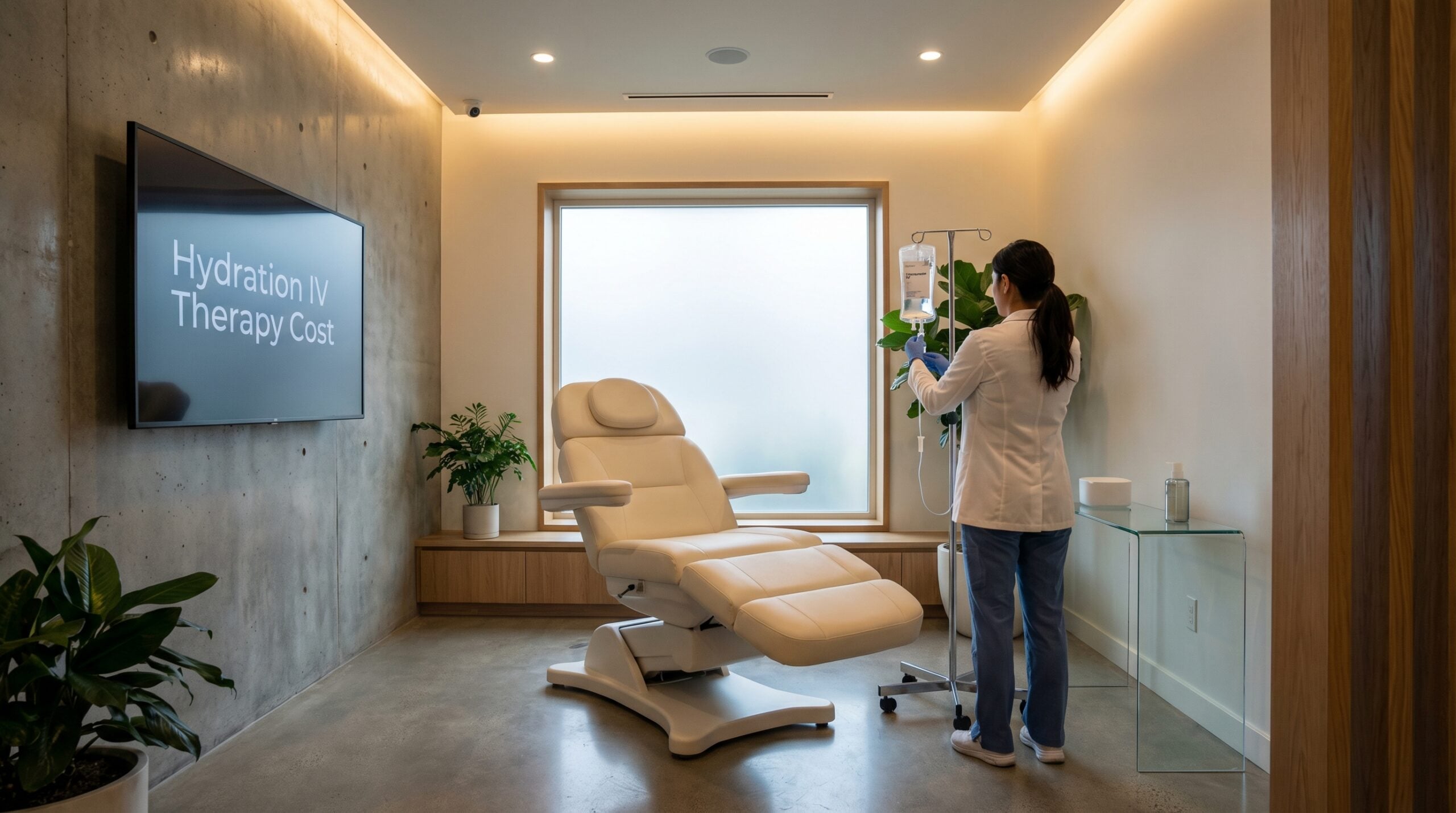
Hydration IV therapy has moved from hospitals into wellness studios and mobile services, giving people a faster way to rehydrate, recover, and support overall wellness. If you are considering your first drip, one of the first questions you probably have is about hydration IV therapy cost, what is included, and how to know if the price makes sense for your goals and budget.
This guide walks you through typical price ranges, what drives those costs, how at-home and in-clinic pricing compares, and how to evaluate value beyond the sticker price. It is written for anyone curious about IV hydration for recovery, performance, travel, or general wellness.

How much does hydration IV therapy cost on average?
In most wellness and mobile IV settings in the United States, a single hydration-focused IV session typically costs between $80 and $250, depending on the formula, setting, and add-ons. Basic saline hydration is usually at the lower end of the range, while vitamin-enriched or specialty drips land toward the higher end, especially when delivered as a mobile, in-home service (How Much Does IV Therapy Cost?, Onus IV, 2023; IV Hydration Therapy Cost Guide, 2023).
Hydration IV therapy cost usually falls between about $80 and $250 per session for standard wellness drips. Basic hydration bags with saline and electrolytes tend to start around $80 to $150, vitamin-enriched hydration cocktails often range from $150 to $300, and mobile or at-home IV services may add $50 to $100 for travel and concierge-level convenience (At-Home IV Therapy Pricing Guide, 2023; IV Therapy Costs Explained, 61Five, 2023). Many people also wonder does IV hydration work when evaluating cost.
Typical hydration IV therapy price ranges
There is no single national price, but most reputable wellness IV providers fall into similar ranges. Understanding these tiers helps you compare options and avoid offers that are unrealistically cheap or unexpectedly expensive.
Baseline cost ranges you can expect
Across U.S. wellness clinics and mobile IV services, published pricing commonly looks like this:
- Basic hydration IV (saline or lactated Ringer’s): about $80 to $200 per session, depending on bag size and membership discounts (IV Therapy Cost Breakdown, Utah Market Guide, 2023; NY Center for Integrative Health IV Therapy Overview, Kachko, 2022).
- Hydration + standard vitamins (for example B-complex, vitamin C, magnesium): usually $150 to $300, sometimes up to $350 for larger bags or higher doses (How Much Does IV Therapy Cost?, Onus IV, 2023; IV Hydration Therapy Cost Guide, 2023).
- Specialized or performance blends (recovery, beauty, immune, or athlete formulas): often $200 to $400+ depending on ingredients such as glutathione, amino acids, or higher-dose vitamin C (IV Therapy Cost Breakdown, Utah Market Guide, 2023).
- NAD+ or advanced longevity drips: commonly $400 to $850+ per session, reflecting higher ingredient cost and longer infusion times (IV Hydration Therapy Cost Guide, 2023).
Mobile IV pricing often appears as a base visit fee plus the drip itself. For example, one mobile guide lists at-home hydration-only drips from about $115 to $199, vitamin-enriched drips from roughly $160 to $400+, and premium NAD+ or high-dose vitamin C drips up to around $749 (At-Home IV Therapy Pricing Guide, 2023). Those considering home services often compare options with mobile IV therapy guidance.
Sample cost comparison table
The table below summarizes common price bands you might see when researching hydration IV therapy.
| Type of IV service | Typical price range (USD) | Common use cases |
|---|---|---|
| Basic hydration (saline or lactated Ringer’s) | $80–$200 | Dehydration, mild hangover, post-exercise, travel recovery |
| Hydration + standard vitamins | $150–$300 | General wellness, energy, immune support |
| Performance / recovery blends | $200–$350 | Endurance events, heavy training, intensive work periods |
| Beauty / anti-aging drips | $250–$380 | Skin, hair, and nail support, antioxidant-focused |
| NAD+ and advanced longevity protocols | $400–$850+ | Longevity, cognitive support, high-level recovery |
| Mobile visit convenience fee | + $50–$125 | In-home, hotel, or office service |
What factors influence hydration IV therapy cost?
Two people receiving hydration IV therapy can be charged very different amounts. The difference usually comes down to ingredients, setting, and the level of professional oversight involved.
1. Ingredients and formulation
The content of the IV bag is the single biggest driver of cost.
- Base fluids: Normal saline or lactated Ringer’s is relatively inexpensive, but larger bags and dual-bag protocols increase cost.
- Vitamin and mineral dosing: Adding B-complex, vitamin C, magnesium, or trace minerals usually adds $20 to $60 per component, especially when dosed at higher levels (IV Hydration Therapy Cost Guide, 2023).
- Specialty nutraceuticals: Compounds such as glutathione, branched-chain amino acids (BCAAs), or certain antioxidants can add $10 to $40 each (IV Hydration Therapy Cost Guide, 2023).
- Prescription medications: Anti-nausea or anti-inflammatory medications, when appropriate, often add $20 to $60 to the final bill.
- High-cost compounds: NAD+ and some peptide-based therapies are significantly more expensive and are the main reason some drips exceed $400 per session (IV Hydration Therapy Cost Guide, 2023).
Reputable providers typically source ingredients from FDA-registered 503B compounding pharmacies or other regulated suppliers, which improves quality control but also increases cost (How Much Does IV Therapy Cost?, Onus IV, 2023).
2. Professional expertise and clinical oversight
Hydration IV therapy is a medical procedure. You are paying not only for fluids but also for clinical judgment and safety.
- Licensed staff: Clinics that staff experienced registered nurses, paramedics, or nurse practitioners generally charge more, reflecting training, certifications, and the ability to manage complications.
- Medical screening: Pre-infusion assessments, vital signs, and health history review take time and require clinical expertise.
- Physician oversight: Many states require medical director supervision, which is factored into overall pricing.
This professional layer is part of what differentiates a wellness IV session from simply drinking electrolyte water. It also helps reduce risks such as fluid overload or vein irritation, especially in people with underlying health conditions (Guidelines for Intravenous Therapy, Infusion Nurses Society, 2021). Anyone evaluating risks may also look at an IV therapy side effects guide.
3. Setting: clinic vs mobile vs hospital
Where you receive hydration IV therapy has a major impact on cost.
- Hospital or emergency room: IV fluids in an ER setting can be billed at $500 to $3,000+ when facility and evaluation fees are included, even though the fluids themselves may cost $79 to $200 (At-Home IV Therapy Pricing Guide, 2023).
- Urgent care: Advertised IV prices around $79 may ultimately total $156 to $250 after additional fees (At-Home IV Therapy Pricing Guide, 2023).
- Wellness IV clinics: Typically $100 to $350 for hydration and vitamin drips, often with more transparent, all-inclusive pricing (IV Therapy Cost Breakdown, Utah Market Guide, 2023).
- Mobile IV services: Roughly $115 to $749 per session depending on the drip type, with a convenience premium for travel and in-home care (At-Home IV Therapy Pricing Guide, 2023).
For non-emergency hydration needs, many people choose wellness clinics or mobile IV services because pricing is more predictable and the environment is more relaxed.
4. Location and market dynamics
Geography also shapes hydration IV therapy cost. High-rent urban areas and luxury wellness centers often charge 20 to 30 percent more than rural or lower-overhead markets, reflecting differences in lease costs, wages, and regulatory requirements (IV Therapy Cost Breakdown, Utah Market Guide, 2023).
In some regions, competition between multiple IV providers can keep prices lower, while emerging markets with few providers may see higher prices.
5. Memberships, packages, and group discounts
Many IV providers use memberships or packages to reduce per-session cost for regular clients.
- Memberships: A monthly fee may include one standard drip worth up to $200, plus discounts on additional sessions and add-ons, effectively lowering each drip’s cost (How Much Does IV Therapy Cost?, Onus IV, 2023).
- Packages: Prepaid bundles of multiple sessions often carry 10 to 25 percent savings compared with paying per visit (IV Therapy Cost Breakdown, Utah Market Guide, 2023).
- Group or event pricing: Drip parties or corporate wellness days may offer 10 to 20 percent off per person when several people are treated at the same location (At-Home IV Therapy Pricing Guide, 2023).
If you plan to receive hydration IV therapy more than once, it is worth asking about these options.
Is hydration IV therapy worth the cost?
Whether hydration IV therapy is worth it depends on your goals, budget, and how you value time and convenience.
Potential benefits and how long they last
IV hydration delivers fluids and nutrients directly into the bloodstream, bypassing the digestive system. This route leads to higher bioavailability than oral supplements, often close to complete absorption for many vitamins and minerals, compared with roughly 50 percent or less via the gastrointestinal tract (Intravenous versus oral vitamin administration, National Center for Biotechnology Information, 2019; NY Center for Integrative Health IV Therapy Overview, Kachko, 2022).
People commonly report benefits such as:
- Faster rehydration after illness, travel, or intense exercise
- Short-term improvements in energy and mental clarity
- Reduced hangover symptoms, such as headache and nausea
- Support for immune function when formulas include vitamin C, zinc, or B vitamins (Immune function and micronutrients, Gombart et al., 2020)
Hydration-focused drips may provide noticeable effects for 3 to 5 days, while more comprehensive vitamin or NAD+ protocols may have perceived benefits for 1 to 2 weeks, depending on lifestyle and underlying health (IV Hydration Therapy Cost Guide, 2023; How Much Does IV Therapy Cost?, Onus IV, 2023). Some readers exploring benefits refer to an IV hydration therapy benefits guide.

Evidence for IV vitamin therapy in otherwise healthy people is still emerging. Some studies support benefits in specific contexts, such as correcting deficiencies or supporting recovery from illness, but routine use for general wellness is less well studied (Intravenous vitamin therapy, Naidu, 2019). For many clients, perceived value includes both physiological effects and the subjective experience of feeling cared for and restored.
Time, productivity, and opportunity cost
Hydration IV therapy also has a time value. For example, an urgent care visit might appear cheaper on paper, but if it requires three hours of travel and waiting, that time has a cost. One analysis estimated that at a wage of $25 per hour, three hours of lost time equals $75, which can make a $175 to $200 at-home drip competitive or even less expensive when time is included (At-Home IV Therapy Pricing Guide, 2023).
If IV hydration helps you return to work, training, or parenting sooner, the indirect economic benefit may be significant, especially for busy professionals and athletes.
When hydration IV therapy may not be appropriate
IV hydration is not suitable for everyone. People with certain heart or kidney conditions, uncontrolled high blood pressure, or a history of fluid overload require careful medical evaluation, because excess intravenous fluid can worsen these conditions (Intravenous fluid therapy in adults, National Institute for Health and Care Excellence, 2013).
Side effects are usually mild when therapy is delivered by trained professionals, but they can include bruising at the insertion site, temporary discomfort, or rarely infection or vein irritation. Serious complications are uncommon but possible, which is why proper screening and sterile technique are essential (Guidelines for Intravenous Therapy, Infusion Nurses Society, 2021). Always discuss your full medical history with your provider before scheduling a drip.
What is included in the price of hydration IV therapy?
Understanding what you are paying for can make hydration IV therapy cost feel more transparent and predictable.
Common elements of a session
A typical wellness IV session usually includes:
- Health screening and discussion of goals
- Vital signs and eligibility assessment
- Preparation of a customized IV solution
- IV insertion by a licensed nurse or paramedic
- Monitoring during the infusion, which usually lasts 30 to 60 minutes for standard hydration and longer for advanced drips
- Comfortable environment with seating or recliners
- Post-infusion guidance and follow-up recommendations
These professional and facility components are built into the session fee. When comparing prices, ask what is included so you can compare similar levels of service.
Transparent add-ons and upgrades
Many providers offer optional add-ons such as extra vitamin C, B12, glutathione, or medications for nausea or headache. These usually have clearly listed prices, often $20 to $60 per add-on depending on the ingredient and dose (IV Therapy Costs Explained, 61Five, 2023).
If you are budget-conscious, it can help to start with a basic hydration or standard vitamin blend and add only the components that align with your specific goals.
How to evaluate hydration IV therapy cost for your situation
Price is only one part of the decision. Safety, quality, and fit with your health goals matter just as much.
Questions to ask before you book
Consider asking potential providers:
- Who performs the IV insertions, and what are their credentials?
- Is there a medical director or prescribing provider overseeing protocols?
- Where do you source your vitamins and fluids, and are they pharmaceutical grade?
- What exactly is included in the listed price, and what counts as an add-on?
- How long will the session take from arrival to completion?
- How do you handle side effects or complications if they occur?
Transparent, confident answers are a good sign that the provider has robust clinical and operational standards (Global IV Therapy Quality and Safety Framework, REVIV, 2022).
Strategies to manage your hydration IV therapy budget
If you want to experience hydration IV therapy while keeping costs predictable, you can:
- Start with a basic hydration or standard vitamin drip before moving to more complex formulas.
- Ask about memberships, packages, and referral credits.
- Consider group sessions with friends or colleagues to reduce per-person cost.
- Schedule during standard hours instead of nights or holidays, which may carry rush fees.
- Use eligible HSA or FSA funds when the therapy is prescribed for specific medical indications, if applicable in your situation (How Much Does IV Therapy Cost?, Onus IV, 2023).
How often should you get hydration IV therapy?
There is no universal schedule. Frequency should be based on your health status, goals, and guidance from a qualified provider.
Some integrative clinics recommend weekly or twice-weekly IV sessions for defined treatment plans, then monthly maintenance, especially when addressing documented nutrient deficiencies or chronic fatigue (NY Center for Integrative Health IV Therapy Overview, Kachko, 2022). For general wellness, many people choose occasional drips around events such as marathons, travel, or intense work periods.
Because frequent IV access carries cumulative risks, including vein irritation and potential infection, it is important to work with a clinician who will reassess your plan regularly and avoid unnecessary treatments (Guidelines for Intravenous Therapy, Infusion Nurses Society, 2021).
CTA: Explore whether hydration IV therapy fits your goals
If you are curious about hydration IV therapy cost in your area, start by clarifying your goals, such as recovery, performance, or general wellness. Then look for a provider that prioritizes safety, transparent pricing, and individualized care. A brief consultation can help you decide whether a basic hydration drip, a vitamin-enriched formula, or an occasional mobile visit aligns best with your health routine and budget.
FAQ
How much does a basic hydration IV usually cost?
Most basic hydration IVs that include saline or lactated Ringer’s with electrolytes cost between $80 and $200 per session in wellness clinics, with mobile services sometimes adding a $50 to $100 convenience fee for in-home visits (IV Hydration Therapy Cost Guide, 2023; At-Home IV Therapy Pricing Guide, 2023).
Why is hydration IV therapy more expensive than drinking water or sports drinks?
Hydration IV therapy is more expensive because it is a medical procedure that uses sterile, pharmaceutical-grade fluids and nutrients, single-use equipment, and licensed professionals to insert and monitor the IV, and these safety and quality measures are built into the session cost (Guidelines for Intravenous Therapy, Infusion Nurses Society, 2021; IV Therapy Cost Breakdown, Utah Market Guide, 2023).
Does insurance cover hydration IV therapy?
Most insurance plans do not cover elective or wellness-focused hydration IV therapy, and coverage is usually limited to medically necessary infusions ordered by a physician for specific conditions in hospital or clinic settings, so routine wellness drips are generally paid out of pocket (IV Therapy Costs Explained, 61Five, 2023).
How can I lower my hydration IV therapy cost?
You can often lower the cost by joining a membership program, purchasing multi-session packages, booking group sessions, choosing standard formulas instead of complex specialty drips, and asking about any off-peak or loyalty discounts your provider offers (How Much Does IV Therapy Cost?, Onus IV, 2023; IV Therapy Cost Breakdown, Utah Market Guide, 2023).
Are there risks or side effects I should consider before paying for hydration IV therapy?
Common side effects include temporary discomfort or bruising at the IV site, and more serious complications such as infection, vein irritation, or fluid overload are uncommon but possible, especially in people with heart or kidney conditions, so it is important to have a medical screening and discuss your health history with a qualified provider before treatment (Intravenous fluid therapy in adults, National Institute for Health and Care Excellence, 2013; Guidelines for Intravenous Therapy, Infusion Nurses Society, 2021).
This blog post is intended for informational purposes only and should not be considered medical advice. Always consult a healthcare professional before making changes to your health routine.
Leave a Reply