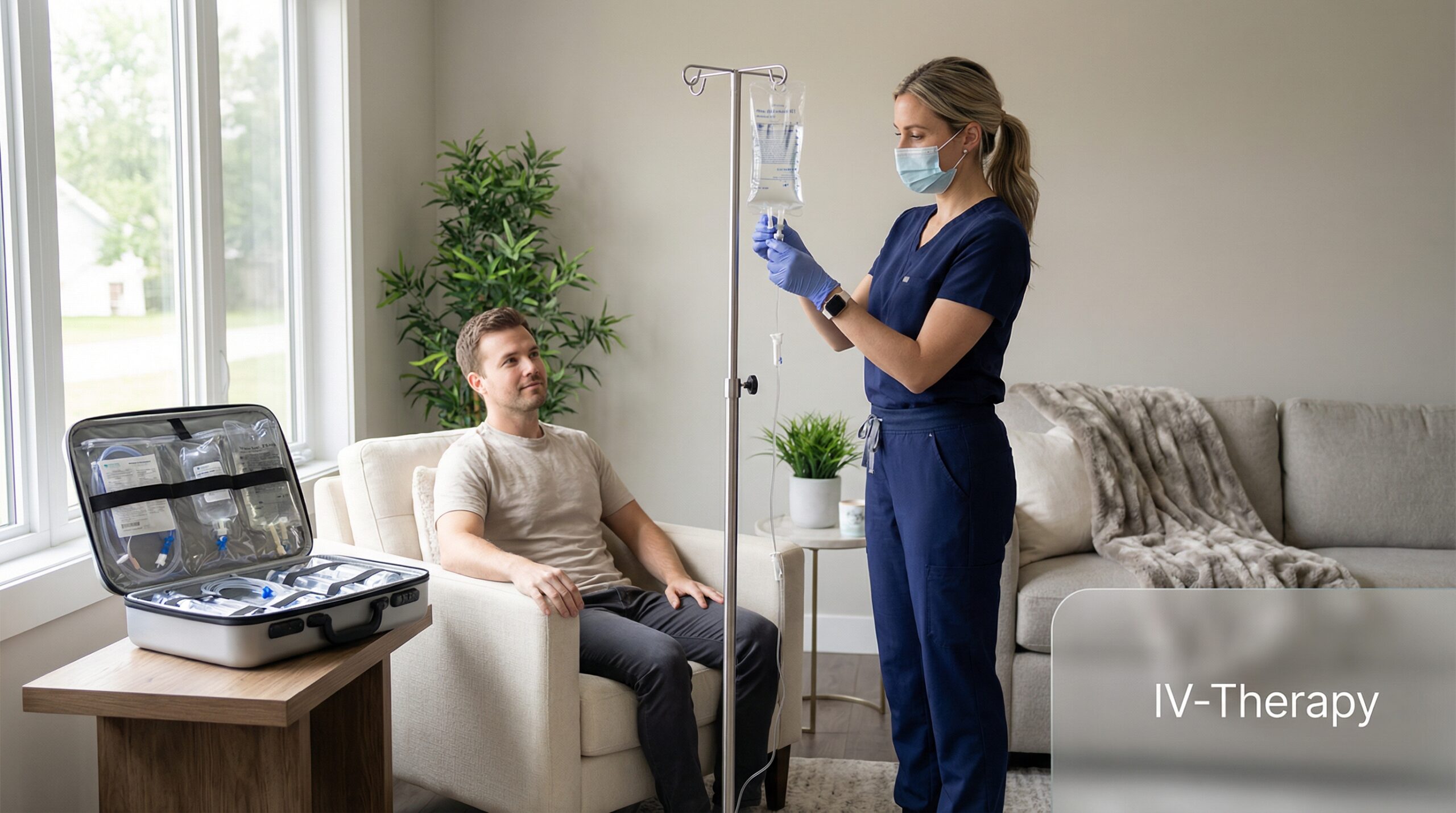
Mobile IV therapy brings professional intravenous hydration and nutrients directly to you, typically in your home, office, or hotel. Instead of traveling to a clinic, a licensed healthcare professional comes on-site to administer IV fluids, vitamins, minerals, and medications tailored to your needs. This guide is for busy professionals, athletes, frequent travelers, and anyone curious about convenient, medically supervised IV wellness.
Mobile IV therapy is a concierge-style service where trained clinicians deliver IV hydration fluids, electrolytes, vitamins, and sometimes medications directly into your bloodstream at your location. It may help with dehydration, fatigue, mild illness support, and workout or travel recovery, but it should never replace emergency care or your primary healthcare provider.

What is mobile IV therapy and how does it work?
Mobile IV therapy is an on-demand service that brings IV hydration and nutrient infusions out of hospitals and clinics and into everyday settings such as homes, offices, events, and hotels. Clinicians use the same core procedure that is standard in hospitals, where peripheral intravenous catheters are placed hundreds of millions of times each year in the United States (Peripheral intravenous catheter use, Alexandrou et al., 2022). The difference is the setting and the focus on wellness, recovery, and convenience.
During a typical visit, you complete a health screening and consent, often supported by telehealth. A licensed nurse or other qualified clinician checks your vital signs, reviews your history, and confirms that IV therapy is appropriate for you. They then place a small IV catheter into a vein, usually in your arm, and connect it to a customized bag of fluids and nutrients. The infusion usually takes 30 to 60 minutes while you rest, work, or relax.
Why IV delivery is different from oral supplements
With oral supplements and drinks, nutrients must pass through the digestive system, where absorption can be limited by factors such as gut health, interactions with food, and first-pass metabolism in the liver (Bioavailability of nutrients, McClements, 2019). IV therapy bypasses the digestive tract and delivers fluids and nutrients directly into the bloodstream. This route allows for 100 percent bioavailability of the infused compounds and more predictable blood levels compared with oral intake (Intravenous vs oral administration, Prescott, 2013).
For hydration in particular, IV fluids can restore circulating volume faster than oral intake, which depends on gastric emptying and intestinal absorption (Fluid balance and hydration, Shirreffs, 2013). This is one reason IV therapy is a standard of care for moderate to severe dehydration in medical settings.
Who is mobile IV therapy for?
Mobile IV therapy is designed for adults who want medically supervised hydration and nutrient support in a convenient, low-friction format. It is not a replacement for emergency services, but it may be helpful for people who:
- Have busy schedules and find it difficult to visit clinics during office hours
- Experience frequent travel, jet lag, or time zone changes
- Engage in intense athletic training, competitions, or endurance events
- Are recovering from mild illnesses such as viral upper respiratory infections, where hydration and symptom support are important
- Want to support energy, focus, or general wellness as part of a broader self-care plan
The global and U.S. markets for IV hydration and mobile IV services are expanding rapidly, driven by demand from wellness-focused consumers and people seeking convenient, at-home care. Analyses project the U.S. mobile IV hydration therapy market to grow at over 10 percent annually through the next decade, with strong interest in energy, immunity, and beauty-focused drips (U.S. Mobile IV Hydration Therapy Market Report, Precedence Research, 2024). Similar reports forecast the broader IV hydration market to more than double by 2036, with mobile and on-demand services as a key growth driver (Global Intravenous Hydration Therapy Market Analysis, Kumar, 2023).
Common use cases for mobile IV therapy
While protocols vary, many mobile IV sessions are built around a few core goals:
- Hydration support: For dehydration related to travel, exercise, heat exposure, or alcohol use. IV saline or balanced electrolyte solutions can help restore fluid and electrolyte balance more rapidly than oral intake when losses are significant (Oral vs IV rehydration, Seifert, 2009).
- Energy and focus: B vitamins such as B12 and B-complex play roles in cellular energy production and nervous system function (Vitamin B12 Fact Sheet, NIH ODS, 2022). IV formulations may include these nutrients for people who want support for fatigue and productivity. energy
- Immune support: Vitamin C, zinc, and glutathione are often included in immune-focused drips. Vitamin C contributes to normal immune function and antioxidant defense, although evidence for high-dose IV vitamin C in otherwise healthy individuals is still limited (Vitamin C and immune function, Carr & Maggini, 2017).
- Athletic recovery: Some athletes use IV hydration and amino acids to support muscle recovery and reduce perceived fatigue after intense exercise. Evidence suggests that adequate hydration and certain amino acids may aid recovery, but IV formulations should complement, not replace, nutrition and training strategies (Nutrition and athletic performance, Thomas et al., 2016).
- Headache or migraine support: In medical settings, IV fluids, magnesium, and anti-nausea medications are sometimes used for acute migraine management (IV therapy in migraine, Friedman, 2013). Mobile services may offer symptom-focused protocols for appropriate clients under medical oversight.
What is typically in a mobile IV therapy drip?
Formulations vary by provider, but many mobile IV therapy drips are built from a similar group of components:
- Base fluids: Normal saline (0.9% sodium chloride) or balanced electrolyte solutions such as lactated Ringer’s, which help restore fluid volume and electrolytes (Crystalloid fluids in clinical practice, Myburgh & Mythen, 2013).
- Electrolytes: Magnesium, potassium, calcium, and trace elements may be added in carefully controlled doses, particularly when losses are suspected or documented.
- Vitamins: B-complex, vitamin B12, and vitamin C are common. Some protocols also include biotin or other water-soluble vitamins.
- Amino acids: Taurine and other amino acids are sometimes used in recovery, energy, or performance-focused drips.
- Antioxidants: Glutathione is a frequently used antioxidant that participates in cellular redox balance (Glutathione in health and disease, Wu et al., 2013).
- Medications: Under physician oversight, some mobile IV services may include anti-nausea, anti-inflammatory, or acid-reducing medications when clinically appropriate. These are prescription products and must be used according to medical guidelines.
Every ingredient should be sourced from regulated pharmacies and compounded or mixed according to sterile standards. Doses and combinations need to be individualized based on your health status, medications, and goals. This is one reason a proper medical review is essential before receiving mobile IV therapy.
Benefits of mobile IV therapy: convenience, personalization, and speed
The benefits of mobile IV therapy fall into three main categories: access, personalization, and physiology.
Convenience and access at your doorstep
Mobile IV therapy removes travel time, waiting rooms, and scheduling conflicts by bringing care to you. For people who are mildly unwell, dehydrated, or simply exhausted, staying at home while receiving treatment can be significantly more comfortable. On-demand and app-based booking are increasingly common, reflecting broader trends in telehealth and home-based care (On-demand mobile health services, Ray et al., 2022).
From a systems perspective, shifting non-emergency hydration and symptom support out of emergency rooms and urgent care centers may also help reduce congestion in traditional facilities. Early data from hospital-at-home and mobile infusion programs suggest that appropriate at-home care can reduce avoidable ER visits and improve patient satisfaction (Hospital-at-home outcomes, Levine et al., 2020).

Personalized protocols aligned with your goals
Many mobile IV services provide menus of drips that can then be customized based on your health history, lab data where available, and specific goals. For example, you might choose between:
- Hydration-focused drips for recovery after travel or events
- Energy-focused drips emphasizing B vitamins and amino acids
- Immune-focused drips with vitamin C, zinc, and antioxidants
- Recovery drips tailored to athletic performance or post-illness support
This personalization reflects a broader shift toward patient-centered, concierge-style healthcare and wellness, where services are designed around individual preferences and lifestyles rather than one-size-fits-all protocols (Patient-centered care trends, Santana et al., 2018).
Rapid onset of action
Because IV therapy delivers fluids and nutrients directly into the bloodstream, effects can be felt more quickly compared with oral intake. People often report noticing changes in hydration status, energy, or symptom relief during or shortly after the infusion, although responses vary widely and depend on the underlying issue, the formulation, and individual physiology.
In medical contexts, IV therapy hydration and medications are used precisely because they provide rapid, predictable absorption and can be titrated in real time (Intravenous therapy in clinical practice, Gorski, 2016). Mobile IV therapy applies the same pharmacologic principles in a wellness-focused setting, always with the caveat that it should not delay emergency or hospital-level care when needed.
Is mobile IV therapy safe?
When performed by qualified clinicians using sterile technique, appropriate screening, and evidence-informed protocols, IV therapy is generally considered safe. However, it is still a medical procedure and carries risks. These include vein irritation, bruising, infection at the insertion site, infiltration (fluid leaking into surrounding tissue), phlebitis, allergic reactions, and in rare cases more serious complications such as fluid overload or electrolyte imbalances (Peripheral IV catheter complications, Alexandrou et al., 2022).
Safety depends heavily on the training of the clinician, the quality of supplies, and the medical oversight structure. Best practices include proper patient selection, careful review of medical history and medications, dose limits, monitoring during the infusion, and clear criteria for when to stop a treatment or escalate to higher-level care. People with heart, kidney, or liver disease, pregnancy, or complex medical histories require special caution and may not be good candidates for elective IV therapy without direct input from their primary or specialty care teams.
Red flags and when to seek emergency care instead
Mobile IV therapy is not appropriate for emergencies. You should seek immediate emergency care, not a mobile IV visit, if you experience symptoms such as:
- Chest pain or pressure
- Severe shortness of breath
- Signs of stroke such as sudden weakness, facial drooping, or difficulty speaking
- High fever with confusion or stiff neck
- Severe abdominal pain, uncontrolled bleeding, or trauma
In these situations, calling emergency services or going to the nearest emergency department is essential. Mobile IV therapy is designed for stable clients with non-emergency needs.
How to decide if mobile IV therapy is right for you
Choosing whether to add mobile IV therapy to your wellness routine comes down to your goals, health status, and preferences. Consider the following questions:
- What are you trying to address, for example, hydration, fatigue, recovery, or immune support?
- Have you discussed these concerns with your primary healthcare provider?
- Are there underlying medical conditions that could affect your safety with IV fluids or specific nutrients?
- Are you already optimizing basics such as sleep, nutrition, stress management, and exercise?
For many people, IV therapy is most effective as a complement to, rather than a substitute for, foundational health habits. It can offer targeted support for specific situations, such as recovery after travel or demanding events, within a broader, long-term wellness strategy.
What to expect from a mobile IV visit
Although details differ by provider, a typical mobile IV therapy session includes:
- Pre-visit screening: Online or phone intake covering your medical history, medications, allergies, and goals. Some services use telehealth with a clinician to review your case and approve treatment.
- On-site assessment: Vital signs, symptom review, and final confirmation that IV therapy is appropriate that day.
- IV placement and infusion: The nurse inserts a small catheter, connects the IV bag, and monitors you throughout the session.
- Post-infusion monitoring and guidance: After the drip finishes, you are observed briefly, then receive instructions for hydration, activity level, and what to watch for afterward.
How mobile IV therapy fits into the future of wellness and healthcare
Mobile IV therapy sits at the intersection of wellness, telehealth, and home-based medical services. Market analyses show that on-demand healthcare and mobile IV platforms are growing at double-digit rates, driven by consumer demand for convenience, hospital systems seeking to expand care at home, and employers exploring cost-effective health benefits (On-demand Healthcare and Mobile IV Platforms Market, Grand View Research, 2025). Advanced dispatch software, smart infusion pumps, and remote monitoring tools are increasingly used to coordinate safe, efficient in-home infusions.
For individuals, this means that services which used to require a hospital stay or clinic visit are gradually becoming available in more comfortable settings, often with highly personalized protocols. For the healthcare system as a whole, mobile IV therapy is part of a broader shift toward decentralized, patient-centered care that aims to reduce unnecessary facility visits while maintaining or improving outcomes.
Next steps if you are considering mobile IV therapy
If you are thinking about trying mobile IV therapy, a thoughtful, safety-first approach is important:
- Discuss your goals and medical history with a healthcare professional who knows you.
- Confirm that any provider you work with uses licensed clinicians and has physician oversight.
- Ask about ingredients, doses, sourcing, and how protocols are individualized.
- Clarify how emergencies are handled and what happens if you feel unwell during an infusion.
When you are ready to explore how IV hydration and nutrient therapy might fit into your wellness routine, our team can walk you through options, answer your questions, and help you decide whether a mobile visit or in-studio experience makes the most sense for you.
FAQ
What is mobile IV therapy used for?
Mobile IV therapy is typically used for hydration support, recovery after travel or intense exercise, symptom relief for mild illnesses, and wellness goals such as energy, focus, or immune support. It brings clinically supervised IV infusions to your home, office, or hotel so you do not have to travel to a clinic. It should not be used for emergencies or as a replacement for primary medical care.
How long does a mobile IV therapy session take?
Most mobile IV therapy sessions last about 45 to 90 minutes from arrival to completion. The infusion itself usually runs over 30 to 60 minutes, depending on the formulation and your vein access, with additional time for assessment, IV placement, and brief observation afterward.
How often can I get mobile IV therapy?
The appropriate frequency depends on your health status, goals, and the specific formulation. Some people choose occasional sessions around travel, events, or periods of high demand, while others incorporate IV therapy into a monthly or biweekly wellness plan. A clinician should review your medical history and help set a safe schedule tailored to you.
Are there side effects or risks with mobile IV therapy?
Potential side effects include bruising, vein irritation, pain at the insertion site, and mild swelling. More serious risks, such as infection, allergic reactions, fluid overload, or electrolyte imbalances, are less common but possible. Careful screening, sterile technique, and monitoring help reduce these risks, which is why it is important to work with trained clinicians.
Can mobile IV therapy replace drinking water and good nutrition?
No. Mobile IV therapy is not a substitute for daily hydration, balanced nutrition, sleep, and other foundational health habits. It may provide targeted support in specific situations, but long-term wellness still depends on consistent lifestyle choices and regular medical care when needed.
This blog post is intended for informational purposes only and should not be considered medical advice. Always consult a healthcare professional before making changes to your health routine.
Leave a Reply