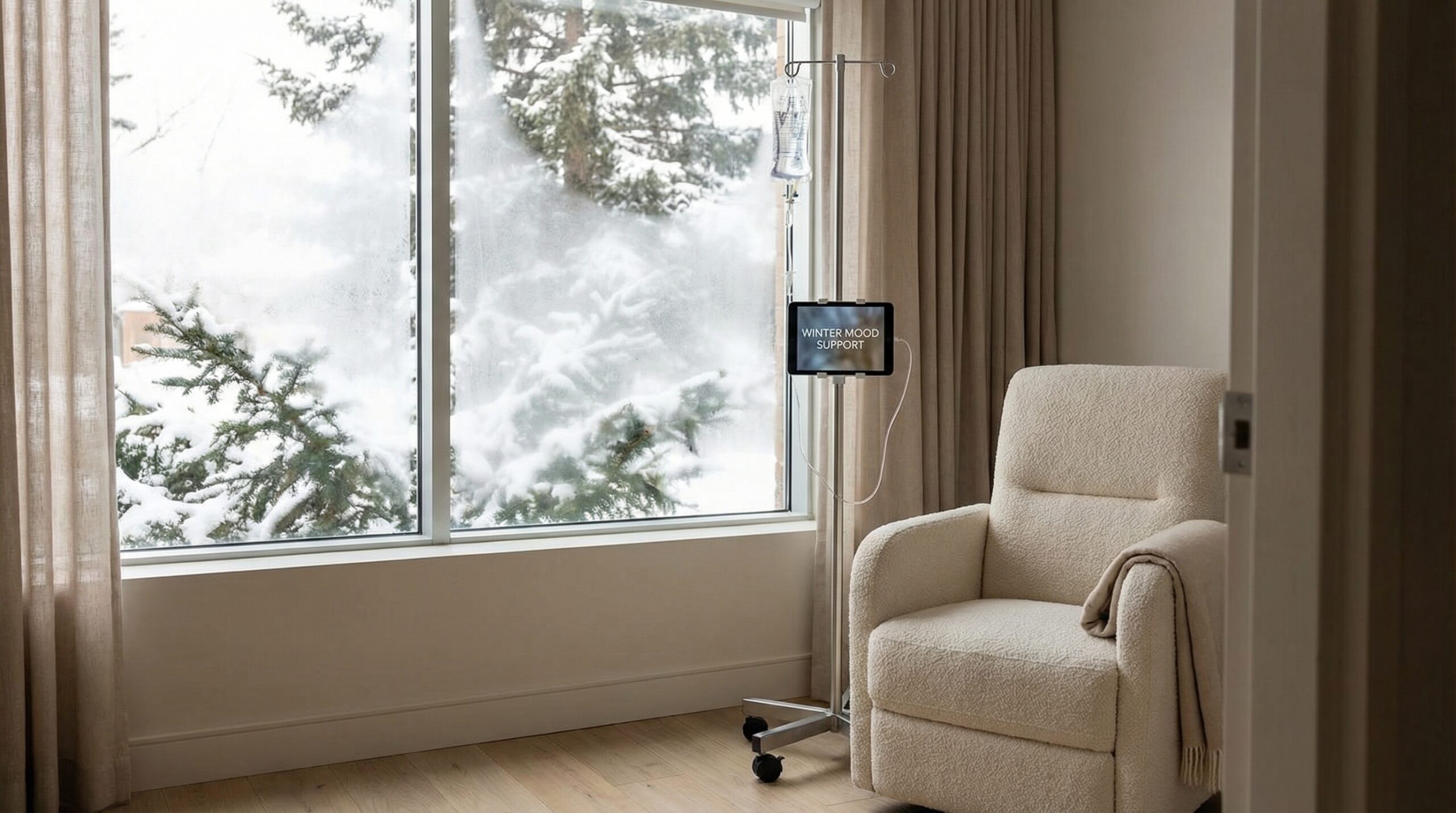
Shorter days, cold weather, and disrupted routines can leave many people feeling low, tired, and unmotivated during the colder months. If you notice your mood dipping every winter, you might be exploring options like Winter depression IV support to complement lifestyle changes and professional care. This article explains how IV vitamin therapy may support mood, energy, and overall resilience in winter, what is realistic to expect, and how to discuss it with your healthcare provider.
Winter depression IV support refers to using intravenous hydration and nutrient infusions as part of a broader plan to cope with winter blues or Seasonal Affective Disorder like symptoms. By delivering vitamins, minerals, and fluids directly into the bloodstream, IV therapy may help support energy, sleep quality, stress response, and overall wellness, which can indirectly support mood. It is not a cure for depression, but it can be a supportive tool alongside light exposure, movement, nutrition, and mental health care.
What is winter depression and why does it happen?
Many people experience a predictable dip in mood during late fall and winter. This is often called winter blues, and in more severe, recurrent cases it may meet criteria for Seasonal Affective Disorder, a subtype of major depressive disorder that follows a seasonal pattern. Reduced daylight affects circadian rhythms, melatonin, and serotonin, which can influence sleep, appetite, and mood regulation (Seasonal Affective Disorder, Melrose, 2015).
Common winter depression symptoms include:
- Low or heavy mood
- Loss of interest or pleasure
- Increased fatigue and daytime sleepiness
- Cravings for carbohydrates and weight changes
- Difficulty concentrating
- Social withdrawal and reduced motivation
Not everyone with winter blues has a diagnosable mood disorder, but even milder symptoms can affect work, relationships, and quality of life. Lower sunlight, disrupted sleep, more time indoors, holiday stress, and changes in physical activity all contribute to this seasonal strain (The Circadian System and Psychiatric Disorders, Walker et al., 2014).
How can IV therapy support people with winter depression?
IV vitamin therapy is not a stand alone treatment for depression, but it may support physical and mental resilience in several ways. Intravenous infusions deliver fluids and nutrients directly into the bloodstream, bypassing the digestive system, which can lead to faster and more predictable absorption compared with oral supplements (Parenteral vs. Oral Vitamin Supplementation, Shils, 2006).
For people struggling with winter-related mood changes, this can matter because fatigue, low appetite, and poor sleep often make it harder to maintain consistent nutrition, hydration, and supplement routines. IV therapy may help by:
- Rapidly restoring hydration when cold, dry air and indoor heating cause hidden dehydration
- Replenishing key micronutrients involved in energy production and nervous system function
- Supporting stress response and sleep quality through specific minerals and amino acids
- Complementing other winter wellness strategies like light therapy, exercise, and psychotherapy
It is important to emphasize that IV nutrients do not replace antidepressants, psychotherapy, or medical care when those are indicated. Instead, they can be one part of a holistic plan to help your body cope better with winter stressors.

Key nutrients in Winter depression IV support
Different clinics use different formulations, but many winter focused IV drips share several core ingredients that have research supporting their roles in mood, energy, and nervous system health.
Vitamin B12 and B complex for energy and mood
Vitamin B12 and other B vitamins play central roles in red blood cell production, mitochondrial energy metabolism, and synthesis of neurotransmitters such as serotonin and dopamine (Vitamin B12 Fact Sheet, NIH Office of Dietary Supplements, 2022). Low B12 levels are associated with fatigue, cognitive difficulties, and depressive symptoms, particularly in older adults (Vitamin B12 Status and Depression in Elderly, Penninx et al., 2000).
IV formulations that include B12 and a B complex (B1, B2, B3, B5, B6) may help support:
- Steadier daytime energy
- Improved concentration
- Reduced perception of fatigue
While evidence that B12 alone treats depression is limited, supporting adequate B vitamin status can be an important foundation for overall mental health.
Magnesium for stress, sleep, and nervous system balance
Magnesium is involved in hundreds of enzymatic reactions, including those that regulate nerve signaling, muscle relaxation, and the stress response. Low magnesium intake has been linked to higher rates of depressive symptoms in observational studies (Magnesium Intake and Depression, Jacka et al., 2009). Clinical trials of oral magnesium supplementation suggest it may help improve mild to moderate depression and anxiety in some individuals (Role of Magnesium in Depression, Tarleton & Littenberg, 2017).
IV infusions often include magnesium because it may:
- Promote muscle relaxation and a sense of calm
- Support sleep quality
- Help regulate the bodys stress response
Vitamin C, zinc, and glutathione for immune and oxidative stress support
Winter depression and immune health are closely connected. When mood is low, people may sleep poorly, move less, and eat fewer nutrient dense foods, which can weaken immune defenses and increase infection risk (The Circadian System and Psychiatric Disorders, Walker et al., 2014).
IV drips commonly include:
- Vitamin C, which supports white blood cell function and may modestly reduce duration of respiratory infections (Vitamin C and the Common Cold, Hemila & Chalker, 2013).
- Zinc, important for immune cell development and signaling; deficiency is associated with increased infection risk (Zinc Fact Sheet, NIH Office of Dietary Supplements, 2022).
- Glutathione, a major intracellular antioxidant that helps reduce oxidative stress, which is implicated in both depression and chronic inflammation (Oxidative Stress and Depression, Black et al., 2015).
Supporting immune resilience and lowering oxidative stress may indirectly benefit mood, especially when winter illnesses are a recurring trigger for feeling run down.
Hydration and electrolytes
Cold, dry air and indoor heating can cause significant fluid loss through the skin and respiratory tract, even when you do not feel thirsty. Mild dehydration can impair mood, attention, and energy (Mild Dehydration Affects Mood and Cognition, Ganio et al., 2011). IV fluids with balanced electrolytes rapidly restore hydration status and may help you feel more alert and physically comfortable.
Amino acids and other mood supportive nutrients
Some IV blends include amino acids such as taurine or glutamine, and occasionally nutrients like L-tryptophan or L-tyrosine that are precursors to serotonin and dopamine. Evidence for IV amino acids in depression is still emerging, and most robust data come from oral supplementation and dietary patterns (Amino Acids and Mood Disorders, Fernstrom, 2018). However, these components are often included to support overall brain function and neurotransmitter balance as part of a comprehensive formula.
Is Winter depression IV support the same as treating Seasonal Affective Disorder?
No. Winter depression IV support is best understood as a supportive wellness strategy rather than a primary treatment for Seasonal Affective Disorder or major depression. Evidence based treatments for SAD typically include bright light therapy, cognitive behavioral therapy, and in some cases antidepressant medications (Seasonal Affective Disorder, Melrose, 2015).
IV therapy may complement these approaches by:
- Helping maintain energy and hydration so it is easier to exercise and stay engaged in daily activities
- Supporting nutrient status when appetite is low or diet quality slips
- Providing a structured time for rest and self care in a calming environment
If you suspect you have SAD or any form of depression, it is important to speak with a qualified mental health or medical professional. IV therapy should be coordinated with, not substituted for, appropriate clinical care.
What does a Winter depression IV support session involve?
While details vary by provider, most IV therapy sessions follow a similar structure.
Initial consultation and screening
Before your first infusion, you should complete a health history and discuss your goals, medications, and symptoms with a licensed provider. They will determine whether IV therapy is appropriate and safe for you, and may recommend laboratory testing to check levels of B12, vitamin D, iron, or other markers when indicated.
The infusion experience
During the session, a nurse or trained clinician inserts a small IV catheter into a vein in your arm or hand. The nutrient solution is infused over 30 to 60 minutes in most standard wellness drips, though some specialized therapies can take longer. Many people read, listen to music, or rest quietly during the treatment.
Some individuals report feeling more hydrated, clear headed, or relaxed shortly after an infusion, while others notice more gradual changes over the next 24 to 48 hours. Responses are highly individual and depend on baseline health, sleep, stress, and other factors.

Frequency and ongoing care
There is no single schedule that fits everyone. Some people choose IV support once a month through the winter, others come more frequently during high stress periods, and some use it only occasionally when they feel particularly depleted. A provider can help you design a plan that fits your health status, goals, and budget. Many people reference how often you should get IV therapy when planning their schedule.
Potential risks and side effects of IV vitamin therapy
Although IV vitamin therapy is generally well tolerated in healthy individuals, it is still a medical procedure and not risk free. Potential side effects and risks can include:
- Temporary discomfort, bruising, or swelling at the IV site
- Vein irritation or inflammation
- Fluctuations in blood pressure or heart rate during infusion
- Allergic reactions to specific ingredients, which can be serious but are uncommon
- Fluid overload in people with certain heart, kidney, or liver conditions
Because high dose vitamins and minerals can interact with medications or underlying conditions, IV therapy should always be administered and supervised by qualified medical professionals who can monitor you and respond to any issues. Discuss your full medical history, including mental health diagnoses and medications, before starting treatment. For further safety considerations, see IV therapy risks.
How to combine Winter depression IV support with other strategies
The best results usually come from combining IV support with evidence based lifestyle and therapeutic approaches for winter mood changes.
Light exposure and circadian rhythm support
Regular exposure to bright light in the morning helps reset circadian rhythms and may reduce SAD symptoms. Light therapy boxes that deliver 10000 lux for about 30 minutes daily have been well studied (Light Therapy for Seasonal Affective Disorder, Golden et al., 2005). Even without a light box, getting outside shortly after waking, when possible, can be helpful.
Movement, nutrition, and sleep
Consistent physical activity, even in short bouts, has antidepressant effects and can improve sleep quality (Exercise as Treatment for Depression, Rethorst et al., 2009). Prioritizing regular meals with protein, fiber, and colorful plant foods supports blood sugar stability and nutrient intake, which can complement the micronutrients delivered via IV. Protecting sleep by keeping a consistent schedule, limiting late night screens, and creating a calming pre bed routine is also essential.
Mental health care and social connection
Cognitive behavioral therapy tailored for SAD has strong evidence for reducing symptoms and preventing recurrence (CBT vs Light Therapy for SAD, Rohan et al., 2015). Counseling, support groups, and staying connected with trusted people can reduce isolation and help you build coping strategies. IV therapy can provide physical support that makes it easier to engage in these psychological and social interventions.
Who might consider Winter depression IV support?
People who may want to discuss IV therapy with their provider include those who:
- Notice a consistent pattern of low energy and mood every winter
- Struggle to maintain hydration or nutrition when feeling down
- Have demanding schedules and feel physically depleted during colder months
- Are already receiving care for depression or anxiety and want to explore supportive wellness options
IV therapy is not appropriate for everyone. Individuals with significant cardiovascular, kidney, or liver disease, uncontrolled high blood pressure, certain electrolyte imbalances, or a history of severe allergic reactions may not be good candidates. A thorough medical evaluation is essential.
Taking your next step
If you are curious about whether Winter depression IV support fits into your wellness plan, start by speaking with a healthcare professional who understands both mental health and integrative therapies. Bring a list of your symptoms, current treatments, and questions so you can make an informed decision together.
Used thoughtfully, IV vitamin therapy can be one more tool to help your body handle the unique challenges of winter. Combined with light, movement, nourishing food, restorative sleep, and emotional support, it may help you move through the colder months with more steadiness, clarity, and resilience.
FAQ
Does Winter depression IV support cure Seasonal Affective Disorder?
Winter depression IV support does not cure Seasonal Affective Disorder or replace treatments like light therapy, psychotherapy, or medications when those are needed. IV therapy is best used as a complementary wellness strategy that may help support energy, hydration, and nutrient status so it is easier to engage in other evidence based treatments and daily routines.
How quickly might I feel a difference after a winter mood support IV drip?
Some people notice changes in hydration, energy, or a sense of calm within hours of an infusion, while others experience more gradual shifts over one to two days. Response varies widely based on your baseline health, sleep, stress levels, and how depleted you were beforehand. No specific result can be guaranteed, and IV therapy should not be relied on for immediate relief of severe depressive symptoms or crises.
How often should I get IV therapy during the winter months?
There is no universal schedule. Some individuals choose monthly infusions through the winter, others come every few weeks during particularly stressful periods, and some use IV therapy only as needed. The right frequency depends on your goals, response to treatment, medical history, and budget. A qualified provider can help you design a personalized plan and adjust it over time.
Is IV vitamin therapy safe if I am already taking antidepressants?
Many people receiving antidepressant medications can safely use IV vitamin therapy, but it is essential to review all medications and supplements with a healthcare professional before starting. Certain nutrients at high doses can interact with medications or underlying conditions. Your provider can check for potential interactions and determine whether any modifications are needed.
Can I use Winter depression IV support instead of seeing a therapist or psychiatrist?
No. IV vitamin therapy should not replace professional mental health care. If you have persistent low mood, loss of interest, thoughts of self harm, or difficulty functioning, you should seek evaluation from a mental health or medical professional. IV support can be an adjunct to therapy and medical treatment, but it is not a substitute for them.
This blog post is intended for informational purposes only and should not be considered medical advice. Always consult a healthcare professional before making changes to your health routine.
Leave a Reply