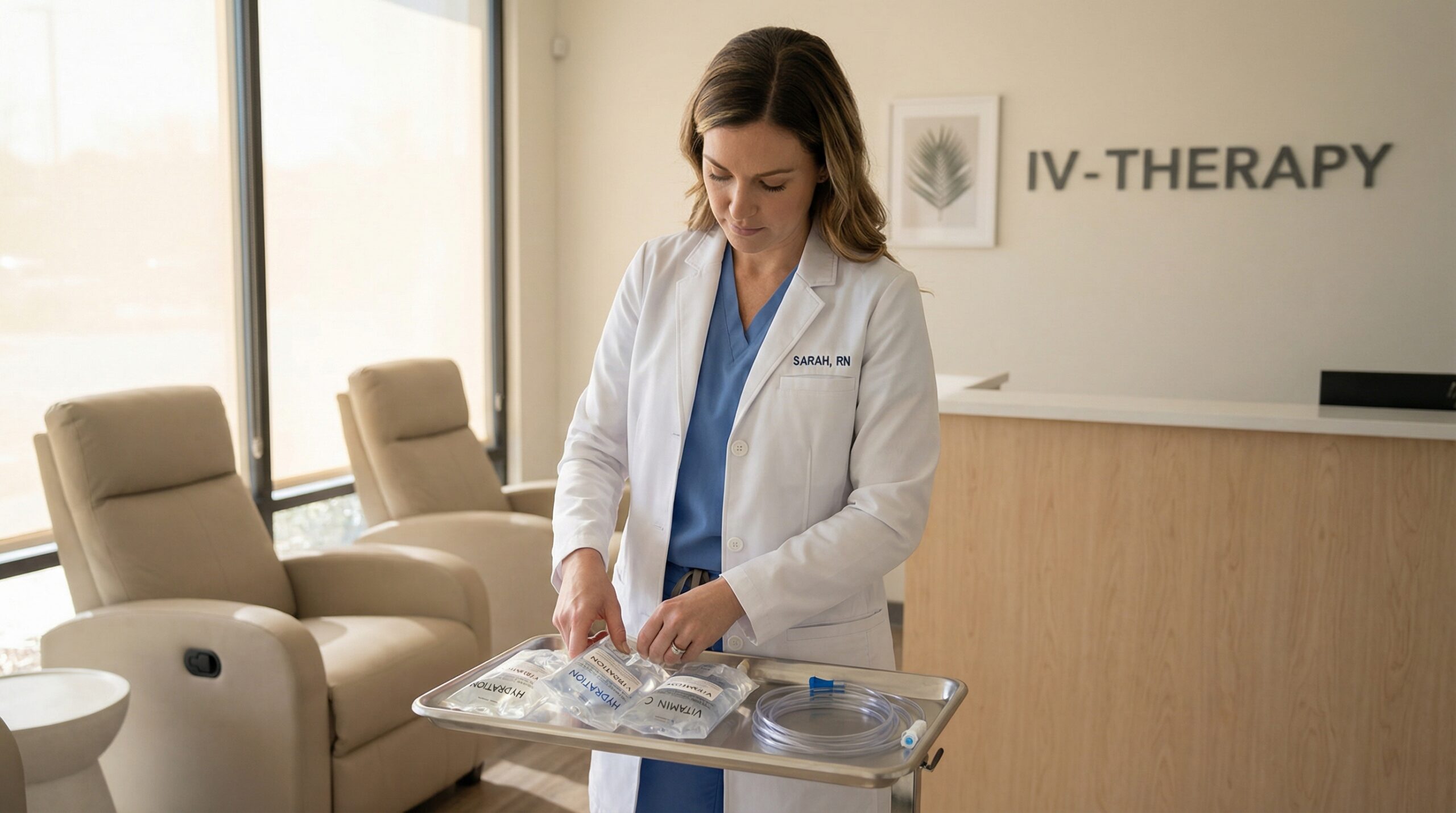
Registered nurse IV therapy is rapidly moving beyond hospitals and into wellness clinics, mobile services, and home-based care. If you are an RN curious about IV vitamin drips, mobile hydration, or infusion nursing as a career path, this guide will walk you through what the work looks like, what skills you need, and how the market is evolving.
This article is for registered nurses, nursing students, and wellness professionals who want a clear, evidence-informed overview of IV therapy in today’s wellness and outpatient landscape.
Registered nurse IV therapy refers to licensed RNs who specialize in safely starting and managing intravenous infusions, from hydration and vitamin drips to more complex medications, in settings such as wellness IV clinics, mobile IV services, outpatient infusion centers, and home care. These nurses combine strong vascular access skills with assessment, monitoring, and evidence-based practice to deliver IV treatments, manage side effects, and educate clients, always working within state regulations and under appropriate medical oversight.
What is registered nurse IV therapy in the modern wellness space?
When most people think of IVs, they picture a hospital room. In reality, IV therapy has expanded into outpatient clinics, home care, and wellness-focused settings where registered nurses play a central role in delivering safe infusions.
In the wellness and hydration niche, registered nurse IV therapy typically includes:
- Vitamin and antioxidant drips (for example B-complex, vitamin C, glutathione) that may support nutritional status and oxidative balance (Dietary Reference Intakes for Thiamin, Riboflavin, Niacin, Vitamin B6, Folate, Vitamin B12, Pantothenic Acid, Biotin, and Choline, Institute of Medicine, 1998).
- Electrolyte and fluid infusions for mild to moderate dehydration in appropriate clients, supporting fluid and electrolyte balance (Maintenance and replacement fluid therapy in adults, Moritz & Ayus, 2015).
- Recovery-oriented drips after intense exercise, travel, or social events.
- Adjunctive infusions in home or outpatient settings for chronic conditions, such as parenteral nutrition or certain biologic medications, when prescribed by a licensed provider (Infusion Therapy Standards of Practice, Gorski et al., 2021).
At the same time, infusion therapy as a specialty has become more complex. Modern infusion nurses are expected to integrate advanced clinical judgment, smart pump technology, and evidence-based standards, not simply start good IVs (Infusion therapy: The past, present, and future, Vizcarra, 2020).

How is the demand for registered nurse IV therapy changing?
Several overlapping trends are driving strong demand for RNs with IV skills.
1. Growth of infusion therapy across healthcare
The global intravenous solutions market is projected to grow from about USD 13.35 billion in 2025 to USD 25.10 billion by 2033, driven by rising hospitalizations, chronic disease, and increased use of parenteral nutrition and fluid management (Global Intravenous Solutions Market, Precedence Research, 2024). In the United States alone, IV solutions use is expected to nearly double over the same period, reflecting how central IV therapy has become in acute and chronic care.
For registered nurses, this means IV therapy skills are not optional; they are increasingly core to roles in medical-surgical units, critical care, oncology, and home infusion programs.
2. Expansion of home and outpatient infusion
Infusion care is steadily moving out of the hospital and into outpatient centers and home settings. An aging population and a growing number of patients on biologics and specialty drugs have accelerated this shift (Infusion therapy: The past, present, and future, Vizcarra, 2020). Home care is the fastest-growing end-use segment for IV solutions, with an estimated compound annual growth rate of 9.50 percent between 2025 and 2033 (Global Intravenous Solutions Market, Precedence Research, 2024).
These trends open opportunities for RNs to work in home infusion, oncology infusion centers, and specialty clinics where they manage vascular access, monitor for complications, and provide long-term patient education.
3. Rise of mobile IV hydration and wellness drips
Within the wellness sector, mobile IV hydration therapy has become a fast-growing niche. The U.S. mobile IV hydration market is projected to grow from about USD 568.5 million in 2024 to around USD 1.02 billion by 2030, a compound annual growth rate near 10.4 percent (U.S. Mobile IV Hydration Therapy Market, Grand View Research, 2024).
Registered nurses are the frontline providers in this model. They travel to homes, offices, hotels, and events to administer hydration, vitamin blends, and recovery-focused drips under physician or nurse practitioner oversight. Many former emergency and critical care nurses are transitioning into mobile IV work for greater autonomy and flexibility.
What does a registered nurse do in IV therapy roles?
Regardless of setting, registered nurse IV therapy involves much more than inserting a catheter. RNs are responsible for holistic assessment, safe administration, and ongoing monitoring.
Core clinical responsibilities
- Client assessment: Reviewing medical history, current medications, allergies, vital signs, hydration status, and contraindications before starting any infusion.
- Vascular access: Selecting appropriate veins, placing peripheral IV catheters, and in more advanced roles managing central venous access devices and ports according to organizational policies (Infusion Therapy Standards of Practice, Gorski et al., 2021).
- Infusion setup and administration: Preparing IV solutions, programming smart pumps when used, verifying compatibility, and following the five rights of medication administration.
- Monitoring and safety: Observing for signs of infiltration, phlebitis, allergic reactions, fluid overload, or electrolyte disturbances, and intervening promptly.
- Documentation: Recording assessments, infusion details, patient responses, and any adverse events in a clear and timely manner.
- Education and counseling: Explaining expected benefits and risks, aftercare, and when to seek urgent medical attention.
Evidence-based practice and standards
Modern infusion nursing is guided by evidence-based standards such as the Infusion Nurses Society’s Infusion Therapy Standards of Practice, which emphasize complication reduction, vein preservation, and patient satisfaction (Infusion Therapy Standards of Practice, Gorski et al., 2021). RNs in IV therapy roles are expected to:
- Stay current with guidelines on catheter selection, dwell times, and infection prevention.
- Use technology such as smart pumps and vessel-guidance tools appropriately.
- Recognize and manage side effects of increasingly complex medications and biologics.
Pathways into registered nurse IV therapy
There is no single route into IV-focused nursing, but several common pathways can help you build the right foundation.
1. Education and licensure
- Complete an accredited ADN or BSN program.
- Pass the NCLEX-RN and obtain an active, unencumbered RN license in your state.
- Meet any additional state-specific requirements related to IV therapy, if applicable.
2. Build strong acute-care experience
Most employers in mobile IV and outpatient infusion prefer at least two years of acute-care experience. Medical-surgical units, emergency departments, and intensive care units are excellent environments to develop:
- Confident peripheral IV insertion skills.
- Clinical judgment for recognizing early deterioration.
- Experience with fluid, electrolyte, and medication management.
3. Seek specialized IV and infusion training
Because many nursing programs offer limited infusion content, additional training is valuable. Options include:
- Employer-based IV therapy courses and precepted practice.
- Workshops in vascular access and infusion safety.
- Certification such as the Certified Registered Nurse Infusion (CRNI) once eligibility criteria are met (Core Curriculum for Infusion Nursing, Infusion Nurses Society, 2017).
Hands-on, supervised practice is essential. Watching online videos alone is not enough to develop true infusion expertise (Infusion therapy: The past, present, and future, Vizcarra, 2020).

Where can registered nurses practice IV therapy?
Registered nurse IV therapy spans several settings, each with its own workflow and lifestyle considerations.
Hospital and clinic infusion roles
In hospitals and outpatient clinics, IV therapy is integrated into broader care. RNs may manage:
- Postoperative fluids and electrolytes.
- Parenteral nutrition for patients unable to eat by mouth.
- Chemotherapy and biologic infusions in oncology centers.
- Antibiotic infusions for acute infections.
These roles often involve advanced technology, complex medication regimens, and close collaboration with interdisciplinary teams.
Home infusion nursing
Home infusion is one of the fastest-growing areas of IV therapy. RNs visit patients at home to manage therapies such as parenteral nutrition, long-term antibiotics, and biologics. This work typically includes:
- Assessing the home environment for safety.
- Teaching patients and caregivers how to manage lines and recognize complications.
- Coordinating with pharmacies and prescribers.
Home infusion offers autonomy and relationship-based care, but also requires strong time management and comfort working independently.
Mobile IV hydration and wellness clinics
In mobile IV services and wellness clinics, registered nurse IV therapy focuses on hydration, vitamin drips, and recovery blends for generally well clients. Typical activities include:
- Traveling to clients homes, offices, hotels, or events.
- Conducting brief health screenings to determine suitability for treatment.
- Starting peripheral IVs and remaining with clients during 45 to 60 minute infusions.
- Educating clients on realistic expectations and potential side effects.
Some companies employ RNs as W-2 staff, while others contract them as independent providers and supply infrastructure such as scheduling platforms and protocols. High hourly rates are possible, but RNs must account for taxes, supply costs, and travel time when evaluating compensation.
Benefits and challenges of a career in registered nurse IV therapy
Like any specialty, IV therapy offers a mix of advantages and trade-offs.
Potential benefits
- High demand and job security: With IV therapy use growing across hospitals, clinics, and home care, skilled infusion nurses are in demand (Global Intravenous Solutions Market, Precedence Research, 2024).
- Flexible work options: RNs can choose from hospital-based infusion units, outpatient centers, home infusion, or mobile IV wellness services.
- Autonomy and relationship-based care: Many IV roles involve longer one-on-one time with patients, allowing for deeper education and support.
- Entrepreneurial opportunities: Mobile IV services and concierge models allow some RNs to build semi-independent practices within regulatory frameworks.
Key challenges
- Repetitive tasks: Some mobile IV roles are highly focused on repeated peripheral IV starts and monitoring, which may not suit nurses who prefer broad clinical variety.
- Complex therapies and technology: Infusion nurses must keep up with new drugs, smart pumps, and safety standards, which requires ongoing education (Infusion therapy: The past, present, and future, Vizcarra, 2020).
- Regulatory and safety responsibilities: RNs must understand state laws about who can administer IVs, required supervision, and scope of practice, especially in wellness settings.
- Business considerations for mobile work: Independent contractors need to manage self-employment taxes, liability coverage, and scheduling logistics.
Clinical safety: what registered nurses must keep in mind
Whether you work in a hospital or a wellness clinic, patient safety is the foundation of registered nurse IV therapy.
Common risks and side effects
Even relatively simple hydration or vitamin infusions can carry risks such as:
- Infiltration or extravasation at the IV site.
- Phlebitis or local infection.
- Systemic infection if aseptic technique is not followed.
- Fluid overload in clients with cardiac, renal, or hepatic compromise (Intravenous fluid therapy in adults in hospital, NICE Guideline CG174, 2013).
- Electrolyte imbalance if solutions are not selected and monitored appropriately.
- Allergic or hypersensitivity reactions to components in the infusion.
RNs must screen clients carefully, use evidence-based protocols, and have clear escalation pathways if complications occur.
Evidence-based hydration and nutrient support
IV hydration and nutrient therapy can be appropriate in certain contexts, for example when oral intake is not possible or when rapid correction of fluid or electrolyte deficits is required (Intravenous fluid therapy in adults in hospital, NICE Guideline CG174, 2013). For wellness-focused vitamin drips, evidence is more limited, and benefits may be modest or population-specific. For instance, vitamin C infusions may reduce symptom duration in some viral illnesses or support certain oncology protocols, but results are mixed and context-dependent (Vitamin C and immune function, Carr & Maggini, 2017).
Transparent education is essential. RNs should explain that IV vitamin therapy is not a cure-all and should not replace standard medical care or a balanced diet.
How RNs can decide if IV therapy is the right fit
If you are considering moving into registered nurse IV therapy, reflect on the following:
- Do you enjoy procedural skills and hands-on vascular access work?
- Are you comfortable working independently and making real-time clinical decisions within your scope?
- Would you prefer the structure of a hospital or the flexibility of home and mobile environments?
- Are you prepared to invest in ongoing education and possibly certification in infusion therapy?
Shadowing an infusion nurse, speaking with RNs currently working in mobile IV or outpatient infusion, and reviewing your state’s scope-of-practice regulations can all help you make an informed decision.
Next steps if you want to grow in registered nurse IV therapy
To build a strong, sustainable career in this space:
- Strengthen your foundational IV and assessment skills in an acute-care role.
- Complete reputable IV therapy and infusion courses, including hands-on practice.
- Seek positions in outpatient infusion, oncology, or home infusion to deepen your experience.
- Consider CRNI or other infusion-related certifications when eligible.
- For wellness or mobile IV work, thoroughly review employer protocols, medical oversight arrangements, and safety practices before accepting a role.
FAQ
What does a registered nurse do in IV therapy?
In IV therapy, a registered nurse assesses the client, starts and maintains vascular access, prepares and administers IV fluids or medications, monitors for complications such as infiltration or reactions, educates the client, and documents all aspects of care while following evidence-based infusion standards and state regulations.
Is IV vitamin therapy safe when provided by a registered nurse?
IV vitamin therapy can be reasonably safe for appropriately screened clients when it is prescribed by a licensed provider and administered by a registered nurse who follows strict aseptic technique, appropriate dosing, and monitoring protocols, but it still carries risks such as infection, vein irritation, fluid overload, and allergic reactions, so it is not risk-free.
What experience should an RN have before working in mobile IV hydration?
Most mobile IV hydration services prefer registered nurses with at least one to two years of recent acute-care experience, strong peripheral IV insertion skills, and confidence in independent assessment and emergency response, since mobile RNs often work alone in homes, offices, or event spaces.
Do registered nurses need special certification to work in IV therapy?
Special certification is not always required, but many employers value additional training or certifications such as the Certified Registered Nurse Infusion credential, which demonstrates advanced knowledge of infusion standards, vascular access, and complication management.
Can IV therapy replace regular medical care or a healthy lifestyle?
No, IV therapy should not replace regular medical care, prescribed medications, or a balanced diet and healthy lifestyle; it may play a supportive role in specific clinical situations or wellness plans, but any infusion therapy should be coordinated with a qualified healthcare provider.
This blog post is intended for informational purposes only and should not be considered medical advice. Always consult a healthcare professional before making changes to your health routine.
Leave a Reply