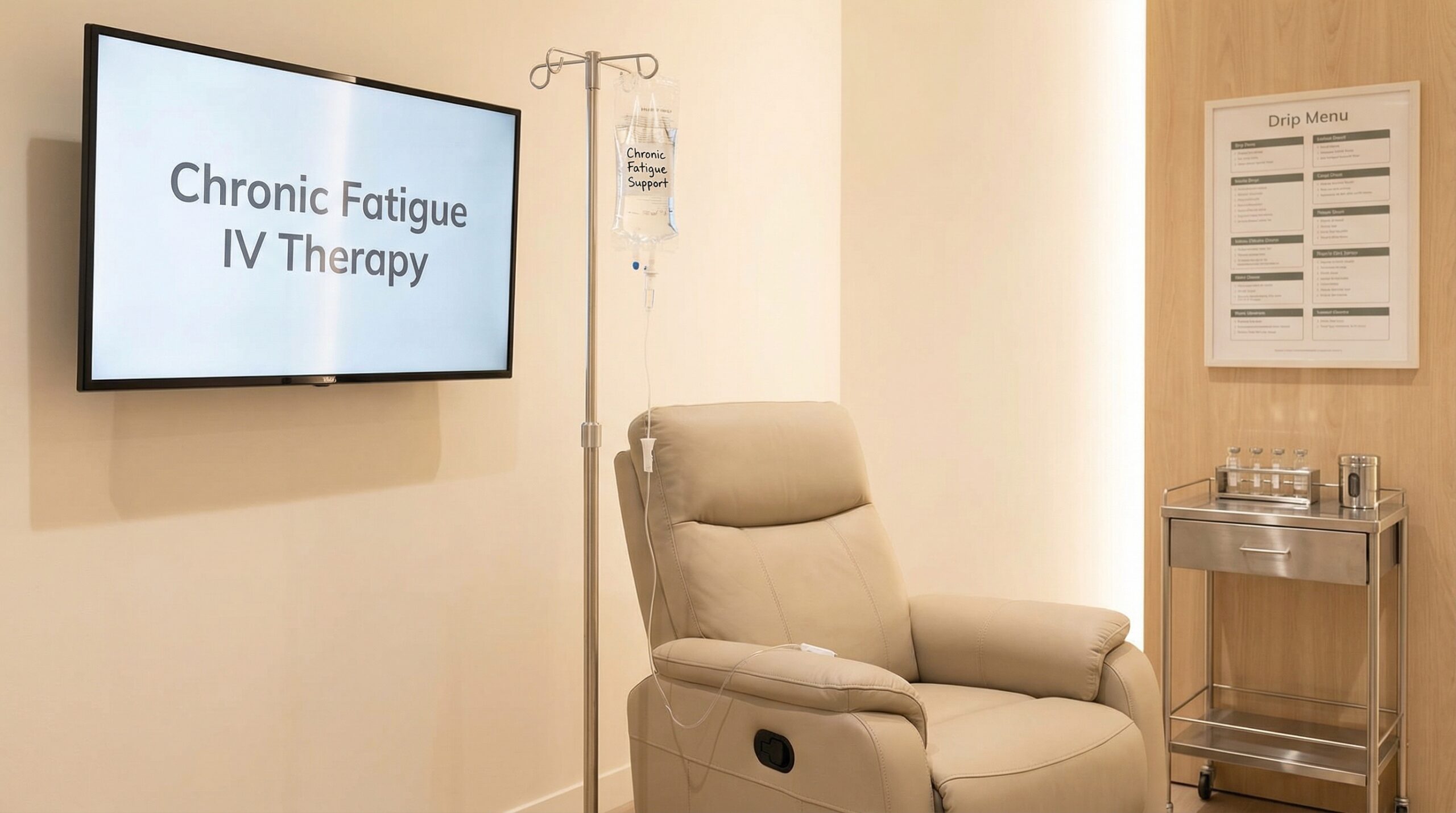
Persistent, life‑disrupting fatigue can make even simple daily tasks feel overwhelming. If you live with Myalgic Encephalomyelitis/Chronic Fatigue Syndrome (ME/CFS), post‑viral fatigue, or dysautonomia, you may have heard about chronic fatigue IV treatment as a possible way to support hydration, circulation, and energy. This guide explains what IV therapy can and cannot do, who it may help, and how it fits into a broader fatigue management plan.
Chronic fatigue IV treatment typically refers to tailored intravenous infusions that may include saline for volume support, electrolytes, and selected vitamins and antioxidants. These infusions are designed to support blood volume, circulation, and cellular energy production, especially in people whose fatigue is linked to dysautonomia, low blood volume, or nutrient depletion. Current evidence suggests IV therapy may ease symptoms like dizziness, brain fog, and fatigue in some patients, but it is not a cure and should always be part of a comprehensive, medically supervised plan.

What is chronic fatigue IV treatment?
Chronic fatigue IV treatment is a broad term for intravenous infusions used to support people with long‑lasting fatigue, including ME/CFS, Long COVID–related fatigue, and conditions with overlapping autonomic dysfunction such as postural orthostatic tachycardia syndrome (POTS). Instead of taking nutrients by mouth, fluids and selected compounds are delivered directly into the bloodstream.
In clinical and wellness settings, chronic fatigue IV treatment may include:
- Isotonic saline infusions to expand blood volume and support circulation.
- Electrolytes such as sodium, potassium, and magnesium to support nerve and muscle function.
- Vitamins like B‑complex and vitamin C to support mitochondrial energy production and antioxidant defenses.
- Adjunctive IV therapies in research settings, such as intravenous immunoglobulin (IVIG) or other immune‑modulating infusions for carefully selected ME/CFS subgroups. (Therapeutic plasmapheresis followed by IVIG in ME/CFS patients with specific autoantibodies, Scheibenbogen et al., 2023)
Because IV fluids bypass the digestive system, they can be useful for people who struggle with oral hydration, nausea, or gastrointestinal absorption issues. However, they should always be tailored to the individual and delivered by trained medical professionals.
How can IV saline help with chronic fatigue and ME/CFS?
Many people with ME/CFS and related conditions have symptoms of dysautonomia, including rapid heart rate when standing, dizziness, and a feeling of “crashing” after minimal activity. Research suggests that a subset of these patients also has low circulating blood volume, sometimes called relative hypovolemia. (Intermittent intravenous saline infusions in ME/CFS with dysautonomia, Bragée ME Center & Karolinska Institutet, 2025)
In a 2025 case‑series from Sweden, ME/CFS patients with documented dysautonomia or POTS received three intermittent IV saline infusions over nine weeks. Each session delivered approximately 1,000–2,000 mL of 0.9% saline over about three hours. Symptom scores across fatigue, brain fog, dizziness, pain, and sleep problems improved significantly over the treatment period, and patients reported better quality of life and modest gains in work capacity. (Intermittent intravenous saline infusions in ME/CFS with dysautonomia, Bragée ME Center & Karolinska Institutet, 2025)
Proposed mechanisms of benefit
Based on current data, intermittent IV saline may help selected patients through several mechanisms:
- Volume expansion: Increasing circulating blood volume can improve stroke volume and cardiac output, which may reduce tachycardia and improve blood flow to the brain and muscles. (Intermittent intravenous saline infusions in ME/CFS with dysautonomia, Bragée ME Center & Karolinska Institutet, 2025)
- Improved microcirculation: Better capillary blood flow can support oxygen delivery to tissues, which may ease symptoms like brain fog and exertional fatigue.
- Autonomic stabilization: Acute reductions in heart rate without significant blood pressure changes suggest that volume loading can partially stabilize autonomic responses in some patients. (Intermittent intravenous saline infusions in ME/CFS with dysautonomia, Bragée ME Center & Karolinska Institutet, 2025)
Planned research like the SIMPLE Study has also highlighted that saline, often used as a “placebo” in ME/CFS trials, may produce real symptom relief, which is why future studies are comparing different IV solutions such as saline, saline with dextrose, and Hartmann’s solution to better understand which formulations help which patients. (SIMPLE Study design overview, Bragée Clinics, 2024)
Who seems to benefit the most from IV saline?
In the Swedish case‑series, a subgroup of patients who reported the greatest benefit from intermittent saline shared several features: generalized joint hypermobility, lower baseline hydration, and pronounced dysautonomia. They experienced larger improvements in quality of life, working capacity, and POTS symptom scores than the rest of the cohort. (Intermittent intravenous saline infusions in ME/CFS with dysautonomia, Bragée ME Center & Karolinska Institutet, 2025)
This suggests that chronic fatigue IV treatment with saline may be particularly helpful for:
- Patients with ME/CFS or Long COVID who have clear signs of orthostatic intolerance or POTS.
- Individuals with evidence of low blood volume or reduced body water content.
- People with connective‑tissue or hypermobility features, who are often prone to venous pooling and dysautonomia.
However, these findings are preliminary, and not everyone with chronic fatigue will respond. Controlled, randomized trials are still needed to confirm who benefits most and how long improvements last.
How does immune dysfunction relate to chronic fatigue and IV therapy?
Modern research increasingly views ME/CFS and some forms of chronic fatigue as conditions with a strong immune component rather than purely psychological disorders. Many patients show signs of immune dysregulation, including impaired T‑cell function, reduced natural killer cell activity, and a shift from Th1 to Th2 immune responses that may impair antiviral defenses. (Immune dysregulation and immunotherapy in ME/CFS, University of Miami review, 2022)
In a small subset of ME/CFS and post‑COVID patients, elevated autoantibodies against beta2‑adrenergic and muscarinic receptors have been linked with worse quality of life, suggesting an autoimmune contribution in these individuals. A pilot study using therapeutic plasmapheresis followed by low‑dose IVIG showed that reducing these autoantibodies was associated with improvements in overall health status, although the sample size was very small. (Therapeutic plasmapheresis followed by IVIG in ME/CFS patients with GPCR autoantibodies, Scheibenbogen et al., 2023)
Where IV treatments fit in immune‑focused care
Immune‑modulating IV treatments such as IVIG, experimental antivirals, or plasmapheresis are not standard wellness therapies. They are typically reserved for tightly defined research protocols or hospital‑level care. However, they highlight an important principle: for some people with chronic fatigue, especially those with clear immune biomarkers, carefully selected IV‑based therapies may play a role within a broader, individualized treatment plan. (Immune dysregulation and immunotherapy in ME/CFS, University of Miami review, 2022)
For wellness‑oriented IV therapy, the immune connection is more indirect. By supporting hydration, circulation, and nutrient status, IV infusions may help create a more favorable internal environment for immune and mitochondrial function, but they are not a substitute for disease‑modifying immune therapies.
What nutrients are commonly used in chronic fatigue IV treatment?
Protocols vary widely, and there is no single “chronic fatigue drip” that works for everyone. In a wellness setting, IV blends for fatigue often include:
- B‑complex vitamins such as B1, B2, B3, B5, B6, and B12 to support mitochondrial energy production, red blood cell formation, and nervous system health.
- Vitamin C as an antioxidant and cofactor in neurotransmitter and collagen synthesis.
- Magnesium to support muscle relaxation, nerve conduction, and ATP production.
- Trace minerals like zinc and selenium that support immune function and antioxidant enzymes.
- Hydration base with isotonic saline or balanced electrolyte solutions.
Evidence for vitamin‑based IV therapy in chronic fatigue is still limited, and most data come from broader studies on micronutrient deficiencies, mitochondrial support, and oxidative stress rather than ME/CFS‑specific trials. Where possible, nutrient choices should be guided by clinical history, laboratory testing, and a careful review of medications and comorbidities.
Safety considerations for nutrient IVs
Although IV vitamins are widely used, they are not risk‑free. Potential side effects can include vein irritation, local bruising, transient changes in blood pressure or heart rate, allergic reactions, and, rarely, complications like infection or thrombosis. High doses of certain nutrients may be inappropriate in people with kidney disease, heart failure, or specific metabolic disorders. For this reason, any chronic fatigue IV treatment should be overseen by clinicians who can screen for contraindications, adjust dosing, and respond to adverse events.
Is chronic fatigue IV treatment right for you?
Deciding whether to try IV therapy for chronic fatigue is highly individual. Consider the following factors with your healthcare provider:
- Your underlying diagnosis: ME/CFS, Long COVID, POTS, other dysautonomias, or unexplained fatigue each carry different risks and potential benefits.
- Presence of dysautonomia or hypovolemia: Those with documented orthostatic intolerance, POTS, or signs of low blood volume may be more likely to benefit from saline‑based infusions. (Intermittent intravenous saline infusions in ME/CFS with dysautonomia, Bragée ME Center & Karolinska Institutet, 2025)
- Access and logistics: Traveling to a clinic for IV sessions can itself trigger post‑exertional malaise in ME/CFS, so the overall burden of treatment must be weighed carefully.
- Medical comorbidities: Heart, kidney, or severe endocrine conditions may limit which fluids or nutrients are safe.
- Your goals: Are you seeking a short‑term “bridge” to improve function enough to engage in pacing, rehabilitation, or other therapies, or are you expecting a cure? Align expectations with what current evidence supports.

Questions to ask your provider or IV clinic
Before starting chronic fatigue IV treatment, consider asking:
- How will you determine whether IV therapy is appropriate for my specific diagnosis?
- What protocol do you recommend and why this fluid or nutrient combination?
- How will we monitor benefits and side effects over time?
- What safety protocols are in place during infusions?
- How will this fit with my existing medications and treatments?
How to integrate IV therapy into a broader fatigue management plan
IV therapy should not replace foundational strategies for managing chronic fatigue. Instead, it can be one tool among many. A comprehensive plan often includes:
- Pacing and energy management to avoid post‑exertional crashes.
- Sleep optimization through behavioral strategies and, when appropriate, targeted medications.
- Nutritional support with a focus on adequate protein, micronutrients, and stable blood sugar.
- Autonomic support such as increased oral fluids and salt (if appropriate), compression garments, and carefully titrated physical therapy for those who can tolerate it.
- Medical evaluation for coexisting conditions like anemia, thyroid disease, sleep apnea, or autoimmune disorders.
Within this context, intermittent IV saline or nutrient infusions may help some individuals stabilize enough to participate more fully in daily life and other therapies. Emerging research into immune‑modulating IV treatments, precision‑matched fluid formulations, and biomarkers may further refine how IV therapy is used in chronic fatigue care over the coming years. (SIMPLE Study design overview, Bragée Clinics, 2024; Immune dysregulation and immunotherapy in ME/CFS, University of Miami review, 2022)
Next steps
If you are considering chronic fatigue IV treatment, start by discussing your symptoms, diagnosis, and goals with a healthcare professional who understands ME/CFS, dysautonomia, or post‑viral fatigue. They can help determine whether a trial of IV therapy is reasonable in your case, which type of infusion is most appropriate, and how to monitor outcomes safely over time.
Ready to explore IV support for chronic fatigue?
Talk with a qualified provider about whether a structured trial of IV hydration and nutrient therapy could fit into your overall plan, and always ensure your infusions are delivered in a medically supervised environment with appropriate monitoring.
FAQ
How quickly can IV saline help chronic fatigue symptoms?
Some patients with ME/CFS, POTS, or orthostatic intolerance report feeling less dizzy and more mentally clear within hours of an IV saline infusion, likely due to rapid expansion of blood volume and improved circulation. In the 2025 Swedish case‑series, symptom scores improved progressively over three infusions given every third week, suggesting that benefits may build over several sessions for some individuals. (Intermittent intravenous saline infusions in ME/CFS with dysautonomia, Bragée ME Center & Karolinska Institutet, 2025)
Is chronic fatigue IV treatment a cure for ME/CFS?
No, current evidence does not support IV therapy as a cure for ME/CFS. Intermittent saline infusions and nutrient IVs may reduce symptom burden and improve quality of life for a subset of patients, but they do not eliminate the underlying condition. Most researchers view IV therapy, at best, as a supportive or “bridge” treatment within a broader management plan. (Intermittent intravenous saline infusions in ME/CFS with dysautonomia, Bragée ME Center & Karolinska Institutet, 2025)
How often can I safely receive IV saline for chronic fatigue?
There is no one‑size‑fits‑all schedule. In research settings, protocols have ranged from single infusions to courses of three infusions over nine weeks, with careful monitoring of heart rate, blood pressure, and body fluid status. Long‑term, frequent saline infusions are not routinely recommended in guidelines for POTS or ME/CFS due to limited data and potential risks, so any ongoing schedule should be individualized and medically supervised. (Intermittent intravenous saline infusions in ME/CFS with dysautonomia, Bragée ME Center & Karolinska Institutet, 2025)
Are vitamin IV drips safe for people with chronic fatigue?
Vitamin IV drips can be safe for many people when properly formulated and delivered by trained clinicians, but they still carry risks such as vein irritation, allergic reactions, fluid overload, or interactions with existing conditions and medications. People with kidney disease, heart failure, or certain metabolic disorders may need modified protocols or should avoid specific nutrients. A thorough medical assessment is essential before starting any IV program.
Can I combine chronic fatigue IV treatment with my current medications?
In many cases, IV therapy can be combined with existing medications, but potential interactions and overlapping side effects must be reviewed carefully. For example, medications that affect blood pressure, heart rate, or kidney function may influence how your body handles IV fluids and electrolytes. Always share a full medication list with your IV provider and coordinate care with your primary clinician.
This blog post is intended for informational purposes only and should not be considered medical advice. Always consult a healthcare professional before making changes to your health routine.
Leave a Reply